Kathy Milligan
The Minds of Billy MilliganKathy Milligan, also called Kathy Jo, is Billy Milligan’s sister and one of the few family members whose connection to him spans infancy, childhood, trial, hospitalization, and later legal uncertainty. Her importance lies less in a separate storyline than in what she can remember and do: she carries family history Billy cannot access, challenges their mother about what happened to him, and remains present when his institutional confinement separates him from ordinary family life.
Identity and Family Background
Kathy was born on December 31, 1956, the third child of Dorothy Moore and Johnny Morrison. Her arrival came amid mounting pressures. Johnny had suggested that Dorothy seek an abortion in Cuba; she refused, regarding it as a mortal sin. The medical costs of the birth overwhelmed him. He borrowed and gambled more, drank heavily, and Dorothy discovered that he owed loan sharks six thousand dollars. Their arguments included violence against Dorothy. Kathy’s infancy therefore began in a household already strained by debt, alcohol, and conflict, although the account does not describe her own understanding of those events as a baby.
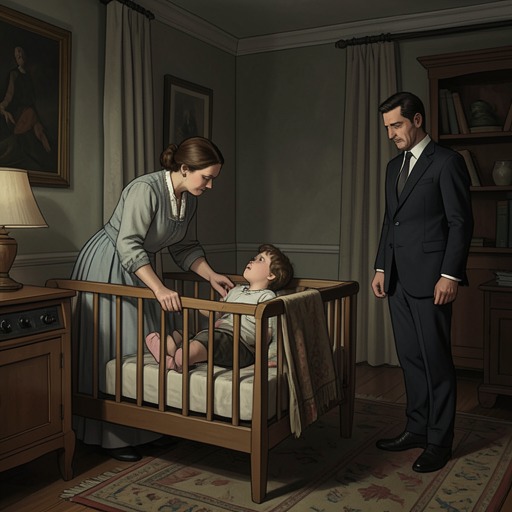
An early childhood scene gives Kathy a place in the complicated care shared among the family. After Johnny was taken away for medical treatment, Dorothy was busy and Billy was lonely; the narrative then presents Christene, one of Billy’s personalities, opening her eyes and responding to Kathy’s cries. Christene recognized that Kathy was hungry, alerted Dorothy, and was praised for watching the baby. She later drew Kathy a doll beside the crib. The episode makes Kathy the infant at the center of an act of care that Billy would not later remember as his own: Christene did not know why Dorothy called her Billy. The family’s everyday tenderness is thus shown alongside the confusion of Billy’s divided experience.
Childhood Memories and Lost Time
Kathy later remembered Billy’s favorite childhood game and asked him to perform it for Challa Milligan. Billy looked puzzled and asked what game she meant. Her prompt and his failure to recognize it make the distance between shared experience and accessible memory visible in a small domestic exchange. Kathy can retrieve a familiar game from their childhood; Billy, despite being the person who played it, cannot.
That contrast becomes more consequential when Kathy sees him at trial. Billy had not seen her for a long time and was startled by the difference between the fourteen-year-old sister he remembered and the twenty-one-year-old woman in front of him. Once past the shock, he felt comfortable with her. Kathy’s presence offered a point of recognition, but it also exposed the years he could not account for: she had visited him often at Harding Hospital and, before that, at Lebanon prison, yet he remembered none of those visits. Her continuing contact and his missing recollection occupy the same family relationship without cancelling each other.
Family Testimony and Confrontation
During a later visit to AIT, Kathy and Dorothy reminisced about Billy’s childhood, each recalling incidents that had confused them at the time and that they could now attribute to one of his other personalities. Their conversation turns family memory into a retrospective explanation of behavior that had once seemed inexplicable. Kathy is not simply listening to her mother’s account; she directly disputes what that account leaves out.
When Dorothy said she had tried to tell doctors and a lawyer that Billy needed help, Kathy answered that someone might have listened if Dorothy had told them about Chalmer Milligan. The accusation brings the stepfather’s abuse into the conversation and contests the mother’s claim that she had sought help without being heard. Dorothy replied that she had not known what Chalmer had done and said that, had she known, she would have acted. She also recalled taking a knife away from Billy. Billy’s question about what knife revealed that this episode, too, was absent from his conscious memory. Kathy’s confrontation therefore joins two kinds of knowledge: her insistence that the family’s account must include Chalmer, and Billy’s inability to recall the object at the center of their exchange.
Support During Later Crises
Kathy’s connection to Billy continues through practical and emotional support. At a weekend at her home, Danny and Tommy painted a mural while Allen worried about an approaching court hearing in Lancaster. The scene places Kathy’s home within the orbit of Billy’s treatment and legal uncertainty: different personalities occupy the same setting, while the prospect of a court decision raises the possibility of further time in hospitals or prisons. In a separate conversation recalled by the writer, Allen explained his wish to leave everything to his sister by remembering that Kathy had once given a bully her last twenty-five cents so the bully would not hit him. The account presents this childhood act as a lasting memory of protection, important enough to shape Allen’s stated decision about his will.
That support does not remove the limits imposed by Billy’s confinement. After he was transferred to the male maximum-security ward, Kathy called and was told there had been trouble. She was also informed that he would not be allowed to leave to attend her wedding the next day. The separation is concrete and immediate: her wedding is approaching, but the institution controls whether her brother can be present.
Later, Tanda moved to Columbus and lived with Kathy so she could remain close to Billy and visit him often. Kathy’s home thus became a place from which someone who loved Billy could sustain contact during his institutionalization. The evidence does not describe Kathy resolving his legal or medical difficulties, but it repeatedly shows her keeping a relationship available across lost time, family confrontation, and restrictions on visits. Her narrative role is that of a sister who remembers, questions, and makes room for continued connection even when Billy cannot remember the same shared past or freely join family life.