Milligan's Stipulated-Evidence Trial and Insanity Acquittal
The Minds of Billy MilliganBilly Milligan's stipulated-evidence trial ended with a divided legal result: Judge Jay C. Flowers dismissed the first rape count, then found Milligan not guilty by reason of insanity on the remaining counts. The proceeding turned not on a contest over whether the charged acts had occurred, but on the medical evidence concerning Milligan's mental condition when they did. Its outcome also sent him into court-supervised care rather than simply ending the case with an acquittal.
Background and Preparation
The trial followed an earlier dispute over whether Milligan could assist in his own defense. His public defenders, Gary Schweickart and Judy Stevenson, continued visiting him in prison even after he sent them a letter firing them. With funds released by the Public Defender’s Office, clinical psychologist Willis C. Driscoll examined Milligan on January 8 and 13, 1978. The tests produced an IQ score of 68, which Driscoll said depression had lowered, and a diagnosis of acute schizophrenia. He described severe difficulties with identity and reality-testing, reported that Milligan heard voices, and concluded that Milligan could not adequately understand proceedings or counsel in his own behalf at that time. Driscoll recommended hospitalization for further examination and possible treatment.
On January 19, Schweickart and Stevenson presented Driscoll’s report to Judge Flowers as evidence that Milligan could not assist with his defense. Flowers ordered an examination by the forensic psychiatry unit at Southwest Community Mental Health Center. The defense worried that the center usually sided with prosecutors and sought protection for anything Milligan told its clinicians. After a dispute over whether such statements could later be used against him, the parties reached a compromise: prosecutors could question him about incriminating statements only if he took the stand. The defense accepted the examination on those terms. This earlier competency dispute concerned Milligan’s capacity to participate in proceedings then; the eventual insanity decision addressed his mental state at the time of the offenses.
The record also contained sharply different accounts of the alleged offenses. In a discussion of trial strategy, Arthur argued that the women had cooperated, had not been injured, and had opportunities to leave; he further claimed that Adalana had returned some money to them. Stevenson and Schweickart did not accept that account, recognizing it as Adalana’s perception rather than a shared or established version of events. The women’s accounts contradicted it. The episode exposes a central tension in the case: an internal account of events could not simply replace the testimony and experience of the women involved.
Stipulated Proceedings
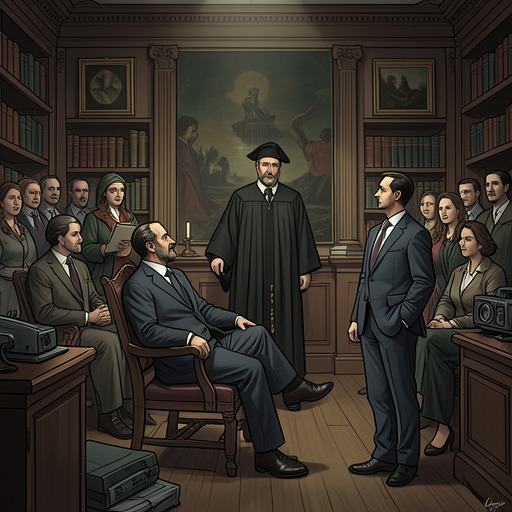
When Milligan entered the courtroom, sketch artists began erasing the mustache they had drawn on him. The visual correction preceded a hearing in which neither side called witnesses or put Milligan on the stand. Schweickart told the judge that prosecution and defense had agreed to read the facts into the record as stipulations. Flowers confirmed that the defense was not contesting the charges or denying that Milligan had committed the charged crimes, except for the first count of sexual assault. The defense’s position on the remaining counts was a plea of not guilty by reason of insanity.
The prosecution likewise agreed not to contest the psychiatric findings from Southwest Community Mental Health Center and Harding Hospital. Those findings were presented as supporting Milligan’s mental condition at the time of the offenses. Judy Stevenson read the defense testimony, taken by deposition, into the record. Among the accounts was evidence from Milligan’s mother, Dorothy Milligan, that she had found him in trance-like states and that he later could not remember what had happened during them. She also described his unusual manner of walking and speaking on one occasion. Her testimony linked those episodes to a wider family history: she said she had remained in her marriage to Chalmer Milligan to keep the family together, and left only after her children gave her an ultimatum.
The record also included the deposition of Milligan’s brother, James Milligan. He described trips with Milligan and their stepfather to family property where James was sent to hunt rabbits while Milligan remained behind with Chalmer. James said that Milligan was crying when he returned and told him that his stepfather had hurt him. According to the deposition, Chalmer then pressured Milligan to deny that anything had happened and invoked the need not to upset their mother. These accounts were part of the evidence read into court; the proceeding itself did not subject the witnesses to live examination.
Ruling and Legal Basis
Before deciding the insanity defense, Flowers dismissed the first count of rape. He cited the lack of corroborating evidence and the absence of a similar modus operandi. That ruling was distinct from the decision on the other counts: the judge did not extend the insanity finding to the dismissed count, but removed it because its evidentiary support was insufficient.
For counts two through ten, Flowers relied on the agreed medical evidence. The doctors’ findings, as he summarized them, established that Milligan was mentally ill when the offenses occurred, that his illness prevented him from distinguishing right from wrong, and that he lacked the ability to refrain from the acts. With no contrary evidence before him, Flowers found Milligan not guilty by reason of insanity on those counts. The judgment was therefore a legal determination about criminal responsibility at the time of the offenses, not a finding that the acts had not happened. Nor was the diagnosis alone the verdict: the judge connected the medical evidence to the questions of understanding and control relevant to the insanity plea.
Aftermath and Significance
Flowers placed Milligan under the authority of the Probate Court of Franklin County and adjourned. Judy Stevenson held back tears and hurried him toward the holding cell to avoid the crowd. Dorothy Turner, Stella Karolin, and others came to congratulate him; several were crying. Schweickart stood apart, reflecting on a long legal fight that had brought sleepless nights and severe strain to his marriage. The courtroom response marked relief, but the order made clear that the result was not an ordinary release from legal supervision.
A later court finding further illustrates the distinction between acquittal and disposition. In December 1979, a court described Milligan as mentally ill, identified his condition as multiple personality, and found grounds for hospitalization, including substantial risks of harm to himself and others. That later ruling was not the trial verdict, but it shows the continuing legal consequences of placing him under probate authority. The trial resolved criminal responsibility for the charged conduct; it did not settle where or under what conditions Milligan would receive treatment.
The proceeding’s structure gave its conclusion unusual force. Milligan did not testify, the parties agreed to the psychiatric evidence, and the judge read the stipulated record rather than hearing a conventional sequence of opposing witnesses. The result preserved two distinct propositions: the defense did not deny the offenses covered by counts two through ten, while the court found Milligan unable to bear criminal responsibility for them because of his mental illness at the time. The separate dismissal of the first count, and the transfer of authority to probate court, prevented the acquittal from collapsing into a simple declaration that the case was over.