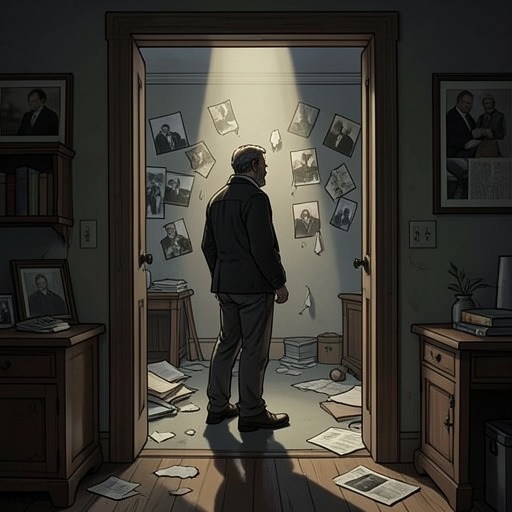
Milligan's Therapy Videotapes
The Minds of Billy MilliganMilligan's Therapy Videotapes turn private treatment sessions into visible evidence: they show different personalities speaking through one body, and eventually allow Billy Milligan to witness that reality for himself. Their significance lies both in what they document and in how their viewers respond, from professional curiosity and distress to Billy's first direct recognition of his condition.
Clinical Record and Demonstration
At Harding Hospital, Dr. George Harding showed staff recent videotapes of himself and Dorothy Turner working with different personalities. The recordings made visible people whom many viewers had never encountered: Arthur and Ragen were unfamiliar to staff outside Wakefield Cottage, while Dorothy Turner was the only person there who had met Adalana. The core Billy appeared on the monitor as well, crying out in confusion about the people around him and why they would not let him stay awake.
The screening took place in a crowded basement room in the administration building. Staff had expected an audience of ten or fifteen, but nearly a hundred people came, including doctors, administrators, their wives, and employees from other hospital branches who had no role in Milligan's treatment. The scale of the gathering changed the recordings from a clinical aid into a public display within the hospital, even as they conveyed evidence unavailable to most of those watching in ordinary clinical encounters.
Billy Watches Himself
The recordings also served a more personal purpose. During a later treatment period, Dr. David Caul arranged to videotape a session with Billy Milligan and Dave Malawista. When Billy watched himself on a monitor, he saw his knees jiggling and recognized that they were still moving; he covered them with his hands to stop them. Seeing his lips move silently on screen startled him, and then the monitor showed Ragen's face, which looked like Billy's own, and presented Ragen's voice outside Billy's head.
Until then, Billy had accepted what others said about his multiple personality, but the diagnosis had not felt real to him. His experience had consisted of occasional voices and lost time. The recording gave him a visible, audible encounter with actions and speech he had not experienced as his own. As Ragen explained the personalities and the Teacher, Billy watched in fearful fascination; the videotape made an account he had received from other people into something he could see for himself.
Audience, Treatment, and Exposure
The staff response to the earlier screening was divided. The appearance of the different personalities drew intense interest, and the core Billy's distress moved some viewers to tears. After the interview that followed the screening, however, several staff members objected that Milligan had again been made to feel special and placed in the spotlight. Rosalie Drake, Nick Cicco, and Donna Egar were angry that he had been put on display; nurses Adrienne McCann and Laura Fisher also complained about the attention he received. The same recordings that served as demonstrations of the diagnosis could therefore be experienced as a clinical presentation or as an exposure of the patient.
At that point, the diagnosis had not yet been made public. It was known to those treating Milligan, the prosecutors, and the judge, while the public defenders and prosecutor Bernard Yavitch favored keeping it secret. The hospital screening was thus an internal presentation, distinct from the later newspaper disclosure. After Dr. Cornelia Wilbur's visit, the treatment strategy shifted again, and Dr. George Harding concentrated on fusing the personalities. The recordings belong to this changing clinical effort: they documented distinct presentations, but they also became part of the institutional debate over how Milligan should be understood and treated.
Significance
The videotapes occupy a middle ground between observation and experience. For clinicians and staff, they offered a record of personalities that many had not encountered directly. For Billy, the monitor supplied a form of evidence that explanation alone had not provided: his own body and voice, seen from outside his immediate awareness. That difference helps explain why the recordings matter beyond their use as a treatment tool. They expose the gap between knowing a diagnosis as a label and recognizing it through an image, while their screening also shows how quickly documentation of a patient can become a spectacle for an institution.