Stuart Moore
The Minds of Billy MilliganStuart Moore is Del Moore’s son, a gifted athlete, and a friend whose easy acceptance offers Tommy, Allen, and Ragen a rare prospect of companionship beyond institutional life. His brief relationship with Tommy becomes especially consequential when they imagine sharing an apartment after Tommy leaves youth camp. Stuart’s sudden death in a motorcycle crash on August 5, 1973, destroys that anticipated future and leaves Tommy in such distress that David comes to experience and express his grief.
Identity and Introduction
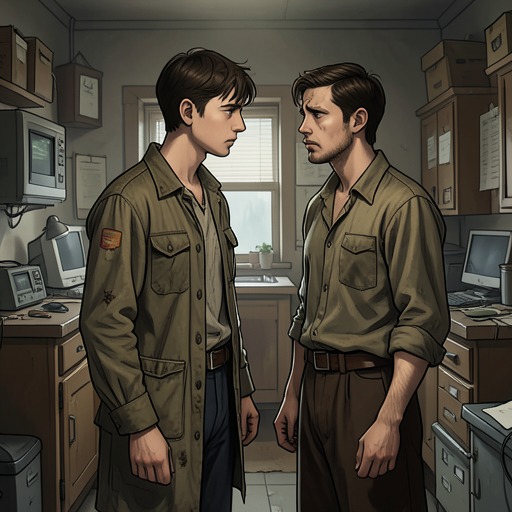
Stuart enters the narrative during one of Tommy’s weekend furloughs. He is about Billy Milligan’s age, plays football, and is described as an all-around athlete. Yet what most immediately impresses Tommy is Stuart’s command of his motorcycle: he can maneuver it in ways Tommy has never seen. The detail gives Stuart a distinctive entrance, defined not just by athletic standing but by a skill that captures Tommy’s attention and admiration.
Stuart is also Del Moore’s son. The account presents him as someone already connected to Tommy’s family circumstances, rather than as a stranger encountered in passing. That connection does not make him distant or formal. On the weekend they meet, Stuart becomes a new friend whom Tommy and the others want to see again.
A Friend Who Accepts Them
Stuart’s welcome extends beyond Tommy. Allen likes him, while Ragen respects his athletic ability, skill, and daring. The different responses matter: the friendship is not confined to one personality’s enthusiasm but is shared across the inner group. They all look forward to spending more time with Stuart.
The basis of that anticipation is unusually specific. Stuart accepts their behavior without treating them as absent-minded or accusing them of lying. In a life where their differences can become a source of misunderstanding, his lack of interrogation makes the friendship feel possible on ordinary terms. The narrative does not give Stuart a detailed account of how he understands those differences; what it establishes is the practical fact that he does not use them to reject or demean the people he has met.
For Tommy, Stuart also becomes an example to aspire to. Tommy admires his athleticism and confidence, and thinks he would like to be like him someday. That wish gives the relationship an aspirational quality: Stuart is not only company but someone Tommy can imagine as a model for a life beyond the circumstances that have shaped him.
The Future They Plan
Tommy tells Stuart that he does not believe he can return to living at home after leaving youth camp. He connects that reluctance with Del spending so much time there and says he does not think the arrangement is right. The disclosure makes their friendship a response to a concrete uncertainty about where Tommy will live, not simply an enjoyable interruption during furlough.
Stuart answers with an offer: when the time comes, they can share an apartment. He has already mentioned the idea to Del, who thinks it is a good plan and expects the two young men to keep an eye on each other. The proposal therefore has both personal warmth and Del’s approval behind it. It gives Tommy a possible alternative to returning to a home situation he finds uncomfortable, while presenting companionship and mutual attention as part of the plan.
Tommy asks whether Stuart truly means it. Stuart’s answer confirms that he does. The exchange marks a shift from a newly formed friendship to a specific expectation about what may follow Tommy’s release. That future remains only a plan; the narrative does not show them moving into an apartment or establish what their shared life would have been like.
Death and Its Consequences
A few weeks before Tommy is due to leave Zanesville, he learns that Dorothy Moore will not make her regular visit. The account then turns to Stuart’s death: on August 5, 1973, he is riding his motorcycle in Circleville when, taking a fast corner, he crashes into the rear of a boat on a trailer. The collision sets both the motorcycle and the boat ablaze, and Stuart is killed instantly.
The abruptness of the news contrasts with the future the two had just discussed. Stuart had been presented as brave and smiling, and as someone who expected to take on the world; now Tommy has to confront his absence before their plan can be tested. The loss is not described as a gradual separation or a completed departure from the friendship. It is a sudden ending imposed by the crash.
Tommy goes into shock. The account links his response to the image of Stuart engulfed in flames and records Tommy’s despair: he cannot bear to remain and no longer wants to be there. David then feels Stuart’s agony and cries Tommy’s tears. The reaction makes the consequences of Stuart’s death extend beyond Tommy’s immediate grief: David becomes the one through whom that pain is felt and expressed.
Narrative Role
Stuart’s importance rests on the combination of acceptance, promise, and loss. His athletic skill first draws Tommy toward him; his easy manner makes the friendship welcoming to Tommy, Allen, and Ragen; and his willingness to plan a shared apartment gives Tommy a tangible possibility for life after camp. The death therefore removes more than a liked companion. It ends a future the two had begun to imagine and changes the emotional direction of their meeting from anticipation to grief.
The account provides only a short interval in which to know Stuart, and does not develop his life beyond his athletic abilities, his relationship to Del, and his friendship with the group. Within that limited portrait, however, his function is sharply defined: he is a credible source of acceptance and an opening toward independent companionship, whose sudden death makes the hoped-for future impossible. His brief appearance leaves its strongest mark not through extended action but through the plans he makes with Tommy and the distress that follows when those plans can no longer be fulfilled.