Tanda
The Minds of Billy MilliganTanda is a resident of Dayton who meets Billy Milligan through her brother, a patient at the Dayton Forensic Center. She becomes a steady source of practical support, then his wife: a presence in his life who offers closeness while also confronting the limits imposed by his confinement. Their marriage is marked by a striking contrast between the intimacy of the Teacher placing a ring on her finger and the hospital conditions that leave the couple unable to be alone together. Tanda later leaves, explaining in a note that the pressure from all sides had become too much.
Meeting Billy and Becoming a Caregiver
Several weeks after Mary left Dayton, Tanda began visiting the Dayton Forensic Center to see her brother. Her brother introduced her to Billy Milligan, and she soon started doing for Billy some of the things Mary had done: typing for him, bringing food from outside, and buying him clothes. These were ordinary acts of care, but in the closed routine of the hospital they gave her relationship with Billy a practical, recurring presence.
That role became more urgent as Billy’s condition worsened. On July 22, 1981, Tanda called the narrator because she was worried about him. He was not changing his clothes, shaving, or eating, and had begun withdrawing from all outside contacts. Tanda feared that he had lost interest in living. Her concern was not presented as a distant observation: she was watching the withdrawal closely enough to recognize its daily signs and to alert someone who might reach him.
A Relationship and a Wedding in Hospital
After moving to Columbus, Tanda lived with Billy’s sister, Kathy Milligan, so she could visit him often. She said she loved him and wanted to be close. The relationship was not confined to Billy’s publicly familiar personalities: the Teacher later told the narrator that he and Tanda were in love and wanted to marry. Their proposed wedding date was December 15, 1981, chosen so Dr. Judyth Box could attend before leaving for a month-long vacation in Australia.
Finding someone willing to perform the ceremony took weeks. Tanda approached preachers, ministers, priests, and judges before Gary Witte, a young Methodist minister who directed a transient open shelter, agreed to marry them. Witte explained that he had performed the ceremony because he supported people treated as underdogs. His willingness made the wedding possible, but the publicity surrounding it also brought the ceremony into public view.
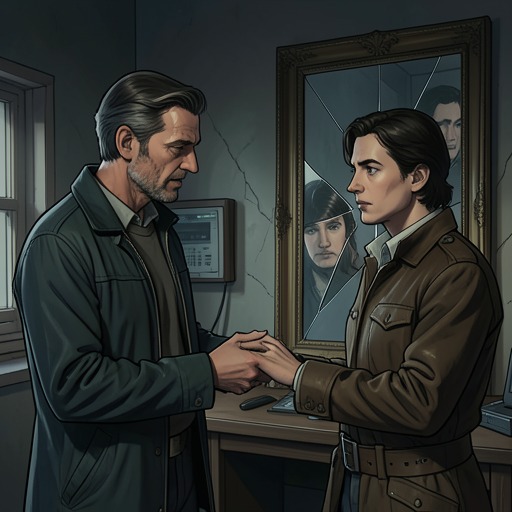
The marriage took place on December 22, after Dr. Judyth Box had already left for Australia. Only Witte, an officer of the probate court who brought the license, and the narrator were present. The Teacher placed the ring on Tanda’s finger and kissed her. The scene gave the marriage its own intimate gesture, but the setting defined what that gesture could not secure: Ohio did not permit conjugal visits, and the couple could not be alone together unless Billy was transferred to a minimum-security or civil mental hospital.
Afterward, Tanda faced reporters, photographers, and television cameramen. She said she had met most of Billy’s personalities and that they had accepted her; she hoped that one day they could live a normal life. Her statement made the relationship a public matter, but it also expressed a future whose basic conditions remained outside her control.
Scrutiny and an Unsettled Future
Soon after the wedding, the Teacher and Tanda noticed changes in Billy’s treatment. The Teacher was taken off all medication. Security staff began repeatedly searching his room and strip-searching him before and after visits; on some occasions, Tanda was strip-searched too. Both experienced these procedures as humiliating and felt they amounted to calculated harassment. The marriage therefore brought no private refuge from the hospital’s power: even visits could expose Tanda to an intrusive security routine.
The therapeutic circumstances changed as well. Dr. Judyth Box’s contract was not renewed by the Department of Mental Health, and the Teacher fragmented. These events belong to the same period of instability that surrounded Tanda’s marriage, though the account does not attribute them to her or establish that they alone determined the relationship’s course. They do show how little control the couple had over the treatment and institutional arrangements on which any shared future depended.
Departure and Significance
On February 12, Kathy Milligan discovered that Tanda’s clothing and possessions were gone and that Billy’s car was missing. Tanda had left a note addressed to Billy. She said she had withdrawn all the money from their joint bank account, promised to repay it someday, and acknowledged that leaving secretly during the night was wrong. She also said she could no longer handle pressure from all sides. The note records both the practical rupture—her departure and withdrawal of their shared funds—and her own recognition of its breach of trust.
Billy’s personalities felt cheated and betrayed, but they took the news relatively well. Allen described feeling broken and, for a time, cold; he then resolved not to judge all women by Tanda, just as he had no right to judge all men by his abusive stepfather, Chalmer Milligan. Dr. Jay Davis was impressed by the way Billy handled the news. Tanda’s departure thus did not erase the relationship’s importance, but it ended the hope of a shared life that the wedding had made visible. Her arc moves from attentive visitor to caregiver, wife, and finally a person who leaves under accumulated pressure. The gap between the Teacher’s ring and Tanda’s nighttime departure gives the relationship its central tension: love is declared and publicly affirmed, yet the conditions around Billy make ordinary privacy and stability difficult to attain.