Fountain of Apollo
The Moon and the SunThe Fountain of Apollo is transformed from a royal garden monument into an enclosed habitat, prison, and exhibition space for the captured sea monster. Under a vast tent, an iron cage surrounds the fountain and its sculptural display of Apollo’s sun chariot; within that enclosure, the creature’s attempts to escape and later performances bring the spectacle of the court into direct contact with captivity. The location’s significance lies in this double use: a celebrated image of motion and dawn becomes the setting in which a living being is contained, watched, and made to perform.
Setting and Structure
The tent covers both the Fountain of Apollo and a surrounding circle of dry ground. Inside it, an iron cage encloses the fountain itself. Apollo and his golden chariot, drawn by the four horses of the sun, rise from the water, with dolphins and trumpet-blowing tritons heralding the dawn. The arrangement places the sea monster within a constructed scene of royal mythology: the fountain’s sculptural world remains visible, while the cage turns the whole water feature into a secured enclosure.
Three shallow, wide wooden stairs descend from the pool’s low stone rim to a platform at water level. The stairs and platform provide access between the fountain’s edge and the water, making the enclosure a place where people can approach the creature as well as observe it. The tent also marks a boundary between the garden outside and this controlled interior. Its structure accommodates both the fountain and the practical work of handling the captive creature, rather than separating the royal monument from the arrangements of confinement.
From Fountain to Prison
The location becomes the sea monster’s prison when it escapes a basin during work at the fountain. As Yves de la Croix loosens the canvas restraints, the pumps begin to shake the night and the nozzles send water upward in the shape of a fleur-de-lys. The central jet reaches the tent’s peak; falling water strikes Apollo’s chariot, dimples the pool, and splashes the creature. It screams, thrashes, and strikes Yves with its tails. When the fountain is shut off, the creature struggles free of the basin and tumbles into the pool, escaping into its prison within the Fountain of Apollo.
The reversal is central to the place’s function. The fountain’s water gives the creature a way out of the basin, but not out of the enclosure. Its movement ends inside the very structure meant to contain it. The pool is therefore both refuge and confinement: the sea monster reaches water, yet remains held within a cage built around a royal monument. The contrast between the engineered stream and the creature’s unpredictable response makes the fountain an active part of the scene, not merely its backdrop.
Access, Care, and Display
After the escape, Marie-Josèphe de la Croix enters the cage and approaches the creature from the fountain’s rim. Later, when workers bring fish and shovel fresh ice onto Yves’s specimen, she crosses the rim and descends to the platform. The planks are dry, suggesting that the creature has not tried to escape a second time. She reads its stillness as fear and tries to coax it by patting the surface of the water as she would call her dog. The sequence gives the platform a practical as well as theatrical role: it is where a keeper can approach the water and attempt contact, although the creature remains inside the larger enclosure.
The fountain also becomes a destination for visitors. A line of people files along the Green Carpet into the tent and crowds around the pool, applauding the sea woman. From within the cage, she swims back and forth, then disappears beneath the surface before bursting out of the water and leaping over Triton. The performance depends on the pool’s depth and on the audience’s view from around it; the same space that limits her movement is made to display her agility. The spectators’ applause registers her as entertainment, while the scene also makes clear that the performance takes place under confinement.
Royal Spectacle and Significance
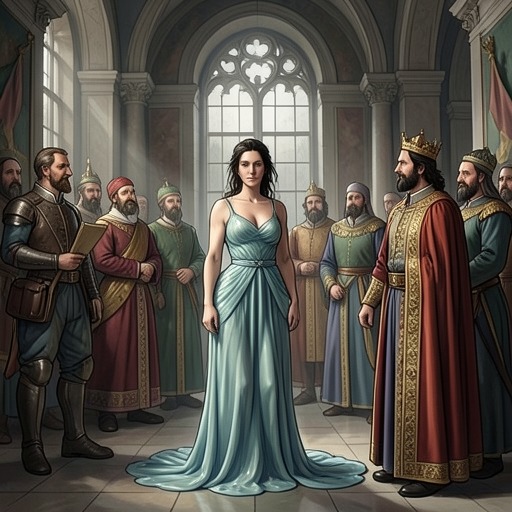
The location stages encounters between the captive and the powerful. Louis XIV joins Yves on the platform within the fountain’s rim and responds to the presence of a live sea monster as a royal spectacle. On another occasion, Louis XIV and Pope Innocent enter the cage to observe the king’s captive. The enclosure thus admits selected visitors into proximity with the sea woman while preserving the larger fact of her captivity. Royal access does not release her; it makes the cage a setting in which possession can be seen and affirmed.
The Fountain of Apollo gathers the book’s conflicting meanings into a single space. Apollo’s chariot and the rising water suggest movement across the sky, while the iron cage fixes the sea monster in place. The pumps, platform, tent, and watching crowd turn a garden fountain into an apparatus of custody and display. Yet the creature’s escapes from the basin, repeated dives, and sudden leaps keep her actions from being reduced entirely to the spectacle arranged around her. The fountain’s double character—as a place of water and movement, and as a prison designed for observation—gives the sea woman’s performances their unresolved force.