Grand Canal of Versailles
The Moon and the SunThe Grand Canal of Versailles is both a theatrical setting for the French court and a contested passage through the story’s worlds of spectacle, violence, and confinement. Its surface carries gondolas, racing royal vessels, and a floating fête island; beneath it, Sherzad finds space to move and listens for a way out. The contrast makes the canal more than a decorative feature of Versailles: it brings courtly display and the possibility of escape into the same confined stretch of water.
A waterway staged for spectacle
The canal first appears as a route for a Venetian gondola. A gondolier sings an Italian folk song while Marie-Josèphe trails her hand in the water, and silver lilies bearing candles spin past. The scene’s measured beauty depends on movement: the boat glides, the lights turn, and the passengers travel through a setting arranged to delight them.
That calm procession passes alongside a very different kind of boat. His Majesty’s miniature galleon races a galley, while the gondolier accepts that his own vessel will come last. The galley’s overseer screams at the convict rowers and lashes their backs to drive the vessel into the lead. The race turns the canal into a stage on which privileged spectators can watch speed and competition without having to row. Yet the spectacle also exposes the force that produces it: the rowers’ exertion, chains, and wounds remain part of the view, even as the guests’ attention is elsewhere.
The contrast sharpens when the gondola reaches the man-made island at the crossing of the canal’s arms. Guests disembark onto heavy planks, and the exhausted rowers remain nearby, gasping, their backs marked by sweat and blood. Lorraine hurries Marie-Josèphe away from their groans. The island’s enchantment does not erase the labor that has brought the party there; the passage from galley to platform places the two experiences close together, then social conduct tries to separate them.
The floating island and royal display
The island seems to arrive almost overnight: the day before, it had not existed. Gold archways, tall spires, flowers, a chamber orchestra, and crystal scattering candlelight create a carefully composed scene of abundance. Its temporary construction makes the fête’s splendor feel both astonishing and deliberate. The island is not simply a natural feature of the canal but a setting made for an occasion, with the waterway carrying guests toward a world assembled for their entertainment.
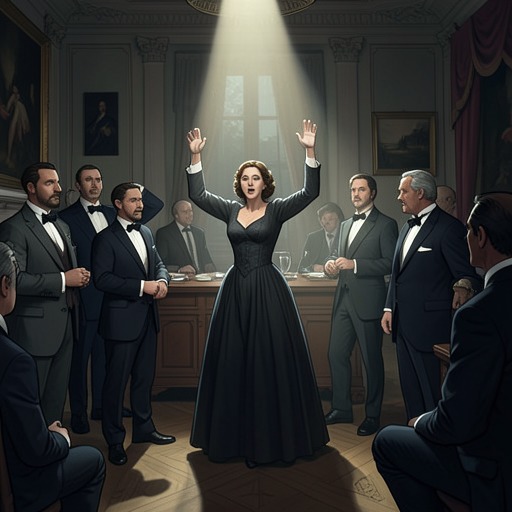
At the dance, Louis and James meet in the center of the floor. Louis crowns James with a diadem and presents him with Poseidon’s trident, which bears a rope of pearls at least three armspans long. James accepts the nautical imagery and adorns Mary of Modena with the pearls. On the island, the canal’s association with boats and water is turned into court ceremony: rulers appear in the roles of sea powers, and jewelry and regalia make their encounter visible to the assembled company.
The setting also places courtly magnificence beside less ornamental forms of control. The candles and music accompany a race powered by forced labor; the island’s elaborate welcome follows the rowers’ exhaustion. The canal thus holds two registers of royal display at once: the polished image of authority and the bodily cost that the fête’s passengers can pass by.
A route through danger and possibility
Elsewhere, the canal belongs to the working geography of the story. When Marie-Josèphe studies a chart with Sherzad, she identifies jagged rocks in a cove near Le Havre where a galleon has sunk and its treasure remains. Lucien says that His Majesty’s flagship could reach the wreck in a few hours. The wreck lies away from Versailles, but this discussion gives the royal watercraft a practical reach beyond ceremony: ships and navigation can serve a treasure expedition as well as a race.
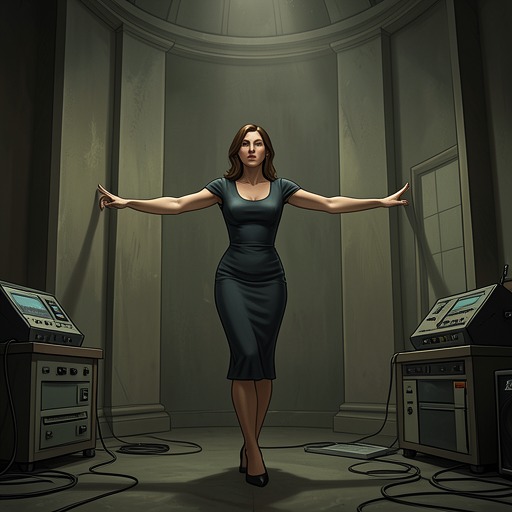
The canal’s meaning changes most sharply below the surface. After days in filthy water, Sherzad luxuriates in the clean, cold water and the space around her. She listens to the shapes of her surroundings, distinguishing long sharp edges and regular curves, and notices the small boats’ keels projecting into her domain. Seeking the underwater river, she swims into a faint, confused current. The water that provides a stage for Versailles above is, for Sherzad, an environment she reads through sound, shape, and movement.
During the escape attempt, the canal becomes a route she can use faster than her pursuers can travel beside it. Under the full moon, Marie-Josèphe sings directions for Sherzad to swim to the far end, away from M. Boursin and beyond his view as she climbs into a wagon. Sherzad answers in song and, propelling herself along the Grand Canal of Versailles, outpaces the galloping horses. The scene reverses the earlier race: instead of convict rowers being whipped to move a galley ahead, Sherzad moves under her own power, using the water to evade capture. Across these episodes, the canal remains a royal setting, but its most consequential use is not to display mastery. It offers a submerged path by which a captive can act for herself.