Natural philosophy
The Moon and the SunNatural philosophy is the novel’s empirical discipline: a way of approaching the world through observation, description, comparison, and testing rather than through alchemy’s promises of immortality or the transmutation of metals. Its meaning emerges not as an abstract definition but through disputes at court and close study of a sea monster’s body. The practice produces evidence, yet it does not guarantee that rulers, religious authorities, or social conventions will welcome what evidence can and cannot establish.
Meaning and Boundaries
The distinction between natural philosophy and alchemy matters to Marie-Josèphe de la Croix from her first encounters with courtly misunderstanding. When the Chevalier de Lorraine treats her brother’s studies as alchemy and casts her own interests as an alchemy of beauty, she corrects him: Yves de la Croix studies natural philosophy, while she studies a little mathematics. Lorraine dismisses the distinction, but the exchange establishes a real intellectual boundary. For Marie-Josèphe, natural philosophy is neither occult speculation nor a decorative accomplishment; it names a mode of inquiry that she and her brother actually pursue.
Yves later gives that boundary a more explicit form. He regards immortality and the transmutation of gold as matters belonging to alchemy, not to natural philosophy. The difference is methodological as well as aspirational: a natural philosopher may form a hypothesis, but it must be tested. The possibility that a supposedly immortal organ exists cannot be settled by longing, inherited tales, or a ruler’s preference. It must be investigated in the body before the investigators.
The novel also distinguishes natural philosophy from chemistry without making the distinction effortless. The Duke of Chartres insists that what he studies is chemistry, an important inquiry into how the world functions, and resists his father’s attempt to dismiss it as alchemy. His father evaluates learning by its usefulness to family fortunes, while Chartres claims a broader intellectual purpose. The competing labels expose a court in which inquiry is not valued on a single scale: it can be judged as dangerous, improper, practically useless, or potentially illuminating.
A Court Divided over Inquiry
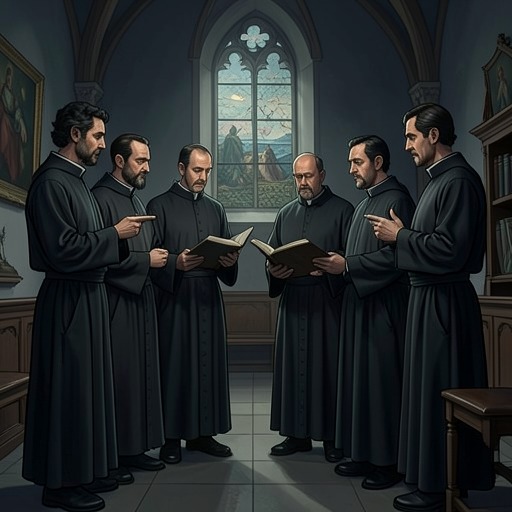
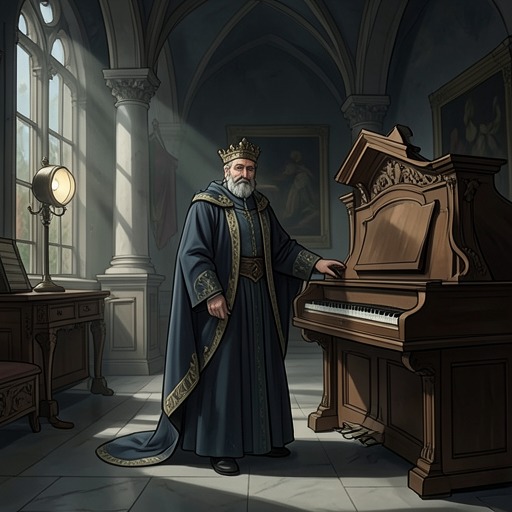
The court’s response to knowledge is divided between curiosity and control. The Duke of Chartres argues that every subject is fit for a natural philosopher because otherwise the truth of the world cannot be understood. Louis XIV counters that what is fit for study may trouble other people or lead them astray, and Chartres’s mother urges him to be quiet. The exchange does not resolve whether inquiry should be unrestricted. Instead, it stages the tension between a general claim to investigate and the authority of those who decide which findings may be spoken aloud.
That tension becomes personal for Chartres. His father warns against his interest in natural philosophy, and his mother considers dissection beneath his station. When Yves says one person is enough to dissect the sea monster, he does not know that Chartres wants to assist; he regards an inexperienced helper as unnecessary. The Duke’s wish to work alongside Yves meets both practical exclusion and social condescension. Even his appeal to study with Marie-Josèphe’s brother is entangled with his effort to present himself as a chemist, while his father reduces his expertise to novice perfume-making.
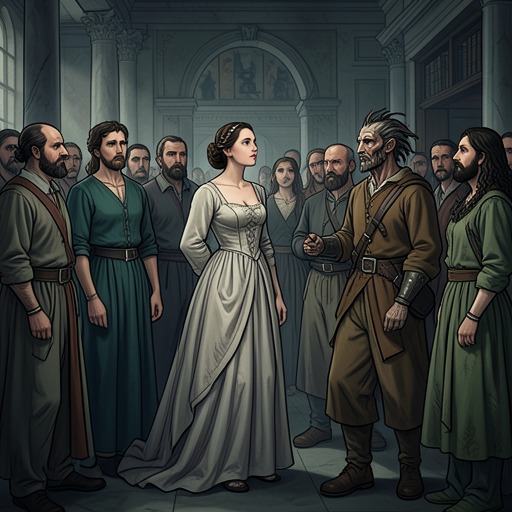
Natural philosophy is consequently more than a private pursuit in the novel. At court, it is tested against rank, gender, and political authority. Chartres’s mother can silence him even when his question concerns truth; Marie-Josèphe, too, speaks into a setting where powerful people decide what subjects are acceptable. Her timid question about whether natural philosophy should transcend war briefly imagines intellectual work as a value beyond military victory, but the surrounding conversation makes clear that such a value has to compete with dynastic and martial concerns.
Dissection and the Demand for Evidence
The dissection of the male sea monster gives the discipline its fullest material demonstration. Yves begins by reporting that the features he has studied so far—the muscles and bones—have counterparts among other furred creatures known to natural philosophy. Louis XIV rejects commonality as the goal: he commissioned the investigation to discover what is unique. The demand directs the procedure toward difference, but it also places pressure on Yves to find a result the King considers significant.
Yves opens the abdomen and examines organs that offer little evidence of an extraordinary nature. The intestines are short for an animal that subsists mostly on seaweed with occasional fish; from this, he infers that seaweed must be easily digested. He measures and inspects the organs, takes samples, and preserves them in jars of spirits. The intestine’s appendix is unusual, but the lower abdomen yields nothing that distinguishes the creature decisively from familiar animals. The work accumulates observations without converting every observation into a discovery.
When Yves opens the chest, he finds neither gills nor a swim bladder. He compares the creature to a dugong and describes its internal organs as normal to mammals. This classification answers one question about resemblance, but it does not satisfy the King, whose interest is the supposed organ of immortality. Yves reports that he has found no evidence for it and refuses to treat the failure of the search as proof of a supernatural explanation. His position is careful rather than dogmatic: the organ either exists or does not, and his own beliefs cannot substitute for evidence.
The method’s intellectual restraint creates friction with royal expectation. Louis XIV asks how Yves could accept the undertaking if he believes the quest futile, and later argues that disbelief would prevent him from finding the organ. Yves explains that he might form a hypothesis, but it would have to be tested. For an instant his desire to pursue knowledge overcomes his caution before Pope Innocent, whose outrage registers the religious stakes of separating inquiry from alchemical ambition. The scene leaves the investigators between two demands: the King wants a discovery, while the method permits only what examination can support.
Marie-Josèphe’s Practice and the Limits of Sight
Marie-Josèphe’s work extends natural philosophy from the public spectacle of dissection to patient examination through instruments and images. She has never believed in transmutation or immortality; observation, description, deduction, and interaction speak more clearly to her. Rather than treating the hoped-for organ as a golden marvel, she prepares samples of kidney, liver, pancreas, and lung, mounts them, and carefully draws what she sees through Yves’s old microscope.
The microscope itself is imperfect evidence-bearing equipment: its mechanism has suffered during the sea voyage, and Marie-Josèphe hopes Mynheer van Leeuwenhoek might sell her one of his instruments, whose lenses are reputed to be the best in the world but difficult to focus. Her wish for better apparatus does not replace her present work. She opens the final jar and compares the anomalous lung tissue with ordinary lung, noting that it is firmer and denser. Under magnification, its structure differs substantially: instead of air sacs, the tissue forms delicate overlapping leaves. She begins to draw the pattern.
This moment makes the practice of natural philosophy visible as a chain of material operations: preserved specimen, prepared sample, microscope, comparison, and drawing. The anomalous lung is not simply declared miraculous because it differs from ordinary tissue. Its distinct structure is recorded as a specific observation. The drawing carries the finding beyond the fleeting act of looking, while the acknowledged limits of the old instrument leave room for further investigation. The evidence is suggestive, but this scene does not establish that the tissue is an organ of immortality.
Intellectual and Narrative Significance
Natural philosophy gives the novel a standard for distinguishing inquiry from wishful certainty, but it also exposes how difficult it is to maintain that standard under pressure. Yves’s work yields ordinary mammalian correspondences, a digestive inference, and an unusual lung structure; it does not produce the result Louis XIV desires. The contrast between the King’s demand for uniqueness and the natural philosopher’s obligation to report what is actually found makes the scientific process dramatic without pretending that every question has an answer.
Marie-Josèphe’s participation broadens that process. She is not merely present at the dissection: she prepares specimens, uses a microscope, studies tissue, and makes drawings. Her stated preference for observation and deduction aligns her practice with Yves’s evidence-based method, while her attention to instruments and visual records gives it a distinct form. The novel thus links intellectual agency to concrete acts of looking and recording, even as courtly decorum and authority restrict who may speak and what may be pursued.
The concept’s significance lies in this combination of method and conflict. Natural philosophy can challenge alchemical hopes without claiming omniscience; it can produce a genuine anomaly without proving immortality; and it can insist on testing hypotheses even when a king or religious authority would prefer certainty. Its work is consequential precisely because its conclusions remain answerable to the evidence rather than to rank, desire, or fear.