
Providence and Human Responsibility
The Most Precious of CargoesThis flow explores the story’s changing language of gods and miracles, asking whether survival comes from divine intervention or from human choices.
increasing Bearing strength in each event
 decreasing
Bearing strength in each eventdecreasingPrayers for a Child

Prayers for a Child
Appeals to many powers
Poor Woodcutter’s Wife prays to heaven, nature, trees, rain, and the sun for a child. As years pass, her hopes seem unanswered.
A habit of longing
Her prayers express both spiritual trust and material deprivation. She hopes not only for a child but also for relief from the cold and hunger that shape her days.
The Train’s Gift
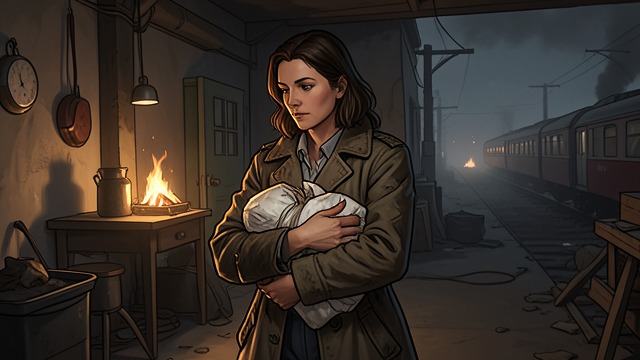
The Train’s Gift
A miracle imagined
Poor Woodcutter’s Wife sees the wrapped baby as a gift from the gods of the train. The child appears to answer a prayer she has repeated for years.
Providence meets need
The girl’s immediate hunger complicates the idea of a complete miracle. No divine force has supplied the milk or protection she needs; the woman must seek them herself.
Help with Conditions
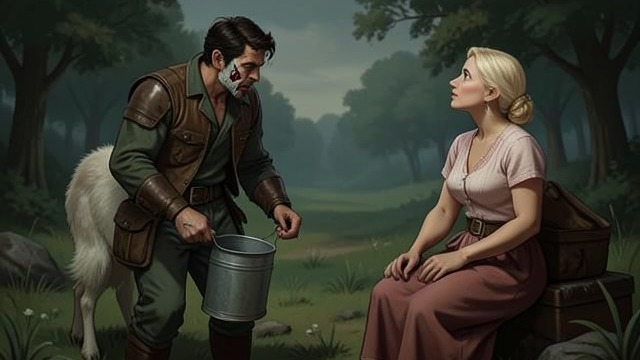
Help with Conditions
A skeptical benefactor
The Man with the Goat and Shattered Face rejects easy claims about divine protection. He remembers his own injuries and says he takes care of himself.
Aid through agreement
He provides milk and later shelter, but describes his action as a bargain and mutual advantage. What the woman may call a blessing arrives through a person’s practical decision.
The Cost of Human Goodness
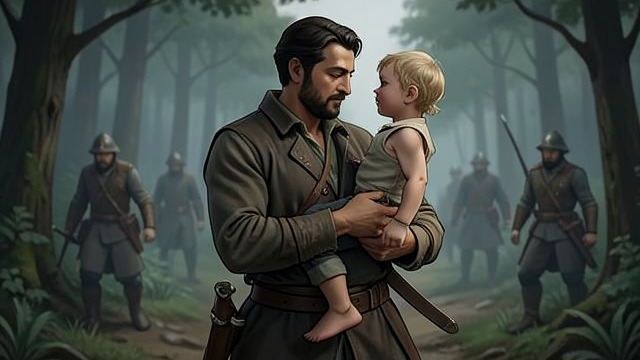
The Cost of Human Goodness
Care without certainty
The forest man protects the fugitives and gives the girl a nursing goat. His kindness does not make the world safe; the advancing soldiers later kill him.
A blessing redefined
Poor Woodcutter’s Wife mourns him and credits his righteousness with the child’s survival. Providence is no longer an invisible promise but the fragile work of people who choose to help.
A Prayer Without the Train Gods
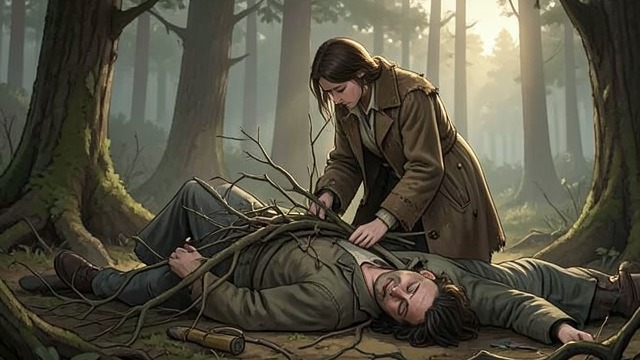
A Prayer Without the Train Gods
Gratitude mixed with distrust
Poor Woodcutter’s Wife covers the dead man with branches and prays for his peace. She does not invoke the train gods, whom she no longer trusts.
Responsibility remains human
The child survived because a father released her, a woman received her, and others supplied care. The story leaves room for spiritual language while grounding survival in human action.
Before the train’s arrival
The snowy morning of the rescue
The woman’s first visit to the grove
After the mother and child reach sanctuary
After the forest man’s death
