
The Doctrine of the Heartless
The Most Precious of CargoesThis flow tracks the making and breakdown of a dehumanizing ideology that turns persecution into a shared social belief and resistance into a moral choice.
increasing Bearing strength in each event
 decreasing
Bearing strength in each eventdecreasingThe Name of an Enemy
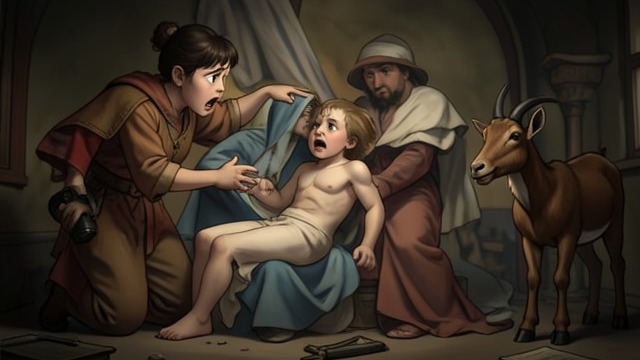
The Name of an Enemy
A child classified
Poor Woodcutter calls the baby one of the heartless and repeats the claim that such people killed God. He treats the infant’s identity as proof of danger.
Fear made ordinary
His language turns a helpless child into a member of a threatening group. That transformation lets cruelty appear like self-defense and makes sheltering her seem criminal.
The Body Contradicts the Slogan
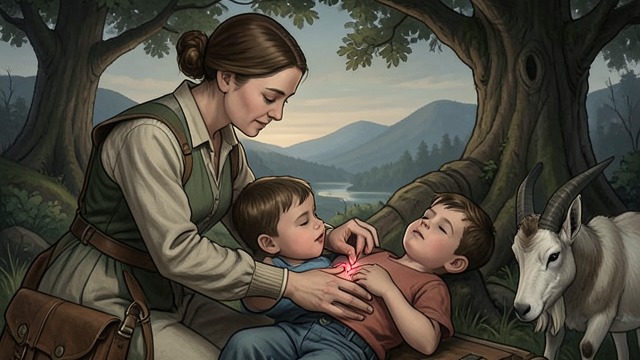
The Body Contradicts the Slogan
Evidence under the palm
Poor Woodcutter’s Wife places her husband’s hand on the girl’s chest. He feels the beating heart of the child he has been taught to regard as heartless.
A conflict within belief
The slogan persists in his speech, but it no longer fits his direct experience. The intimate encounter begins a shift that public argument alone had not achieved.
A Truth Spoken Among Comrades
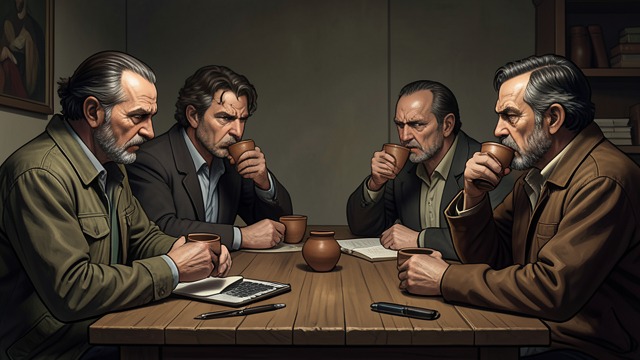
A Truth Spoken Among Comrades
Propaganda at the table
Workmates drink wood alcohol and repeat calls for the extermination of the heartless. The talk turns hatred into a group ritual reinforced by the war and by resentment.
Breaking the silence
Poor Woodcutter declares that the heartless have a heart. His statement costs him the security of silence but frees him from repeating the words that had once governed his response to the child.
The Informer’s Visit
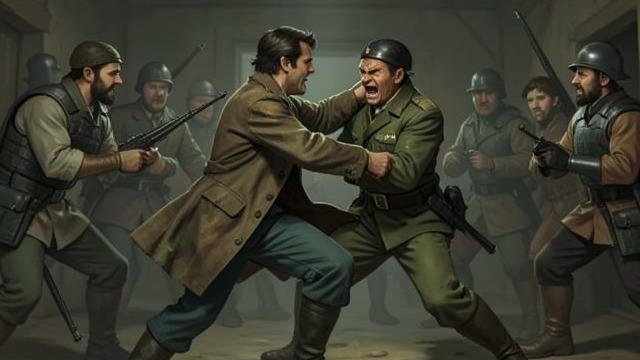
The Informer’s Visit
Ideology becomes enforcement
Wood-Alcohol Distiller brings armed men to seize the child. The prohibition on sheltering the heartless becomes a practical threat to the family.
The target answers back
Poor Woodcutter attacks the informer and the militiamen, choosing the life of the girl over the safety of compliance. Private conviction becomes direct resistance.
A Cycle of Occupation
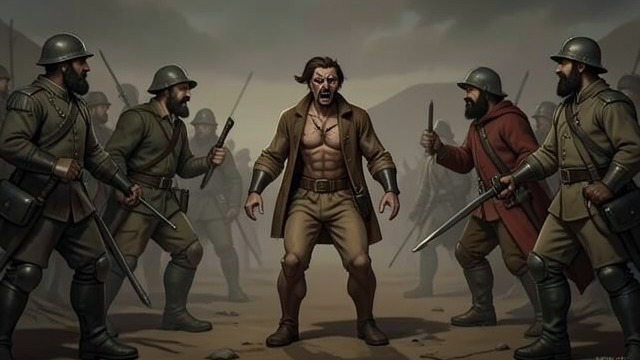
A Cycle of Occupation
One tyranny gives way
The Death’s Heads retreat as the Reds advance. The Man with the Goat and Shattered Face, who fears both forces, is eventually killed by Red soldiers.
No easy moral division
The replacement of one army by another does not automatically make the forest safe. The story’s conflict concerns systems and people who exercise power, not only the identity of the uniformed force.
When the couple first argue over the baby
On the night Poor Woodcutter raises his hand
At an evening gathering after the child’s first steps
Shortly before dawn, when the girl is older
During and immediately after liberation
