
The War’s Repeating Machinery
The Most Precious of CargoesThis flow traces the movement from occupation and deportation through retreat and liberation, while showing how violence persists beyond the defeat of one regime.
increasing Bearing strength in each event
 decreasing
Bearing strength in each eventdecreasingOccupation and Forced Labor
Occupation and Forced Labor
War enters daily life
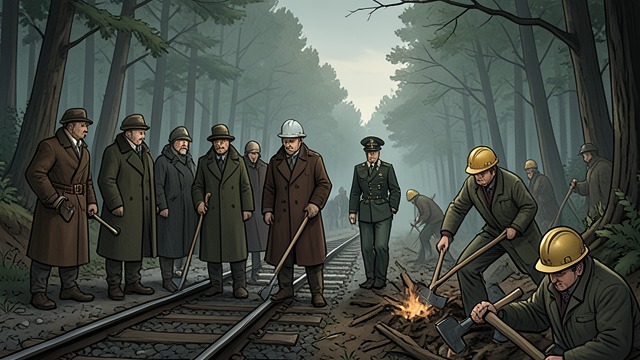
The occupying army redirects labor toward its own military and public works. Poor Woodcutter is conscripted, while his wife struggles to find food and firewood.
A forest divided by the railway
Workers cut a track through the woodland. The infrastructure that serves wartime power later becomes a route for transports carrying Jewish families toward the camps.
Confinement and Deportation
Confinement and Deportation
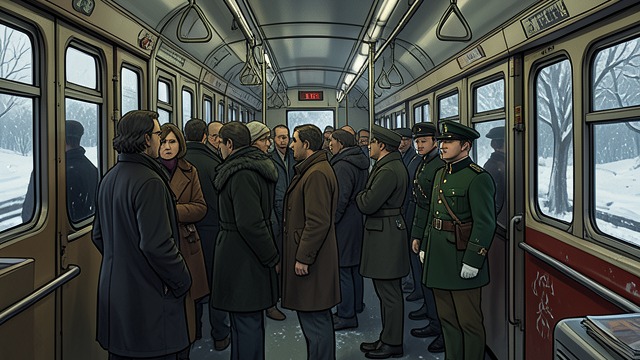
Movement under guard
Zacharie Grumberg and Dinah are held at Drancy after their earlier time in Pithiviers. French guards are eventually replaced by German forces, and the family is placed on Convoy 49.
A process, not an accident
The transport is part of an organized system of internment and deportation. The wagon’s deprivation and the camp’s later selection procedures continue the same effort to strip people of choice and personhood.
Extraction and Extermination
Extraction and Extermination
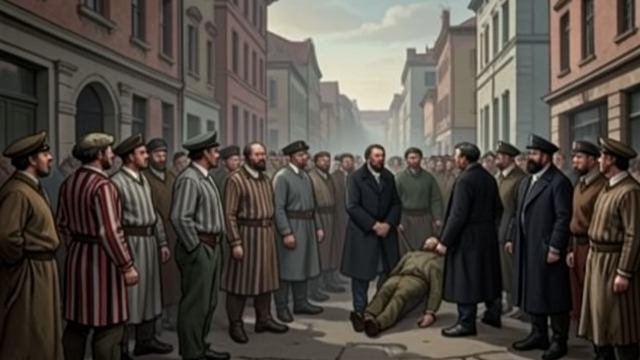
People turned into categories
At arrival, selectors separate those judged useful from the rest. Those rejected are murdered, while prisoners such as the father are forced into labor.
Material exploitation
The father gathers hair removed from deportees’ heads for shipment and reuse. The process connects the bodily violence of selection to an economy that exploits even the dead.
The Destroyed Evidence
The Destroyed Evidence
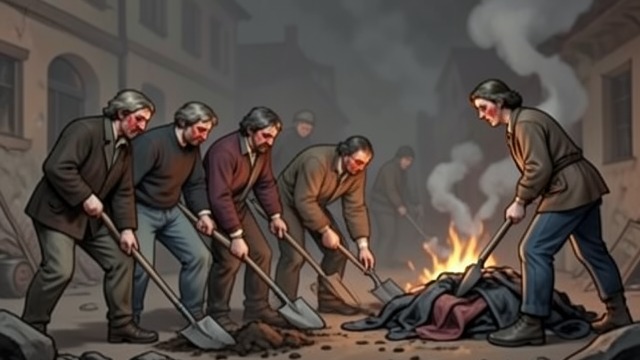
A rushed concealment
As the war turns, prisoners are forced to dig trenches and burn piles of corpses. Equipment and clothing accumulate as the camp authorities try to erase evidence of their crimes.
Witnesses left behind
The father is close to death amid the labor and destruction. The effort to hide the crime does not erase the witnesses, though it nearly kills the people compelled to assist in the concealment.
Liberation Without Peace
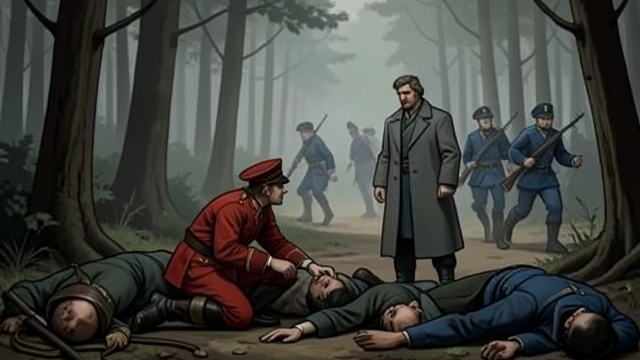
Liberation Without Peace
A new army arrives
A soldier among the Reds rescues the father from a shack of corpses. Elsewhere, Red soldiers kill the Man with the Goat and Shattered Face as they move through the forest.
Aftermath remains unsettled
The old occupying force is driven back, but bereavement, displacement, and fear continue. The end of the war opens the possibility of searching; it does not restore those who have been killed.
During the occupation of France
From 1942 to March 1943
After Convoy 49 reaches Poland
As the Death’s Heads retreat
Spring 1945 and its aftermath
