
The Heart Inside the Alleged Heartless
The Most Precious of CargoesThis flow follows the image of the heartbeat as the story’s direct answer to dehumanization and its measure of moral change.
increasing Bearing strength in each event
 decreasing
Bearing strength in each eventdecreasingA Rule of Exclusion
A Rule of Exclusion
Belief used as a weapon
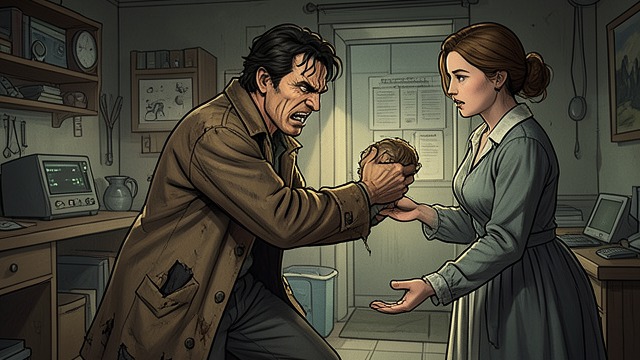
Poor Woodcutter claims that the heartless are dangerous and that sheltering them is forbidden. He treats group identity as proof that the infant cannot be innocent.
A child caught in a system
The baby has no power to answer the accusation. Her helplessness shows how prejudice operates by making inherited labels more important than a person’s visible need.
The Pulse Beneath the Hand
The Pulse Beneath the Hand
A physical fact
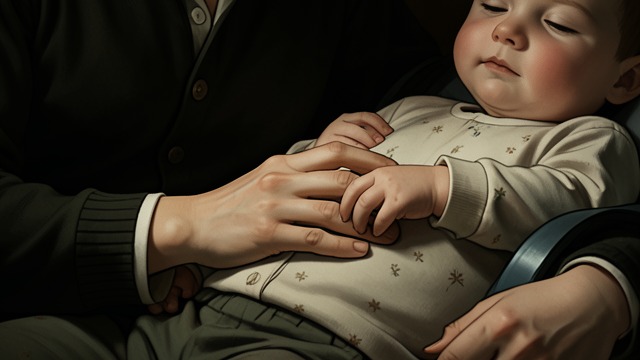
Poor Woodcutter’s Wife places his hand on the baby’s chest, where he feels the child’s heartbeat. The scene replaces a political slogan with an immediate bodily experience.
An argument made intimate
The pulse does not instantly erase his fear, but it unsettles the claim that the heartless have no heart. The child becomes difficult to keep at a distance once he has felt her life directly.
Words Against the Crowd
Words Against the Crowd
Hatred rehearsed aloud
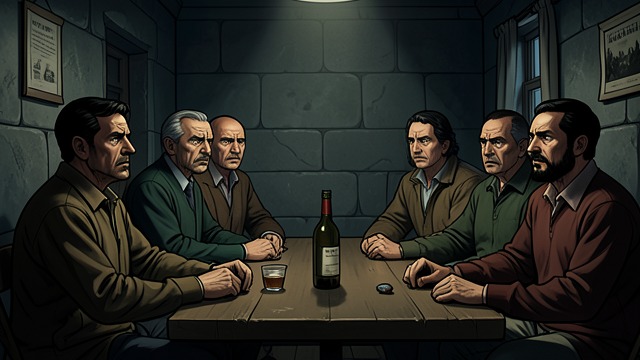
Poor Woodcutter’s comrades call for the death of the heartless, echoing propaganda taught by the hunters. Their drink and shared speech give hatred the force of a collective ritual.
A changed voice
Poor Woodcutter says that the heartless have a heart, first quietly and then with force. His resistance is significant because it breaks his own silence before it changes anyone else.
The Child Reaches Out

The Child Reaches Out
Contact after fear
The little girl reaches toward Poor Woodcutter, and he struggles against his desire to hold her. The child’s ordinary gestures make the dehumanizing label increasingly untenable.
Feeling becomes responsibility
His tenderness grows from hesitation into open delight as she learns to stand. The story presents moral change as a lived relationship, not only a revised opinion.
A Life Given for the Girl

A Life Given for the Girl
The belief becomes action
Poor Woodcutter fights the men who come to take the child and tells his wife to flee. His former fear of the heartless has been replaced by loyalty to the girl.
Humanity demonstrated
He risks his life for someone whom the propaganda described as less than human. His actions provide the story’s strongest answer to the doctrine he once repeated.
At the first argument over the baby
On the night the husband threatens the child
During a drinking gathering after work
During the child’s first months with the couple
During the final attack on the cabin
