Dinah
The Most Precious of CargoesDinah is a Jewish mother whose fierce commitment to her children is tested by internment, deportation, and the loss of the family she tried to keep together. She chooses to bear and raise her twins despite the danger of bringing Jewish children into a world marked by persecution; later, as the family is deported from Drancy internment camp, hunger and separation overwhelm the hope with which she once faced their birth. The narrative ultimately presents Dinah and her son Henri as dead, while her husband’s inability to find their surviving daughter becomes an enduring postwar wound.
Identity and Background
Dinah is the wife of an unnamed Jewish father and the mother of twins, Henri and Rose. The family’s circumstances are shaped by persecution and deprivation: after being transported from Pithiviers to Drancy internment camp, they remain together for a time, and the twins help sustain their parents’ hope that they might endure the camp as a family. The father has nearly completed medical studies in eye, ear, nose, and throat surgery, but finds work in Drancy as a barber because the camp already has many doctors. Dinah’s experience of the family’s danger is not abstract. By the time of deportation, both her parents and later her husband’s father have departed, with no word returning.
The twins were born in the spring of 1942. Dinah’s husband considered abortion before he knew there were two children, but Dinah decided, after much thought, that she wanted to keep them. A discreet maternity clinic on rue de Chabrol, near Cité d’Hauteville, suggested that the babies might be placed with a trustworthy family. Dinah rejected the premise that their own parents were not such a family: despite deprivation and internment, she had enough milk to nurse both infants, and she believed that their birth carried the possibility of help and protection. Her confidence in motherhood is presented as an act of resolve, not an absence of knowledge about the danger surrounding them.
Motherhood Under Persecution
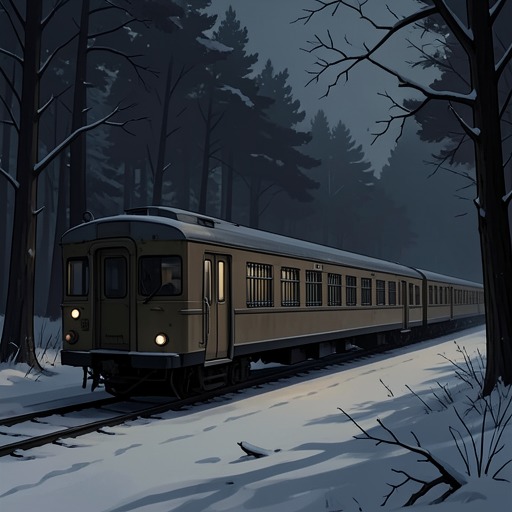
The contrast between the twins’ birth and the deportation journey defines Dinah’s arc. At first, she can calm their cries with her abundant milk; on the train, her body has been depleted by the conditions at Drancy, and she lies on the straw-covered floor with little or no milk. The family is crowded among panic, screaming, and sobbing. The twins take turns crying as she tries to soothe one and then the other, while the woolen Pyrenean shawl she has been allowed to keep serves both as a covering and as the cloth in which she usually swaddles them.
The father realizes that the passengers are not being sent to work but are being removed from the places where they are no longer wanted. As he searches for shelter for his family, Dinah’s immediate crisis is that the children cannot be fed. Their father has spent his time in the camp trying to protect them and has appealed to the administration on their behalf; now, after two days of travel, he feels powerless to find a solution. The account places his helplessness beside Dinah’s physical labor: she holds the infants, attempts to quiet them, and faces the consequences of hunger and exhaustion directly.
A fellow passenger recognizes the father as Romanian and speaks of having become stateless; the wagon contains many people in the same condition, picked up in Paris or elsewhere in France. Someone mentions Iaşi, and the father knows the place. This brief exchange sets Dinah’s family’s personal crisis within a wider history of displacement, without making her own ordeal interchangeable with the other passengers’ experiences. She is a mother trying to keep two particular children alive in a wagon whose occupants have been stripped of security and certainty.
Dinah understands Yiddish, but when a woman sings a Yiddish lullaby, she pretends not to recognize it. The moment places her knowledge and grief behind a deliberate silence: she is among people offering fragments of memory, sorrow, and anger, yet does not openly join the song. The narrative gives no explanation for her pretense, so the gesture remains a guarded response within a crowded scene of shared distress.
Names, Records, and Deportation
Dinah’s identity is also changed by the paperwork imposed on her. In her provisional papers and a new official family record book, she is registered as Diane. The administrative name does not erase the person the narrative has shown, but it records the way persecution turns a family into classified and transportable subjects. The twins, already registered and marked as Jewish, are described as hunted even before the train journey reaches its end.
After a deportee selection, qualified doctors retain only ten percent of those delivered. The rejected group includes elderly people, men, women, children, and the infirm, who disappear into the Polish sky. The narrative then describes Dinah, under the name Diane, and Henri as slipping away from earthly life into a heavenly limbo associated with the innocent. This fairy-tale language softens the statement of their fate without undoing its historical brutality: Dinah and Henri do not survive the selection. Rose, Henri’s twin sister, is distinguished from them in the account, and the later story follows a surviving daughter whose father cannot recover her identity or whereabouts.
Faith, Care, and the Meaning of Survival
Dinah’s earlier confidence is expressed through faith: she had trusted that the children’s lives meant that God intended them to grow up. On the train, that assurance has collapsed alongside her milk, confidence, and hope. Her circumstances expose the distance between belief in providence and the material needs of a starving infant. The narrative does not present her suffering as a lesson that resolves this contradiction; it lets the need for food and protection remain immediate and unanswered.
The daughter’s later survival is associated with human care rather than a divine guarantee. The Poor Woodcutter’s Wife takes in a child from the train and struggles to feed her; the child’s survival is subsequently attributed to the person who dropped her from the train and to the protection of the Man with the Goat and Shattered Face. The Poor Woodcutter’s Wife comes to distrust the gods of the train. Read beside Dinah’s earlier hope, this reversal makes survival depend not on a promise that suffering will be prevented, but on people responding to a vulnerable child’s need.
Aftermath and Narrative Significance
Dinah’s absence continues to shape her husband after the war. At a reunification camp, he relives the train, the snow, the forest, the Prayer shawl, and the old woman, as well as the moment his wife turned away from him forever. He asks himself why he did not allow fate to destroy all four of them together. The thought conveys survivor’s guilt, but it also registers the scale of what has been lost: he has survived while his wife and one child are gone and his daughter remains beyond his reach.
He leaves the camp with the small sum provided to those departing and searches for the railway, the forest, and the bend in the line associated with the final separation. He follows an abandoned track through forests and villages, then wanders farther afield. In the camp and on the road, he struggles even to remember his daughter’s name. The search is thus not simply a journey toward a known person; it is an attempt to recover a family identity shattered by deportation and loss.
Dinah’s narrative significance lies in the movement from chosen motherhood to enforced separation. Her decision to keep the twins gives the family a period of hope, while the train exposes how little that hope can protect them from hunger, state violence, and selection. The later fairy-tale language and the continuing search for the daughter do not restore Dinah or Henri. Instead, they preserve the cost of their absence and set human acts of care against the failure of the assurances on which Dinah once relied.