Poor Woodcutter’s Wife
The Most Precious of CargoesPoor Woodcutter’s Wife is a poor woman whose longing for a child becomes an act of determined care when a baby is thrown from Convoy 49 into the snow. In a forest shaped by occupation, hunger, and cold, she takes the child as her daughter and struggles to keep her alive. Her story gives chosen kinship its material weight: love must be sustained by food, labor, shelter, and the willingness to carry on after loss.
Identity and Background
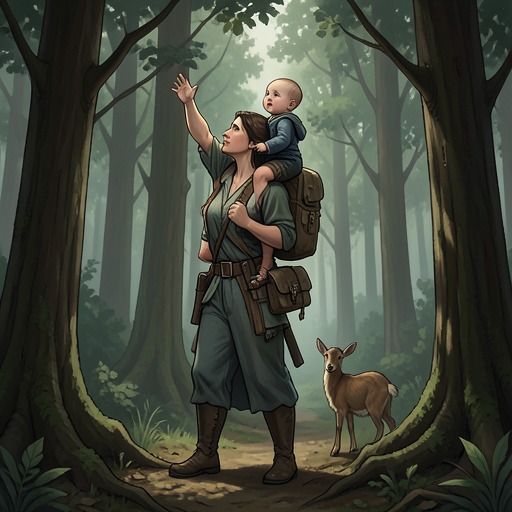
Poor Woodcutter’s Wife lives with Poor Woodcutter in a forest during the Second World War. The conquering army has occupied the surrounding towns, villages, fields, and woods, and Poor Woodcutter has been conscripted into public works for its benefit. From dawn to dusk, she walks through the woodland hoping to provide for their household. Hunger is constant, and winter brings a severe cold; even the forest’s summer heat only drives the cold away temporarily.
The couple have no children to feed. Poor Woodcutter treats this as a blessing and thanks heaven for it, while his wife secretly grieves that she has no child to love. Her longing is not a passing wish: she prays to heaven and to the powers of the natural world to grant her a child. The story places this private desire alongside the material privation of their life, so that the fulfillment of her prayer immediately confronts her with a more urgent need than longing alone can answer.
The Child from Convoy 49
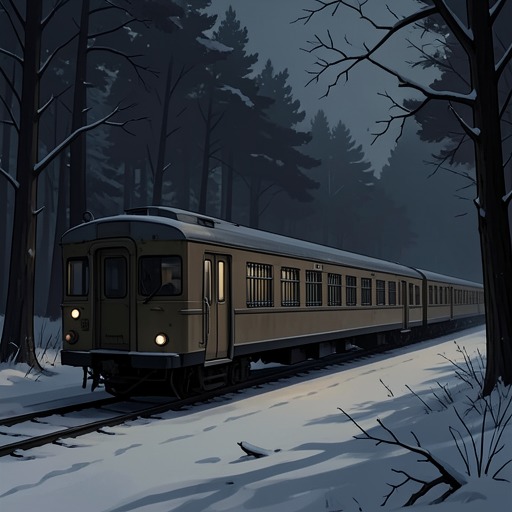
When Convoy 49 passes, Poor Woodcutter’s Wife calls after it. This time, a hand at a narrow window drops a package into the snow and signals that she should pick it up. She unwraps it to find a living baby, hungry and crying rather than the serene infant of a sacred image. She gathers the child against her chest, tucks her into her scarves, and runs home. As the baby tries and fails to suckle at her breast, she feels herself become a mother, at once blissfully happy and anxious: she has received the child she prayed for, but has no milk to feed her.
At home, she tries to quiet the baby with a finger, then makes buckwheat porridge from kasha. The child eagerly sucks the food from her finger but spits out its bitterness. The episode makes the limits of affection plain: Poor Woodcutter’s Wife can hold, soothe, and feed the baby as best she can, but those efforts cannot supply the milk the child needs to survive. She knows the danger and seeks help rather than treating the arrival of the child as a miracle that has already solved itself.
A Bargain for Milk
Poor Woodcutter’s Wife carries the baby into a secluded grove where a solitary man lives with a goat. Although the grove is feared and difficult to enter, she goes there because she understands that the child cannot thrive without milk. She offers a recurring exchange: a bundle of firewood for two mouthfuls of milk, promising to come every day, in winter and summer. The man questions the arrangement, but she insists that the wood is not his to claim. Her proposal turns her knowledge of the forest and her daily labor into the means of keeping her daughter alive.
After examining the child, Man with the Goat and Shattered Face explains that milk from a jenny would be preferable, but he has none. For the next three months, he will provide goat’s milk diluted with boiled water in a ratio of two measures water to one measure milk; porridge, then fruits and vegetables in spring, should supplement it. Poor Woodcutter’s Wife takes her daughter lovingly and falls to her knees to kiss his hand. He recoils and tells her to get up, refusing the posture of worship as well as praise. He also insists that she never reveal that he keeps a goat and gives milk away. The help is compassionate, but it must remain concealed.
The arrangement becomes a routine: every morning, she brings firewood and receives a warm cupful of milk. The child survives and grows healthier, though she is never fully sated; hunger continues to gnaw at her, and she sucks at whatever she can put in her mouth. Poor Woodcutter’s Wife’s care is therefore not a single rescue but repeated work, bound to the daily exchange and to the man’s continued provision.
Loss and Flight
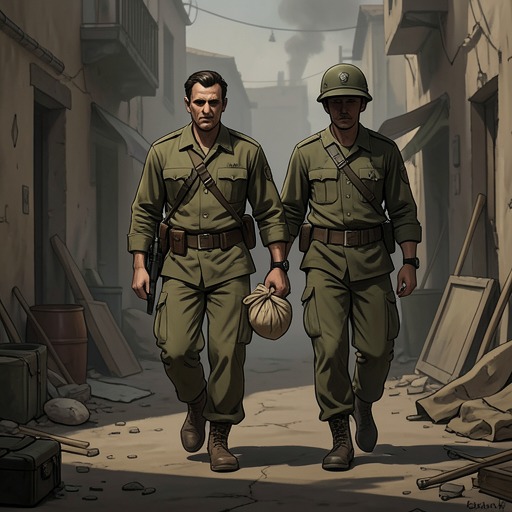
Later, Man with the Goat and Shattered Face leads Poor Woodcutter’s Wife and the child into a garden she has never seen. There, the fruit and flowers seem to reach toward her daughter, and the scene offers a brief image of abundance after the forest’s scarcity. The man remains watchful, listening toward the east as the Reds advance. When two Red soldiers enter the forest, they shoot him and leave without recognizing his tenderness or the value of the life he has protected.
The next morning, Poor Woodcutter’s Wife finds his body. She weeps, and her daughter and the goat weep with her. She does not bury him; instead, she covers his body with blossoming branches and makes a prayer for the peace and happiness denied him on earth. She no longer trusts the gods of the train. In her understanding, the child survived not because those gods had ensured her safety, but because of the hand that dropped her into the snow and the righteousness of the man with the rifle and goat.
She gathers their few old clothes, wraps the cheese and cheese-making tools in the prayer shawl, takes her daughter by the hand, and leads the goat east. She has no destination beyond the direction in which the sun is said still to rise. Passing tanks and trucks marked with red stars and ruined villages, she eventually settles in a village square, spreads the shawl over a surviving section of wall, and waits for customers with her daughter on her lap and the goat grazing nearby. The movement from forest household to improvised market does not resolve her hardship; it shows her carrying the means of survival, and the child she chose, into an uncertain future.
Narrative Role and Significance
The narration introduces Poor Woodcutter’s Wife through a fairy-tale setting but distinguishes her story from the familiar tale of parents abandoning children because they cannot feed them. Her central choice reverses that premise: the child arrives in circumstances of extreme hunger, yet she accepts the responsibility of feeding and protecting her. The fairy-tale language of prayers, gods, and miraculous delivery remains in tension with the concrete work of finding food, trading firewood, and walking east after violence takes away her protector.
Her relationship with her daughter is established through care rather than biological maternity. The baby’s arrival makes her a mother in feeling, but the story measures that bond through practical acts and their costs: carrying the child, trying food that fails, asking for milk, returning each morning with wood, and finally taking her daughter and the goat away from the dead man’s garden. By ending with Poor Woodcutter’s Wife waiting among ruins, the narrative leaves the future open while showing that her caregiving continues beyond the loss of the people and places that first sustained it.