Rose
The Most Precious of CargoesRose is the daughter thrown from a deportation train and the twin who survives, carried from imminent death into a new family by a sequence of desperate choices and sustained care. Raised by the Poor Woodcutter’s Wife, she grows from a starving infant into a young woman whose life is bound to the goat that nourished her and the mother who chose her. Her father finds her after the war, recognizes her, and leaves without making himself known; the story offers survival, but no confirmed reunion.
Identity and Separation
Rose was born in the spring of 1942, alongside her twin brother Henri, at a time when their father wondered whether it was right to bring Jewish children into the world under persecution. For a period, the twins helped their family remain together at Drancy internment camp. Their father had nearly completed medical studies in surgery, but work was scarce for a doctor in the camp, so he became a barber instead. The family’s brief reprieve ended with deportation by train.
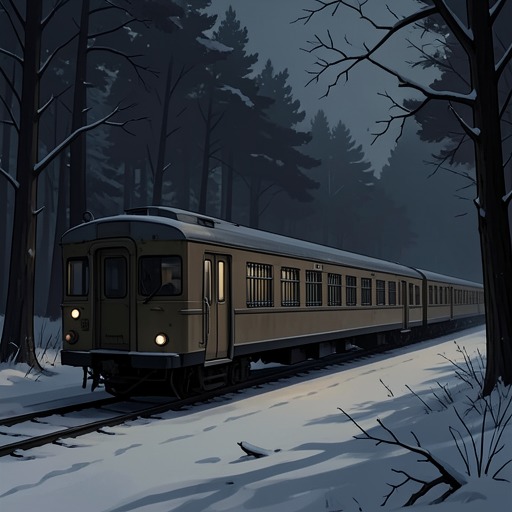
During the journey, the father feared that every halt might bring a separation or death. When the train slowed in snow, he understood that he could not feed both babies. He took the child nearest him without choosing between the boy and the girl, wrapped the child in his prayer shawl, and prepared to pass the baby through the bars of the window. Dinah, the twins’ mother, held the other child close. The narrative presents the father’s act as a terrible choice made under conditions in which neither child could be assured of safety.
The baby thrown from the train is first treated as a little boy by the people who find her. When the Poor Woodcutter’s Wife insists that the child is a girl, the Poor Woodcutter recognizes that she is right and returns the baby to her. The infant’s sex is thus disclosed within the scene, and the foundling becomes Rose, the rescued twin. Her brother Henri remains with Dinah. The later account says that Dinah, registered under the provisional name Diane, and her child Henri were taken into the fate of those selected for deportation; Rose’s survival therefore begins with a separation that saves her while destroying the family she was born into.
A Child Sustained by Care
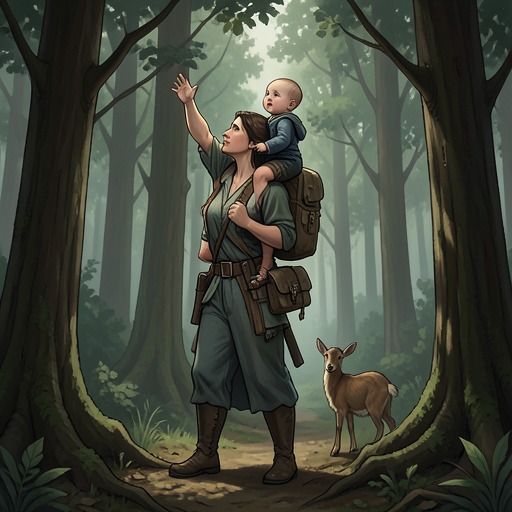
The Poor Woodcutter’s Wife takes the crying infant into her scarves and holds her against her chest. The child is desperately hungry, and the adoptive mother experiences the joy of becoming a mother alongside the immediate fear that she has no milk. At home she lights a fire, boils water, and tries to feed Rose buckwheat porridge. The baby sucks eagerly from her finger but spits out the bitter food. These first attempts make the child’s survival a practical problem, not a fairy-tale instant of effortless rescue.
The Poor Woodcutter’s Wife knows Rose cannot thrive without milk. She carries the baby, wrapped in the shawl that came with her, into the secret part of the forest where the Man with the Goat and Shattered Face lives. She offers to bring firewood every day, in winter and summer, in exchange for two mouthfuls of milk. He agrees to help, though he tells her that the milk must initially be diluted with boiled water and supplemented with porridge, then fruit and vegetables in spring. The Poor Woodcutter’s Wife receives Rose back, tries to kiss his hand in gratitude, and is told to rise and not kneel to him.
The exchange becomes a daily routine: each morning the Poor Woodcutter’s Wife brings a bundle of firewood and receives a warm cup of milk. The Man with the Goat and Shattered Face asks that his gift remain secret, but his goat’s milk keeps Rose alive. At first she is never fully satisfied; she puts anything she can into her mouth and, once stronger, cries without restraint. Her later vigor carries the trace of that early hunger. The milk is not a single miraculous cure but a resource secured through repeated labor, practical instruction, and the cooperation of the woman who raises her and the man who shelters her.
When danger later forces the Poor Woodcutter’s Wife to leave with Rose, the Man with the Goat and Shattered Face receives the child in his arms and leads them through the forest. They reach a hidden garden the adoptive mother has never seen. There, fruit and flowers seem to turn toward the child. The scene enlarges Rose’s refuge from a cup of milk exchanged at the forest’s edge into a place of shelter and abundance, while preserving the story’s emphasis on human care: the man carries her, and her mother follows.
Recognition After the War
After the war, Rose’s father wanders through towns and forests, unable to settle on what he is seeking. Public celebrations mark liberation, but he remains in mourning for his wife, children, parents, and in-laws. Hunger brings him to a small table displaying cheeses on an unusual cloth threaded with gold and silver. Behind it sits the woman who has raised Rose, with the child in her lap and a goat beside them.
Rose encourages the stranger to try the cheese and indicates that it was made from the goat’s milk. Her father understands who she is: his daughter, the child thrown from the train and the child he had saved. He reaches toward her cheek, but Rose takes his hand and presses it to her lips before laughing. He pulls his hand away. Her gesture is affectionate, yet she does not know him as her father; the encounter gives him recognition without restoring their former relationship.
He watches Rose with her adoptive mother, then leaves without disclosing his identity. He believes he has nothing to offer her and does not want to upset the happiness he sees. The decision lets Rose continue her life with the woman she knows as her mother, but it also makes the father’s rescue end in another separation, this time chosen rather than imposed. The narrative never confirms whether he returns or whether Rose learns who he is.
Later Life and Narrative Significance
Rose grows up to become a young pioneer. She wears a red scarf and a red star pinned to a white blouse, and her photograph appears on the cover of a magazine, where she looks radiant because the photographer asked her to smile. The magazine identifies her as Maria Tchekolova and presents her as a deserving pioneer, the daughter of a poor woman who has become a cheesemonger. The adult image gives her a public identity and a visible future far removed from the nameless, starving infant passed through the forest.
Her father later sees the photograph while visiting the country each year to commemorate the liberation of the camp that took his wife, Henri, and other relatives. He thinks he recognizes his wife and his own mother in Rose’s image and writes to the magazine Youth and Joy in an attempt to contact Maria Tchekolova. The account does not establish whether his effort succeeds. Rose’s ending therefore remains deliberately open: she survives, grows up, and appears to flourish, while the possibility of reunion stays outside the narrator’s knowledge.
Rose’s story turns rescue into an ongoing relationship rather than a single heroic deed. Her father’s act makes survival possible, but the Poor Woodcutter’s Wife’s daily labor and the goat’s milk sustain it; the Man with the Goat and Shattered Face supplies shelter and practical help. Rose’s later happiness does not erase the loss of Henri or her birth family, and the father’s recognition does not resolve that loss. Instead, the story holds two truths together: she was saved by an act of love under unbearable pressure, and the life that followed became hers through the care of people who were not her birth parents.