The Holocaust
The Most Precious of CargoesThe Holocaust is the historical catastrophe behind the novel’s fable, shaping its trains, camps, separations, and losses. Rather than treating persecution as distant background, the story brings its machinery into the lives of a family deported from France and a child who survives because strangers choose to care for her. Against the scale and impersonality of mass murder, the novel sets intimate acts of feeding, sheltering, and remembrance—and a persistent question about whether deliverance comes from divine powers or human hands.
Historical frame and chronology
The narrative places its family’s ordeal within the deportation of Jews from France. After being transported from Pithiviers to Drancy internment camp, the parents and their twins, Henri and Rose, have so far remained together while other internees are taken away. The father believes the twins have helped preserve this brief interval of family unity. At Drancy, his nearly completed medical studies, with a specialty in eye, ear, nose, and throat surgery, do not lead to medical work: because the camp already has many doctors and patients, the Jewish administration gives him a job as a barber. Drawing on his observations of his father’s scissors, he becomes skilled enough to pass as a professional. He cuts hair for as long as the French National Gendarmerie guards the camp.
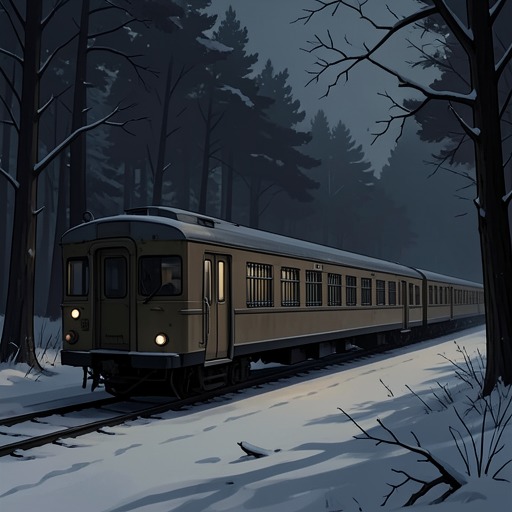
The story gives deportation a precise date and route through Convoy 49. The train leaves Bobigny-Gare, near Drancy, on March 2, 1943, and arrives on the morning of March 6 at its destination, which the narration calls a pit of hell. The Poor Woodcutter’s Wife does not see the train return empty or witness later convoys: she is absorbed in caring for the baby she has taken in. This contrast between a railway system moving people toward death and one woman’s attention to a single child makes the larger history present through sharply different scales of experience.
Bureaucracy, selection, and the processing of people
At the convoy’s destination, deportees undergo a selection process conducted by qualified doctors. The selectors retain only 10 percent—described as a hundred out of a thousand—while the elderly, men, women, children, and people deemed infirm are rejected and killed. The narration’s language of a delivery and its rejects exposes the violence concealed by administrative classification: human beings are handled as consignments, sorted according to usefulness, and disposed of when they do not meet the selectors’ criteria.
The father’s barbering continues within this system of exploitation. He shaves the deportees and gathers blond, dark, and red hair into bales, which join thousands of others. The hair is shipped to the land of the conquering generals to be made into wigs, finery, upholstery, or floor cloths. The ordinary sequence of work—shaving, gathering, sorting, packing, shipping—renders atrocity as an organized supply process. Its routine does not make the violence less extreme; it shows how violence is extended through assigned tasks and the treatment of human remains as usable material.
Faith, care, and the meaning of rescue
The story’s religious language begins before the child arrives. The Poor Woodcutter’s Wife prays to heaven, the gods, the wind, rain, trees, and sun for a child, then comes to feel that all the powers of heaven, earth, and magic are conspiring with her husband to deny her one. When she finally receives the baby, she feeds her cooking water and kasha, soothing her with a lullaby that calls her little cargo and her own child. The scene gives the child’s survival a material beginning: thirst is quenched, hunger is eased, and an adult holds and comforts her.
The Poor Woodcutter’s Wife later tells the Man with the Goat and Shattered Face that the child was entrusted to her by the god of the cargo train. When he points out that this supposed god provided no milk, she insists that the child will live if he helps feed her, and that the gods will be grateful and protect him. His reply is shaped by his own injuries and distrust; divine protection, he says, has already been more than enough. The exchange leaves religious belief in contention rather than offering a simple explanation for suffering. The child’s immediate need is not answered by an argument about providence but by the practical help she asks him to give.
After the Man with the Goat and Shattered Face is killed, the Poor Woodcutter’s Wife recognizes that the child’s survival was not thanks to the train gods, but to the hand that dropped her into the snow and to the righteousness of the man who sheltered and fed her. She covers his body with blossoming branches and prays for the peace denied him in life, while admitting in her own thoughts that she no longer trusts the train gods. Her conclusion relocates the meaning of rescue from supernatural promise to human action: the drop from the train, perilous as it was, made survival possible, and the man’s care sustained it.
Collapse, liberation, and continuing trauma
As the trains cease to run, the supply of shaved heads ceases too. The father, now a former barber and former father of twins, collapses under starvation, sickness, and despair. Nearby survivors urge one another to hold on and listen for the distant cannons; one comrade says that the Reds are coming and the Death’s Heads will end up shitting in their boots. The arrival of the Soviet Red Army is anticipated as the end of the guards’ power, but the story does not present that prospect as a simple release from suffering.
The Death’s Heads force surviving prisoners to dig trenches in the snow and burn the piled-up corpses, while hastily destroying the crematoria in an effort to erase evidence of their crimes and eliminate witnesses. Hair already packed for shipment is left behind beside mountains of spectacles and heaps of clothing belonging to men, women, and children. The abandoned materials reverse the earlier image of efficient processing: the same regime that gathered, sorted, and shipped human remnants now rushes to destroy the traces of its own operations.
The father’s physical collapse is bound to the memory of his own act of separation. Delirious as he walks and digs in the snow, he relives the moment he tore one twin from his wife’s arms and threw the child from the train. He asks himself why he did not accompany his wife and both children to the end of the journey. Two fellow prisoners drag him into a nearby shack so he will not be thrown, still half alive, into the flames. The rescue preserves his life but does not undo his loss or the guilt that haunts him; survival remains entangled with a choice made under impossible circumstances and with the family he believes he has lost.
Records, fable, and historical memory
The novel’s historical frame is joined to documentary memory in its appendix. It cites the Memorial to the Deportation of Jews from France, compiled by Serge Klarsfeld in 1978 from alphabetical lists of deported Jews, and gives the example of Abraham and Chaja Wiesenfeld and their twin daughters, Fernande and Jeannine. Born in Paris on November 9, 1943, the twins were deported from Drancy on December 7, twenty-eight days after their birth, on Convoy 64. This archival detail places the fictional child’s peril beside recorded cases of families and newborn twins caught in deportation.
The translator’s note describes the book as a fable interwoven with allegory and history, love and loss, and the shadow of the Shoah. Its fairy-tale language—cargo-train gods, a precious shawl, and a child entrusted to a woodcutter’s household—does not remove the historical violence; it creates a form through which intimate acts can be held against it. The account of Convoy 49, camp labor, selection, forced burning, and material traces keeps that fable answerable to history. The result is a narrative in which prayer and providence are repeatedly tested, while care, risk, and remembrance remain visible as human responsibilities.