Zacharie Grumberg
The Most Precious of CargoesZacharie Grumberg is a father, a nearly trained doctor turned camp barber, and a survivor whose attempt to save his family leaves him with a choice he cannot stop reliving. Deported on Convoy 49, he endures hunger, forced labor, and the destruction of those around him; after liberation, survival becomes an obligation to find his daughter, though the remembered moment of separation shadows that search.
Identity and Background
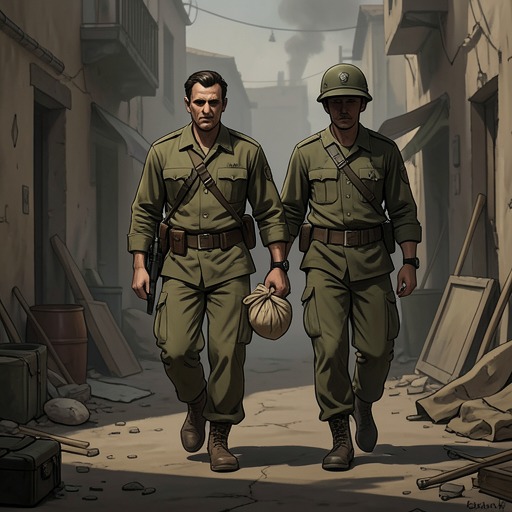
Before internment made ordinary plans impossible, Zacharie had almost completed medical studies, specializing in eye, ear, nose, and throat surgery. At Drancy, however, he was told there were already many doctors and many patients, while two camp hairdressers had recently left. He accepted work as a barber instead. The shift was not a simple change of trade: it placed the trained medical student in a precarious job fashioned from the camp’s immediate needs, and made his ability to earn a place there depend on a skill learned at home.
Zacharie had watched his father cut hair with scissors, first clicking them in the air and then making a decisive snip at a stray lock. He carried that remembered technique into the camp and became convincing enough that professional barbers took him for one of their own. His skill gave him work for as long as French gendarmes guarded the internees. When they were replaced by the Germans, his customers dwindled to members of the administration and a few desperate internees. To them he repeatedly offered reassurance that he could not guarantee. The barber’s practiced hands and calming assurances thus served people trapped in a system that offered no reliable safety.
Fatherhood in Drancy
Zacharie and Dinah’s twins, Henri and Rose, were born in the spring of 1942, when their parents were already confronting the danger of bringing Jewish children into the world under the yellow star. Zacharie had considered an abortion before knowing there were two children; Dinah, after much thought, chose to keep them. Their birth brought joy, but the babies were immediately registered, classified, marked, and hunted. Their cries could be calmed only by their mother, who was full of milk and hope.
The twins also seemed to offer a fragile protection. While the family was transported from Pithiviers to Drancy, Zacharie believed their continued unity was owed to the presence of the children. He and Dinah even spent Christmas 1942 together in the internment camp. The family’s reprieve did not last. Drancy’s conditions dried up Dinah’s milk, and she lay on the floor of a cattle wagon on the woolen Pyrenean shawl she had been allowed to keep, trying to soothe one crying baby while the other whimpered. Her parents had departed, and there had been no word from them; Zacharie’s father had also left. The twins, once a reason to hope the family might remain together, now made the danger of separation immediate.
Deportation and the Fatal Decision
In the wagon, after two days of travel, Zacharie watched the twins try to suckle at Dinah’s dry breasts. He had understood fatherhood as a duty to protect them and had repeatedly pressed the camp administration on their behalf. Now the stench, exhaustion, and deliberate degradation of the transport left him feeling powerless, but he could not accept doing nothing. The narrative presents his response not as a calculated escape but as a desperate attempt to find a way to save his children.
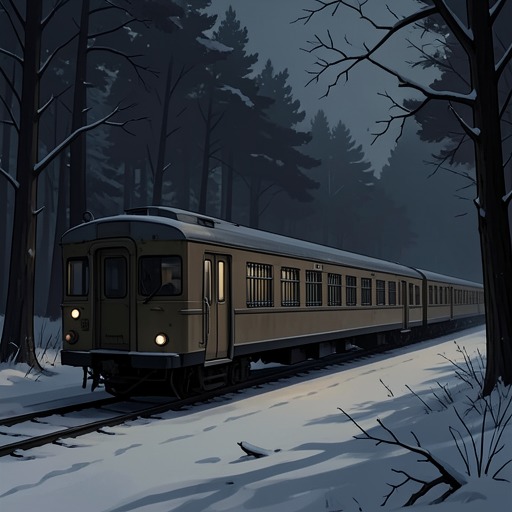
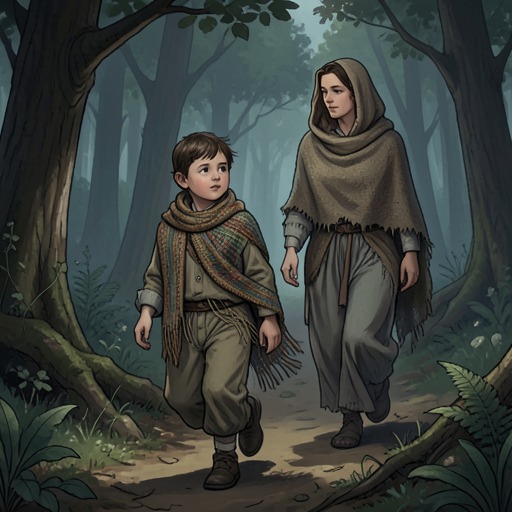
At the moment when he tore one twin from Dinah’s arms and threw the child from the train into the snow, he separated his family in the hope that the child might live. The act becomes the defining wound of his later life. In the forced labor and collapse that follow, he remembers it again and again: the train, the snow, the forest, the prayer shawl, the old woman, and Dinah turning away. His mind returns to the counterfactual that torments him—whether he should have stayed with his wife and children rather than making the frantic gesture. The choice is preserved as an act of love under catastrophic constraint, but the narrative does not soften its cost or allow him to escape its moral weight.
Collapse, Survival, and Search
When the trains ceased to arrive, the work that had defined Zacharie’s life in captivity ceased with them. He was now a former father of twins, former husband, and former shaver of heads, overcome by starvation, sickness, and despair. The Death’s Heads forced prisoners to dig trenches in the snow and burn the accumulated corpses as the crematoria were destroyed. Hair prepared for shipment, along with spectacles and heaps of clothing, lay abandoned. Zacharie himself was near death; two comrades dragged him into a nearby shack so that he would not be left outside.
A young soldier among the Reds found that Zacharie was still alive, gave him water and biscuits, and carried him out of the shack. In the spring landscape, grass and small white blossoms had replaced the snow and boots; a bird’s song and the tears that returned to his eyes marked his recognition that he was alive. The change in his condition did not erase what had happened. Rather, the possibility that his daughter might also have survived gave survival a new demand: he had to do everything in his power to find her.
Zacharie set off on foot behind the Reds, collapsed from starvation outside a church, and was helped by a priest who fed him and prayed for him. He walked on until he reached a reunification camp for refugees and displaced people. His gaunt appearance and the number tattooed on his forearm served as his passport, and he found room and board there. Yet the camp did not bring inward peace. He continued to relive the separation and to see Dinah’s eyes as she turned away from him. The search for his daughter therefore begins in hope, but remains bound to guilt and the irreparable loss of his family’s former life.
Historical Identity and Narrative Role
The book identifies Zacharie as the author’s father and records that he was among the 1,000 Jews carried on Convoy 49, which left Drancy on March 2, 1943. This historical identification anchors the character’s fictionalized scenes in the documented deportation of Jews from France. His movement from barber to prisoner on the edge of death, and from despair to a search for his daughter, is not a recovery from trauma so much as a continuation of responsibility after catastrophe. The narrative’s repeated return to the train and the snow makes the rescue attempt both an action taken to preserve life and an enduring source of suffering; survival gives Zacharie a future task, but does not restore what the decision and the deportation have taken from him.