Çukurcuma neighborhood
The Museum of InnocenceÇukurcuma neighborhood becomes the center of Kemal’s life with Füsun after their separation: for nearly eight years he returns to her family’s supper table, where meals, television, paintings, and small household objects give repetition the force of a private world. The neighborhood is at once a refuge from Istanbul’s political violence and a space in which that violence can never be kept entirely outside. When Tarık Bey dies, the routines that had sheltered Kemal and Füsun become difficult to sustain; later, the house and its contents draw Kemal back as tangible remains of their shared life.
Setting and Duration
Kemal’s regular visits began on October 23, 1976, eleven days after Nesibe the seamstress had welcomed him to come on any evening. His final supper with Füsun and Nesibe in Çukurcuma was on August 26, 1984. Across those seven years and ten months, 2,864 days passed; Kemal’s notes counted 1,593 suppers in 409 weeks, an average of about four visits a week. The visits were not evenly spaced: he sometimes saw the family every day, while at other times he stayed away in the hope of forgetting Füsun. Yet he never went more than ten days without seeing her, because longer absences brought back the misery he had endured in autumn 1975.
The family’s welcome gradually became routine rather than ceremonial. They kept a place for Kemal at the table and learned when he was likely to arrive; he, in turn, worried that either appearing or staying away might cause offense. The ordinary label of guest did not fully describe his presence, so the family settled on a euphemism for his visits: he came to sit. The neighborhood’s importance thus grew through repeated passage between the city and one particular household. What began as a return to see Füsun became a dependable schedule shared, in different ways, by everyone at the table.
Domestic Time and the Supper Table
The Keskin family home held two competing measures of time. A German-made wooden and glass wall clock, with a pendulum and chime, hung beside the door. It represented the continuity of the world outside, though television was increasingly taking over the work of marking the day. The clock’s place in the house carried a wider history: such clocks had become fashionable among Istanbul’s Westernized and wealthy households in the late nineteenth century, then spread among the middle classes as the Republic looked westward. By the mid-1970s, televisions had altered domestic routines, and the old clocks were losing their practical importance even as they continued to tick.
In the Keskin household, television was the more immediate timekeeper. At seven each evening, the screen displayed a large clock shortly before TRT’s news. Füsun checked her wristwatch while Tarık Bey consulted one of his pocket watches, and Kemal watched her carefully set the time. The broadcasts also supplied a nightly structure to his visits: he usually arrived around seven and stayed until the closing ceremony, shortly before midnight. He estimated that an average visit lasted about five hours, though he often tried to persuade himself he had left earlier. The four-minute ceremony of marching soldiers, the raised flag, and the national anthem finally made the hour unmistakable.
Repeated evenings in Çukurcuma came to feel detached from ordinary chronological time. Meals, conversations, glances, and excursions to the Bosphorus recurred, sometimes into winter, with each visit echoing an earlier one. The family’s routines gave Kemal continuity and a sense of peace, even while the outside world changed. Small incidents shaped that domestic rhythm: the clock’s chime could interrupt a conversation, and Füsun might move between the kitchen and dining area with plates or pots while her parents watched a film, quiz show, or news report. Kemal experienced her movement not as an obstruction to the television but as the scene that mattered most.
Objects, Painting, and Repeated Scenes
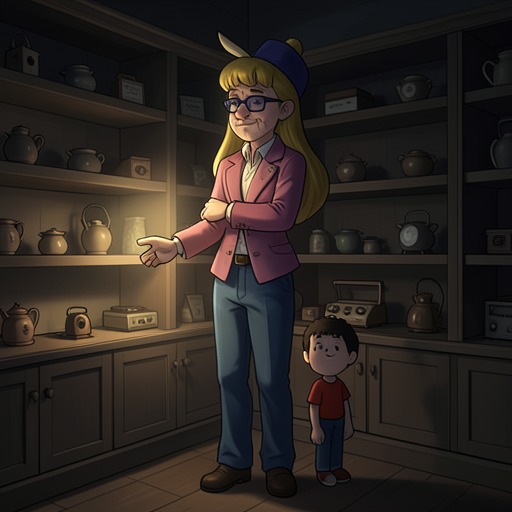
After supper, the family often moved to the back room. Nesibe the seamstress brought out her knitting and watched television; she allowed Kemal and Füsun some time alone there, but did not let a suspiciously long interval pass before following them. The household’s familiarity resided in such practical details as much as in its conversations. Kemal associated the rooms with the Uşak carpet’s brick-red dye, cloth and buttons, old newspapers, Tarık Bey’s reading glasses, ashtrays, and Nesibe’s knitting. At the end of a visit, he sometimes pocketed a thimble, button, or spool. Back at the Merhamet Apartments, these objects helped him recall the room and prolong the happiness he had felt there.
Füsun’s slowly developing paintings became another focus of shared attention. Kemal, Füsun, and Feridun looked at photographs of Istanbul’s birds and discussed what she might paint next: a hawk, dove, or swallow. As the film project they hoped to make remained delayed, this gradual work offered a different kind of progress. Kemal found security in watching the pictures take shape and in the ordinary room around them. Later, the dove was finished and Füsun had begun painting a swallow. Such changes were small, but their slowness belonged to the household’s recurring life rather than to the ambitions that remained indefinitely postponed.
The pattern also included silences and interruptions that did not need to become exceptional to matter. A car might clatter down the hill; rain might sound at the windows; someone might add coal to the stove or make tea. Kemal discreetly watched Füsun’s hand, and sometimes she yawned as if absorbed in a quieter world of her own. Television commercials placed everyday food on the screen while the family ate it, folding the broadcast into the meal. In this accumulation of repeated gestures, Çukurcuma is not merely a backdrop: its rooms and belongings make shared time perceptible, and give Kemal a way to remember evenings he could not keep unchanged.
Political Violence and the Limits of Refuge
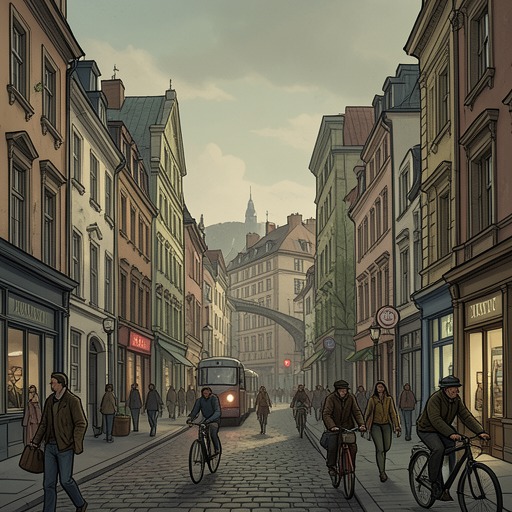
The calm of the Keskin home existed beside increasingly dangerous streets. By 1978, bombs were exploding at night, and neighborhoods around Çukurcuma were divided among competing political factions. Tophane and Karaköy were described as controlled by nationalist groups; around the crooked streets toward Cihangir, workers, students, and petty bureaucrats were sympathetic to Kurdish, Alevi, and left-wing factions. Armed clashes could erupt over control of a street, coffeehouse, or small square, sometimes after a bombing. The violence made the drive home hazardous as well as the visit itself.
Çetin Efendi was often caught in the crossfire and had to judge where to park or wait. He refused Kemal’s suggestion that Kemal go to the Keskin home alone. At night, after supper, they passed streets where people put up posters, pasted notices, and scrawled slogans; Kemal and Çetin exchanged fearful looks in the mirror. The news brought accounts of bombings, killings, and massacres into the household, but the family often preferred to talk about the television presenter or another less frightening subject. Home could offer a feeling of safety, but it could not remove the danger surrounding the neighborhood.
The military coup of September 1980 imposed martial law and a ten o’clock curfew. Kemal then had to leave at a quarter to ten, before his visits had satisfied his desire to remain with Füsun. The rushed drive through dark, rapidly emptying streets sharpened the frustration of an evening cut short. The curfew imposed official time on a private routine that had been organized around lingering at the supper table. In retrospect, Kemal remembers the restriction not only as a political measure but as a deprivation of time with Füsun.
Loss and the House as a Place of Memory
On March 9, 1984, two months after Füsun obtained her driver’s license, Kemal arrived at the house to find its windows and curtains open and its lights on, contrary to Nesibe’s customary concern about wasted electricity. The supper table was empty and there was no food. Two neighbors sat before the television, where an actor appeared in costume, until one of them told Kemal that Tarık Bey had died. Kemal went upstairs to Füsun’s bedroom. She was doubled over and crying; when she saw him, they embraced, and she wept against his neck and chest. His happiness at holding her was inseparable from the sorrow of her grief.
In the days after the funeral, Kemal went to Çukurcuma early each evening, but the household no longer felt as it had. Tarık Bey had been the person most able to pretend not to see the relationship between Kemal and Füsun. Without him, the family could not return to the comfortable, partly rehearsed routines of the preceding eight years. The shared suppers had once offered a form of continuity; his death exposed the unease that the routine had helped contain.
After the first tearful visits, Nesibe told Kemal he could go upstairs to Füsun’s room whenever he wished and take as much as he wanted. His visits became less frequent, but remained ritualized: he checked the food and water in Lemon’s cage, watched television with Nesibe, looked through Füsun’s bird pictures, and then went upstairs to her room and opened her drawers and cupboards. After returning from Paris and its museums, he told Nesibe he wanted to buy the house itself, the entire building, along with all its contents. The request gave the neighborhood home a new significance: it was not only the setting of the years he had spent with Füsun but also the place whose rooms and objects he hoped to preserve together.