1956 Chevrolet
The Museum of InnocenceThe 1956 Chevrolet is the car that carries Kemal and Füsun’s family on their European tour, becomes the scene of their final journey together, and survives as a wreck that Kemal brings back into his life. Its meaning changes with its condition: first a vehicle for travel and renewed intimacy, then the instrument and remnant of catastrophe, and finally a possession Kemal wants to live beside. The car’s passage from road to wreck to collection gives physical form to the novel’s movement between shared experience and preserved memory.
The Car on the European Journey
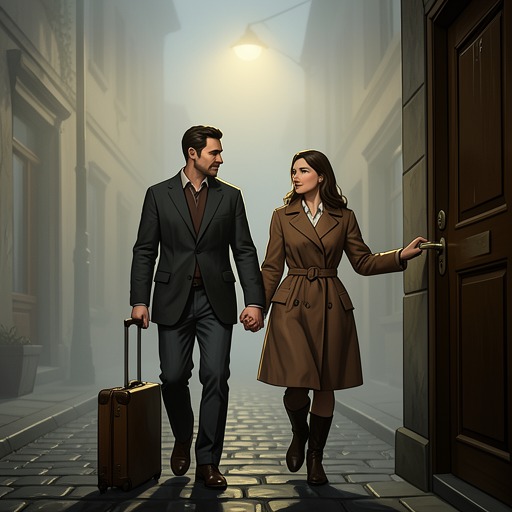
On the road through Thrace, the Chevrolet carries Kemal, Füsun, Nesibe, and Çetin Efendi on a trip whose slow progress makes Kemal imagine that the European tour could last for months. At the Çatalca exit, Çetin fills the tank while Füsun and Nesibe buy local fol cheese from an old roadside seller. The group stops at a neighboring teahouse for tea and simits and eats the improvised meal together. For Kemal, sitting across from Füsun brings back the sweet bodily impatience of early love, distinct from the corrosive pain of the years when his love went unanswered. The car is thus part of an ordinary, shared day as well as the vehicle carrying the couple toward their anticipated future.
As evening falls, the journey becomes more difficult. At 7:40, the setting sun shines into the travelers’ eyes; after Çetin turns on the headlights, Nesibe urges everyone not to drive in the darkness. Trucks on the two-lane road approach without dimming their lights. Just past Babaeski, Kemal notices the Grand Semiramis Hotel’s blinking purple neon and asks Çetin to slow down. They turn in front of Türk Petrol, where a dog barks as they approach. The car stops outside the hotel, and Kemal understands the place as the end point of nine years of longing: he believes that his dreams are about to come true. The Chevrolet has brought them to a night that seems to promise the completion of their reunion.
Füsun Takes the Wheel
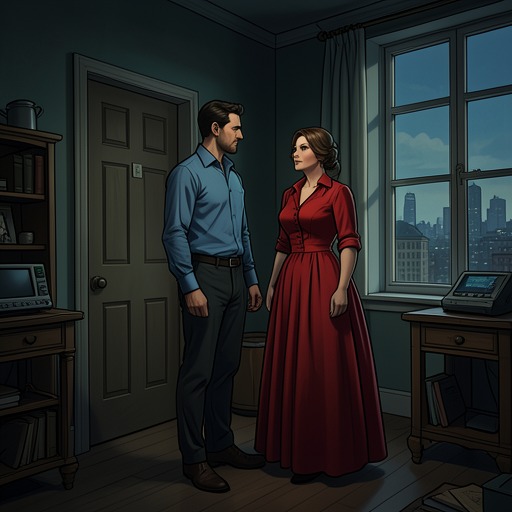
At the hotel, the family is given separate rooms: one for Füsun and Nesibe, one for Çetin Efendi, and one for Kemal. Later, Füsun insists on driving the car back to the hotel. Kemal stops and changes places with her, kissing her against the hood before she gets in. The scene joins the car to both the couple’s physical closeness and the driving lessons that preceded the journey. Füsun starts the engine carefully, releases the handbrake, and eases the Chevrolet onto the road, resting her left arm on the open window in a pose Kemal compares to Grace Kelly in To Catch a Thief.
She tries to make a U-turn where the main road meets a muddy country lane, but cannot complete the maneuver and the car stops. As they continue, the dog is ahead in the road. Füsun honks, and the Chevrolet jerks first right and then left. It then begins to travel straight, but no longer along the road. Kemal sees that it is heading not toward the hotel but toward a plane tree. The loss of control transforms the car’s familiar role: it is no longer carrying them toward a shared destination but moving them toward an impact Kemal believes cannot be avoided.
The Crash and Its Delayed Memory
Kemal’s account makes the crash both a physical event and a remembered threshold. He understands the car’s approach to the tree as the end of their allotted happiness and feels that his future cannot be separated from Füsun’s. He shouts a warning, although he recognizes that Füsun can see what is happening. The Chevrolet, his father’s twenty-five-year-old car, hurtles into the plane tree on the left side of the road. Beyond it stands a small factory producing Batanay sunflower oil, a brand the Keskin family uses and that Kemal and Füsun had noticed from the car shortly before the accident.
The narrative does not present Kemal’s knowledge of the immediate aftermath as complete. Months later, when he finds the wreck, he recalls a dream in which Füsun and he looked into each other’s eyes just after the collision. In that recollection, Füsun’s pleading gaze tells him that she does not want to die and is still hoping he can save her. Kemal, believing himself to be dying too, smiles at his fiancée and feels glad to be going with her. He says that memory of what followed eluded him during months in hospital and for years afterward; what he can recount depends on other people’s reports and what he learns on returning to the site. The car’s ruined remains therefore mark not only the accident but the boundary between what Kemal remembers and what he must reconstruct.
Recovery and the Museum
After returning to Istanbul, Kemal follows Çetin’s directions to a Chevrolet specialist’s garage in the streets behind Maslak. The wreck stands in an empty lot beneath a fig tree, its trunk open as chickens wander through it and children play nearby. Şevket Usta tells Kemal that some parts were salvageable: the gas cap, gearbox, and rear-window handle have been sold to owners of other 1956 Chevrolets. The model is common enough in the city that many taxis are now the same kind. This circulation of parts contrasts with the singular force the damaged car holds for Kemal: components have entered ordinary use, but the particular vehicle remains bound to his memories of Füsun.
Looking into the wreck, Kemal sees where the fuel gauge, speedometer, radio knobs, and steering wheel once sat in mint condition. He touches the steering wheel, which seems almost as old as he is, and the intensity of the memories overwhelms him. It is the first time since Füsun’s death that he has nearly cried in public. After tea and some bargaining, he and Çetin buy the car back. Kemal says that he wants to spend the rest of his life under the same roof as it; when he explains that he will bring together the things stored in the Merhamet Apartments and spend his remaining days among them, the car becomes part of a larger collecting project.
Kemal has already considered museums made from collectors’ homes, including those of Gustave Moreau, and has traveled extensively among museums. His intention to keep the Chevrolet is not simply a wish to restore it as a functioning car: the wreck is one of the objects through which he can remain among the dead and preserve the past that it physically witnessed. He ultimately places the car within the horizon of the Museum of Innocence, where damaged material remains can hold the story of a life without undoing its loss. The Chevrolet’s final significance lies in this conversion: a vehicle that once carried Kemal and Füsun together becomes a fragment of their time that he can keep under one roof.