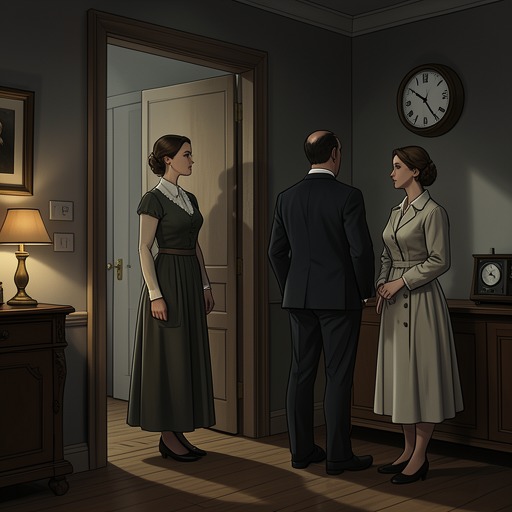
Ceyda
The Museum of InnocenceCeyda is Füsun’s close friend from the beauty contest, a trusted keeper of her confidences, and the person Kemal turns to when he cannot reach Füsun directly. She carries his letters, offers him news without surrendering Füsun’s privacy, and later supplies memories and photographs that deepen his understanding of the past. Her role is modest in outward action but decisive in the story’s movement between separation, hope, and recollection.
Background and the beauty contest
Ceyda and Füsun knew each other through the Milliyet National Beauty Contest. In an interview preserved with Ceyda’s official contest photograph, she described her ambition as a happy marriage to an ideal partner. Years later, she donated the photograph to Kemal’s museum, allowing an image of her younger self—and the hopes attached to it—to become part of the public record of his story. The clipping gives her an independent presence beyond her role as Füsun’s friend: she, too, once imagined a future shaped by romance and marriage.
When Kemal seeks her out, Ceyda is pregnant and preparing to marry the wealthy, conservative Sedirci son. She speaks openly about the approaching wedding and her happiness. Her circumstances sharply contrast with Kemal’s uncertainty: while he is searching for Füsun and trying to recover a relationship he has lost, Ceyda is moving toward a socially recognized family life. Her answers about Füsun’s whereabouts are evasive. Kemal suspects that Füsun has warned her, but Ceyda does not disclose where her friend is or provide the access he wants.
Confidante and intermediary
Ceyda nevertheless agrees to help Kemal. He is ashamed of the letter he has written to Füsun and fears that sending it through the post would allow her mother to intercept it, so he asks Ceyda to deliver it. Their meeting at Maçka–Taşlık gives him room to speak about his suffering without the embarrassment he expects elsewhere. He regards Ceyda as mature and understanding, and her willingness to listen encourages him to imagine that reconciliation remains possible.
Ceyda’s own account of love is serious, but her assistance does not amount to a promise that Füsun will return. When she agrees to pass on the letter, Kemal invests the gesture with hope and imagines that it will lead to marriage and a shared family life. The ordinary setting around their walk—families, children, students, and people sitting together—also recalls to him the value of everyday life. Ceyda becomes the point at which his private longing briefly reconnects with a future he can picture, though that future is largely his own projection.
After another two days, Kemal meets Ceyda again and gives her a letter in a yellow Satsat envelope. He has written four or five versions and chosen the most restrained. Rather than explain its contents at once, he presents it as an urgent matter that Füsun must receive. He eventually tells Ceyda that it concerns something that had angered Füsun and that the news should make her happy. He has ended his engagement and speaks confidently of marrying Füsun and raising a child who could grow up alongside Ceyda’s son, Ömer. Ceyda answers with a caution that life does not always follow people’s wishes. Her words puncture the certainty of his imagined resolution without preventing him from hoping.
The letter explains that Füsun’s missing earring has turned up among Kemal’s father’s belongings and that he wants to return it, along with the other earrings he had tried to give her and a tricycle. Kemal sees the message as an opening to the long-planned dinner with Füsun’s parents. When weeks pass without a reply, he continues to believe that Füsun will answer, partly because Ceyda has confirmed that she knows he has broken off his engagement. Ceyda has carried the message, but she cannot control its reception or outcome.
Later testimony and shared memories
Six months before Kemal’s death, he introduces Ceyda to the narrator as Füsun’s closest confidante. The narrator considers her someone who knows Füsun’s secrets and understands Kemal unusually well. By then, Ceyda’s sons are grown, both are engineers, and her family includes seven grandchildren. Her husband, the Sedirci son she had once described as her prospective husband, is much older; he shows little interest in the story she and Kemal discuss.
Ceyda recounts a secret about the first evening Kemal visited the Keskin home. Füsun found the earring he had left in the bathroom, but she and Ceyda decided that Füsun should pretend not to know about it in order to punish him. Kemal had already learned this from Ceyda years earlier. The disclosure shows the intimacy of the friendship: Füsun shared the discovery immediately, and the two women made a decision together about how to respond. It also revises the meaning of Kemal’s long search for the earring. What he experienced as a lost object and a possible route back to Füsun had been known to her from the beginning.
Ceyda’s recollections also restore details Kemal had not seen. She produces a photograph from the 1973 Milliyet National Beauty Contest finals showing Hakan Serinkan whispering to Füsun the cultural questions she would be asked onstage. Ceyda recalls that neither she nor Füsun advanced, but that they remained good lycée girls and laughed together that night. Kemal turns pale and falls silent when he sees the photograph. At the end of the evening, Ceyda gives it to him, recognizing its importance to his private history even when her husband has little interest in the contest story.
Narrative role
Ceyda links the beauty-contest past to Kemal’s later attempts to find Füsun, and then links both periods to the museum’s collection of evidence. Her repeated meetings with Kemal at Maçka–Taşlık become associated with his view of Dolmabahçe; he later discovers that he has accumulated many photographs of that scene. The location thus records not only his longing for news but the repeated shape of his encounters with Ceyda.
Her help is real, but the story preserves the limits of what she can do. She listens, carries letters, keeps confidences, and eventually offers photographs and recollections; she does not speak for Füsun or guarantee Kemal the reunion he imagines. Ceyda’s combination of compassion and reserve makes her more than a messenger. She is a witness whose memories expose the difference between Kemal’s hopes and the choices made by the women whose lives he tries to recover.