Chinese porcelain dogs
The Museum of InnocenceChinese porcelain dogs are domestic ornaments whose changing place in the Keskin family’s home traces both ordinary household life and Kemal’s increasingly compulsive attachment to Füsun. First noticed atop a television on Kuyulu Bostan Street, the figures become a recurring presence: arranged among lace, cigarette boxes, and other small objects, quietly removed and replaced, and finally incorporated into the collection that Kemal brings to his museum.
Domestic placement and household history
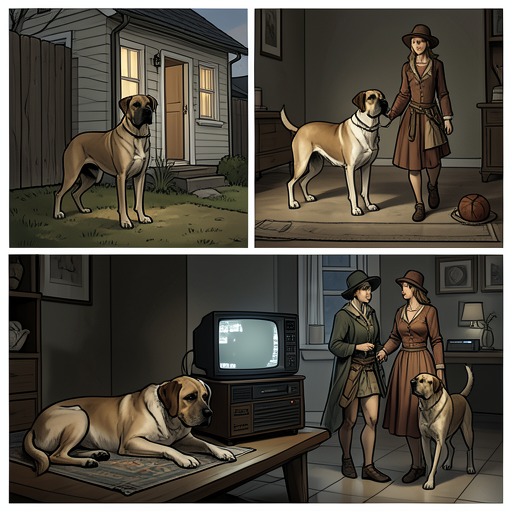
The first dog Kemal notices in the Keskin apartment had occupied a place atop the family radio before television arrived in Turkey. As the family’s attention shifted to the television, the dog moved with it, retaining a position within the room even as the household’s central appliance changed. It sat on a handmade lace doily, sometimes beside a small vase or a seashell. On one occasion Füsun held the television’s shell to Kemal’s ear so he could listen to the faint sound inside it; at other times, a cigarette box or ashtray helped determine where the dog stood.
The arrangements made the figure part of a lived-in domestic scene rather than an isolated decoration. Kemal suspects that Nesibe the seamstress tended to these small groupings, which could make the dog seem poised to nod or pounce on an ashtray. A second dog later joined it, guarding another cigarette box. In December 1979, while the family waited for dinner, Kemal watched Füsun shift the original dog with an impatient flick of her wrist. The brief gesture caught his attention precisely because it altered an object that otherwise belonged to the room’s familiar background.
Attention, disappearance, and replacement
The dogs’ place in the home also changes as Kemal begins taking small objects from the Keskin household. At first, his thefts focus on things that could disappear unnoticed, including matchboxes, Füsun’s cigarette butts, saltshakers, coffee cups, hairpins, and barrettes. He later turns to more conspicuous belongings such as ashtrays, cups, and slippers, replacing some with new ones. The television dogs are caught up in the same covert pattern: their repeated changes eventually make Nesibe and Füsun aware, or nearly certain, that Kemal is taking things away.
When Kemal presents a replacement dog, he explains that Fatma Hanım broke the previous one while putting it away and says he found the new figure in a shop at the Spice Bazaar while buying birdseed and rapeseed. Nesibe accepts it, admires its black ears, and welcomes it as a peaceful presence. Her response gives the replacement a place in the household even as the substitution conceals Kemal’s taking of the original. The dog thus passes between private possession and family furnishing without a direct confrontation over its disappearance.
A later absence makes that pattern harder to ignore. Less than two months after Kemal has begun arriving earlier to see Füsun, Nesibe tells him that the black-eared dog has gone missing and that Tarık Bey has been asking about it. She observes that people grow accustomed to things and notice them when they vanish. Kemal is too upset to speak easily and cannot bring himself to leave the house; the approaching curfew further delays his departure. Two days afterward, he brings two porcelain dogs from the Japanese Market in Beyoğlu. The pair is received as a fitting addition to the television set, turning replacement into a repeated household event.
Comfort amid political violence
The dogs’ apparent harmlessness takes on a more urgent meaning as political violence unsettles the neighborhood. Nesibe describes the black-eared figure as a poor creature that brings peace. Kemal likewise understands the dogs’ presence as a form of protection: whether attractive or ugly, they make the family seem to sit in a place guarded by dogs. That reassurance belongs to a specific setting, where militants’ gunfire echoes through the neighborhood and the outside world seems increasingly unreal.
The coup of September 12, 1980, provides the background to the missing dog’s discovery and Kemal’s reflection on why the family has noticed its absence. He links the timing to the coup and to a prevailing impulse to put houses in order, though he does not present that explanation as certain. He also considers how the dogs’ position has outlasted a change in family attention: when the radio was the center of evening listening, people could glance away from it toward the dog; with television, everyone’s gaze fixed on the screen, leaving the ornament less noticed and easier for him to remove. The figure’s smallness and near-invisibility are therefore part of its usefulness to Kemal, while its continuing presence offers the family a modest sense of steadiness.
From household object to collected object
Kemal’s relation to the dogs develops from secret removal toward a more visible practice of compensation. He longs to touch the pair but keeps his hands off them for more than a year. By 1982, when he finally takes them, he has begun leaving money discreetly or bringing an expensive replacement the next day. During those final years, objects shaped like dogs but serving other purposes—including pincushions and tape measures—also appear atop the television. The familiar silhouette persists even as its material use changes.
The dogs ultimately belong to a much larger collection. When Kemal assembles his holdings in the converted museum, he lists Chinese porcelain dogs among the saltshakers, thimbles, pencils, barrettes, and ashtrays gathered from domestic life. He imagines these objects migrating across borders like storks: familiar forms can appear in homes and markets far from the particular household where he first noticed them. The dogs’ significance therefore rests both on their distinct history in the Keskin home and on their capacity to join a wider world of everyday things. In the collection, an ornament once passed over as background becomes a preserved trace of family routine, political unease, and Kemal’s effort to hold on to the life he remembers.