Dogs
The Museum of InnocenceDogs appear mainly as figurines: small household objects whose changing positions and disappearances reveal the quiet traffic between the Keskin home and Kemal Basmacı’s collection. Their significance lies less in representing living animals than in how they become entangled with cigarette boxes, family routines, concealment, and memory.
Figurines in the Keskin Home
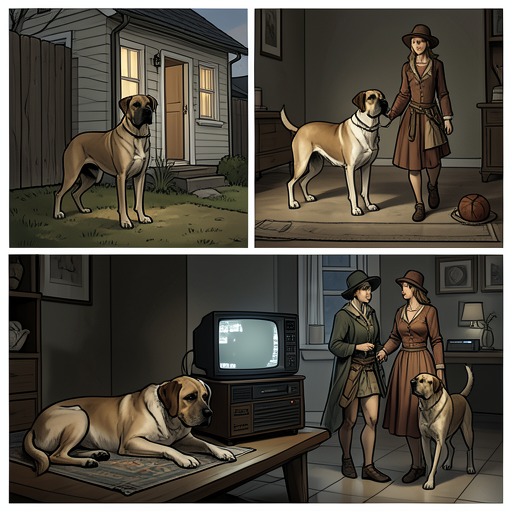
A china dog sits on the television, where its presence is unremarkable until Kemal’s attention makes the family’s belongings newly noticeable. In December 1979, while everyone waits at the table for Nesibe the seamstress to serve dinner, Füsun shifts the figure with an impatient flick of her wrist. The gesture briefly draws attention to the object without explaining why it is there; the narrator himself distinguishes its changing position from the still-unanswered question of its original place in the room.
The china figure belongs to a domestic world also shaped by changing fashions. Plastic dogs that nodded their heads once appeared in the rear windows of private cars and shared taxis, then quickly went out of fashion. The small dogs in the Keskin home are part of this everyday material landscape, but they acquire a more particular role as Kemal begins taking household objects.
Disappearance and Replacement
Kemal’s collecting starts with easy-to-pocket things, including matchboxes, Füsun’s cigarette butts, saltshakers, coffee cups, hairpins, and barrettes. He later turns to more conspicuous objects such as ashtrays, cups, and slippers, gradually replacing what he takes with new items. The dogs become part of this pattern: as figures on the television change regularly, Nesibe the seamstress and Füsun either suspect or know that Kemal is removing them, as he does other possessions. His interest is not yet openly shared; he says he is ashamed of hoarding and does not want others to see the collection.
When a television dog is broken, Kemal supplies a replacement and offers Nesibe the seamstress a cover story: he says Fatma Hanım dropped the original while putting it away, and that he found the new figure in a shop at the Spice Bazaar while buying birdseed and rapeseed. Nesibe the seamstress welcomes the replacement as a black-eared street dog and treats it affectionately, as a creature that brings the household peace. Her response returns the figure to ordinary domestic life even as Kemal’s account conceals its connection to his collecting.
From Household Ornament to Collection
The figures also have a place in the novel’s wider account of Kemal’s possessions. When he later gathers the collection for the museum, china dogs appear alongside saltshakers, thimbles, pencils, barrettes, and ashtrays. These objects seem to migrate across cities and countries: Kemal recognizes similar everyday wares in markets and shops far from Istanbul. The dogs thus join a material world in which familiar household things circulate widely, while the attachments people form to them often pass unnoticed.
The chapter title The Dogs gives these modest figures a distinct place in the narrative. Their changing positions, replacements, and eventual presence among the museum objects trace how Kemal’s private attention alters the meaning of ordinary things. In the Keskin home, a dog is an ornament among others; in his collection, its removal and preservation make it part of a record of the household and the life he longs to keep.