Füsun
The Museum of InnocenceFüsun is an eighteen-year-old, poor distant relation of Kemal whose renewed appearance unsettles the life he has arranged around his impending engagement to Sibel. She is at once a young woman pursuing an education and an acting ambition, a lover who speaks plainly about her feelings, and the central figure in Kemal’s enduring recollections. Because the story is told through his memory, her presence is repeatedly set against his fantasies of her absence: the city becomes a map of places where he might find her, or mistake someone else for her.
Identity and First Encounter
Before meeting Füsun again, Kemal had almost forgotten that she existed. He is thirty and preparing to become engaged to Sibel, whom others regard as a perfect match for him. Füsun, by contrast, is eighteen and poor, and their difference in age and circumstances is present from the beginning of Kemal’s account of their renewed acquaintance.
At the Şanzelize Boutique, Füsun recognizes Kemal immediately, while he does not recognize her at first. She explains that she had chosen not to disturb him when she realized he had failed to identify her. The exchange establishes an early imbalance in their encounter: Kemal’s surprise and embarrassment follow from recognizing her only after she has already recognized him. His account also dwells on her physical presence and on his inability to act naturally, making clear that his response is shaped by attraction as well as surprise.
Education and Ambition
Füsun is trying to determine what future she might pursue. After failing the previous year to earn a high enough university entrance-exam score for the course she wanted, she spends the time left over from working at the boutique attending an Outstanding Achievement Course. With only forty-five days until the next examination, she is studying hard, though she admits that she does not know which course she ultimately wants to take.
One wish, however, is more definite: she would like to train as an actress at the conservatory. The aspiration gives her a purpose distinct from her relationship with Kemal, while the circumstances surrounding it show how uncertain her options are. She is preparing for another university examination even as the artistic ambition she names lies elsewhere. The account presents this hope without recording whether she achieves it.
Love and the Terms of Intimacy
Füsun eventually tells Kemal that she has fallen deeply in love with him and thinks about him from morning until night. In Kemal’s recollection, she speaks through tears, her voice at once accusatory and gentle. The emotion is not presented as a quiet, untroubled declaration: its force carries anger and hurt alongside tenderness. Her words make explicit the attachment that has become central to their relationship.
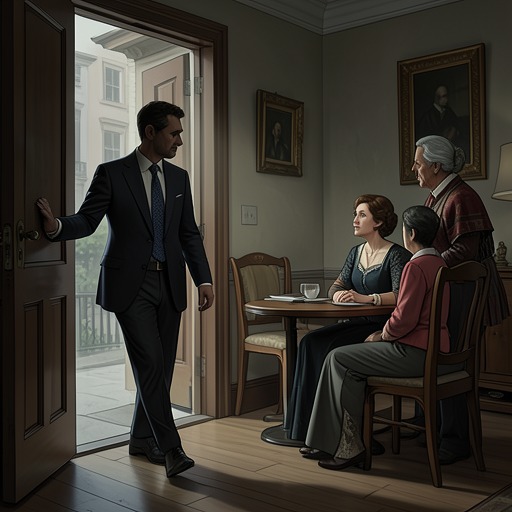
After they make love, Füsun sets out a further condition for their relationship. One day, Kemal must come to supper at her parents’ home and bring both her earring and the tricycle she rode as a child. The request joins adult intimacy to family recognition and childhood memory. Füsun suggests that his visit can be explained as an ordinary act between relatives, or as an offer to help her with mathematics before the entrance examination. In this way, the proposed supper would bring Kemal into her family’s household without requiring them to disclose the nature of their affair.
Absence, the City, and Kemal’s Search
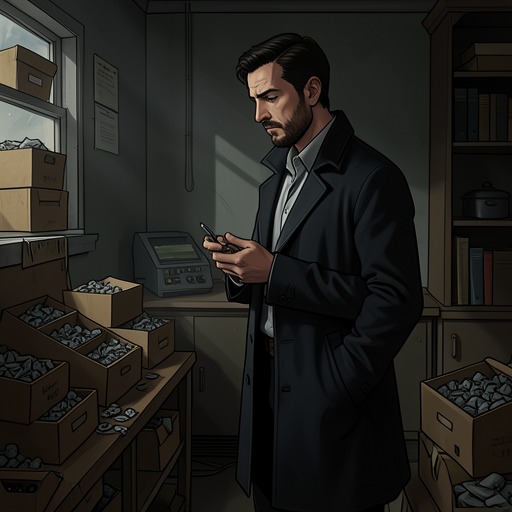
When Kemal tries to forbid himself from visiting the Merhamet Apartments and touching objects that remind him of Füsun, he finds that simple rules do not keep him away. He has previously found excuses to approach places associated with her, including a trip to buy Sibel flowers near the Şanzelize Boutique. He responds by imposing a stricter regime: a mental map of Istanbul divided into prohibited and conditionally permitted areas. The Şanzelize Boutique, the Merhamet Apartments, Kuyulu Bostan Street, and other locations connected to Füsun become restricted territory; some streets may be crossed only quickly, sober, and without stopping. His home and Teşvikiye Mosque are also marked as places where lingering might intensify his suffering.
The restrictions do not remove Füsun from the city. Kemal imagines glimpsing her in cinemas, markets, streets, and windows, then recognizes that these appearances are ghosts created by his unhappiness. He nevertheless continues to frequent places where he expects to see them and adds those sites to his mental map. Istanbul becomes, in his description, a network of signs pointing back to Füsun: even a false sighting can determine where he walks and what he notices.
His search also takes him through the poor neighborhoods of Vefa, Zeyrek, Fatih, and Kocamustafapaşa. When an imagined glimpse draws him into one of these districts, he remains after realizing that the figure was not Füsun, reasoning irrationally that she may still be nearby. A broken marble fountain, streets marked with political slogans and death threats, and coffeehouses where old people and unemployed men sit reading newspapers become part of the landscape through which he seeks her. He begins to value these neighborhoods and resolves to spend time there, as if living more like Füsun and her family might bring him closer to them. The episode reveals as much about Kemal’s longing as about Füsun herself: the city he traverses is organized by his search and his projections.
Shared Time and Narrative Significance
After Füsun and Feridun mutually decide to divorce, Kemal arranges for a lawyer to represent Füsun. Though he can no longer visit her in Çukurcuma, they meet every other day in Beyoğlu and go to the cinema. Their outings create a different pattern from the earlier mental map of forbidden streets. In the cool, dim theaters, they choose films after looking over the posters, find seats toward the back, and hold hands as though they have all the time in the world.
Kemal’s remembered details give these meetings an intimate rhythm. During a summer double feature, while he is arranging his trousers and setting newspapers and magazines on the adjacent seat, Füsun’s hand lands on his lap, open and expectant; his hand closes around hers. Between films, when the lights rise, they exchange news in whispers but do not hold hands. The contrast between these small gestures and Kemal’s earlier imagined sightings distinguishes shared presence from projection. Füsun is not fully accessible as an independent narrator in these passages: readers meet her through Kemal’s observations, recollections, and longing. Yet her studies, acting ambition, declaration of love, and condition of a family supper show a person making plans and stating what she wants, not merely an image in his mind.