Füsun’s beauty pageant photo
The Museum of InnocenceFüsun’s beauty pageant photo is a late-discovered image of Füsun at the 1973 Milliyet Beauty Contest finals, first seen by Kemal only when Ceyda brings it out during a visit. Its arrival changes the terms of his looking: a photograph from Füsun’s youth becomes not just new evidence of her past, but an object he carries, kisses, and asks to preserve in his museum. At the story’s close, the image gathers the novel’s private acts of remembrance into a final declaration that Kemal lived a happy life.
Discovery at Ceyda’s home
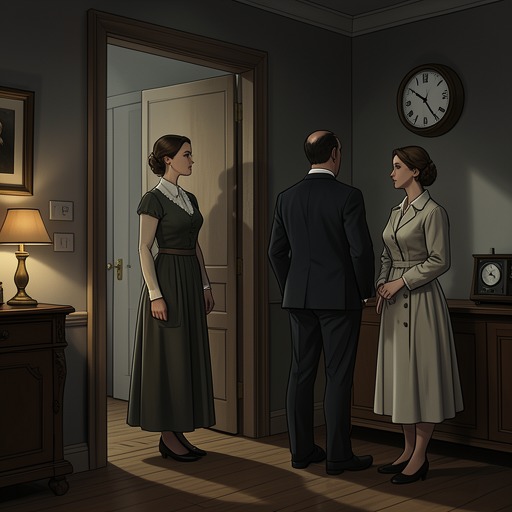
Ceyda says she has come across a photograph that Kemal had never seen. The discovery excites the company, but her husband has little interest in the beauty-contest story, so the photograph is not examined for long. The limits of that gathering make the image’s appearance feel contingent: it is brought into view because Ceyda has found it and is willing to share it, then nearly put aside because the people around her do not all care about the memory it holds.
The photograph was taken during the finals of the 1973 Milliyet Beauty Contest. It shows Hakan Serinkan whispering to Füsun the cultural questions she would be asked when she went onstage. Ceyda recalls that the two young women did not make it through, but behaved like the good lycée girls they were and laughed until they cried that night. The image therefore preserves more than a posed likeness: it belongs to a particular contest, to the brief interval before Füsun’s turn onstage, and to a shared episode between the friends. The whispered questions place her at the threshold of public scrutiny, while Ceyda’s account restores the private laughter that the photograph alone cannot show.
The image and Kemal’s response
The photo’s first audience is small, and its emotional effect is sharply uneven. Ceyda lays it on the wooden coffee table; as soon as Kemal sees it, his face turns white as ash and he falls silent for a long time. The contrast between the casual setting and his bodily reaction makes clear that the picture is not an ordinary addition to his knowledge of Füsun. It confronts him with an image he had lacked, from a past he has spent years trying to approach through memory and collected things.
Ceyda understands the importance of the discovery to him. At the end of the evening, she offers him the photograph as a present. Her gift carries the image out of the shared room and into Kemal’s personal keeping, but does not make it merely private: much later, he brings it to the street in front of the Merhamet Apartments while speaking with Orhan Pamuk. The object thus moves between settings and forms of attention—from a coffee table where an old story is briefly revisited, to Kemal’s pocket, and finally to the proposed public space of the museum.
What the photograph preserves
Under the pale light of a streetlamp, Kemal takes the photograph from his pocket and looks at it lovingly. It shows Füsun in a black swimsuit embroidered with the number nine. The description dwells on her honey-hued arms and splendid body, but refuses to reduce her to the beauty that the contest invited others to judge: her face betrays no joy, only sadness. Kemal and Orhan stand together looking at her with love, admiration, and respect, struck by what they see as the depth of her humanity and the radiance of her soul.
That shared gaze makes the photograph more than a keepsake for Kemal alone. Orhan asks him to put it in the museum, naming the image as something that should be preserved and made available to visitors. The photograph has been developed for thirty-four years by the time of this exchange, yet its age does not exhaust its meaning. It records Füsun at a moment in her youth, while the later viewers bring to it knowledge and feeling accumulated across the intervening years. Its stillness holds together the public scene of the contest and the private attachment through which Kemal sees it.
Museum, farewell, and remembered happiness
Kemal responds to Orhan’s request by taking the photograph seriously as a final object of remembrance. He kisses it lovingly and places it carefully in the breast pocket of his jacket. The careful gesture follows the long movement of the image through the story: first unknown to him, then given by Ceyda, then carried with him, and at last treated as a fitting presence in the museum he has made from the things and memories associated with Füsun.
After placing it in his pocket, Kemal smiles at Orhan and gives his last words for the book: “Let everyone know, I lived a very happy life.” The photograph does not erase the sadness visible on Füsun’s face, or the long passage of time that separates the men from the contest night. Instead, it gives Kemal a way to look at her with tenderness and to frame his own remembered life through that act of looking. The image’s final significance lies in this conjunction: it remains a trace of Füsun’s earlier self, becomes a treasured part of Kemal’s museum, and accompanies his closing insistence that his life was happy.