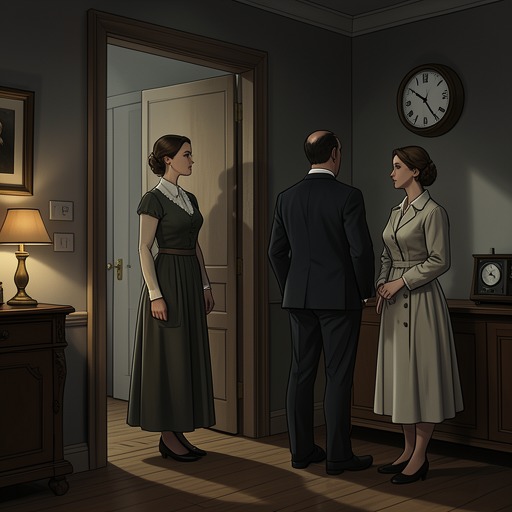
Füsun’s participation in the Milliyet National Beauty Contest
The Museum of InnocenceFüsun’s participation in the Milliyet National Beauty Contest brought her into conflict with her father, Tarık Bey, and exposed a changing social judgment of beauty contests. She became a finalist with her mother’s support, but Tarık Bey’s eventual consent did not amount to lasting acceptance: after hearing what people said about his daughter, he regretted yielding and prohibited further ventures of that kind while she lived in his house. Years later, her brief public recognition survived as a memory for only a few people.
Entry and Family Conflict
Tarık Bey first learned that Füsun had entered the contest with her mother’s approval and was furious. Because he loved his daughter, however, he could not withstand her tearful pleas and allowed her to participate. His change of heart was temporary. Once he heard how others spoke about her, he came to regard his tolerance as a disgrace and insisted that she have no more such adventures under his roof.
The incident placed Füsun’s ambitions within a family structure where her father could permit or restrict her public appearance. His affection softened his initial refusal, but social judgment restored his opposition. The episode therefore records both her determination to enter and the limits imposed on that choice after the contest drew attention.
A Changing Meaning of the Contest
Tarık Bey contrasted the beauty contests of the early Republic under Atatürk with those of the 1970s. In his view, women appearing in black swimsuits at the earlier contests had represented Turkish history and culture while demonstrating the country’s modernity to the world. By the 1970s, he believed, the contests had become associated instead with contestants seeking careers as singers or models, whom he judged to lack culture and manners.
He also noticed a change in how hosts framed contestants’ futures. Earlier hosts had politely asked what kind of man a contestant hoped to marry, a question that indirectly tested whether she was a virgin. Contemporary hosts asked what a contestant sought in a man, with character understood as the expected answer, but their manner struck Tarık Bey as smirking rather than refined. His account connects the contest’s public image to expectations about women’s marriageability and sexual respectability, even as the language of modernity changed.
Recognition and Its Afterlife
Füsun’s status as a finalist resurfaced years later during a visit to the home of Demir the Typewriter. One of his twin daughters recognized her from the Milliyet National Beauty Contest, a recognition that pleased Füsun. The narrator notes, however, that few others remembered her participation. The scene gives the contest a modest afterlife: it remained a source of recognition for Füsun, but not a lasting public distinction.
Her father’s prohibition also shaped the conditions around her later ambitions. Kemal and Feridun discussed their planned art film in hushed tones because they feared Tarık Bey might object to Füsun becoming a film star and obstruct her plans. The earlier dispute over the contest thus forms part of the family context in which her prospects in public entertainment had to be negotiated.
Narrative Significance
The contest links public visibility with private control. Füsun enters with her mother’s support and becomes a finalist, yet her father’s response turns participation into a matter of family reputation and household permission. The contrast Tarık Bey draws between the early Republic and the 1970s further shows that the same public display could be praised as evidence of national modernity in one period and condemned as vulgar ambition in another.
The episode is also recalled through its uneven residue: Tarık Bey remembers the comments that made him regret his decision, while years later only a small number of people remember Füsun as a finalist. Her participation is therefore neither a simple triumph nor a mere family dispute; it marks a brief encounter between aspiration, public scrutiny, and the restrictions placed on a young woman’s future.