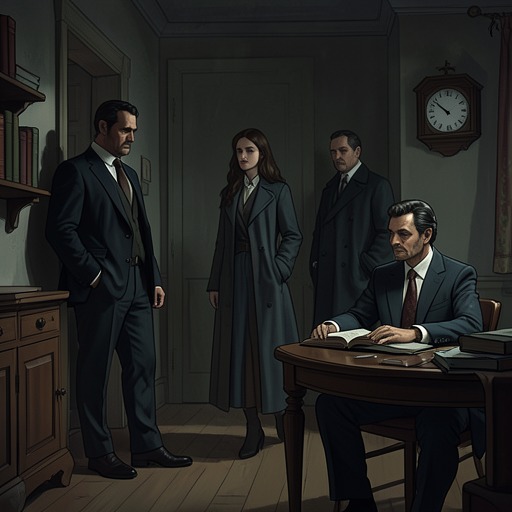
Füsun’s thwarted ambition to become an actress
The Museum of InnocenceFüsun’s thwarted ambition to become an actress is a long-standing desire that she says she was prevented from pursuing, and a fault line in her confrontation with Kemal. She admires Papatya’s success but insists she does not envy her; what she regrets is failing to fight for her own future. When Kemal claims that she can still become a film star, Füsun calls the reassurance a lie, saying he has no intention of helping her. She eventually accuses him and Feridun of deliberately keeping her from films because they feared she might become famous and leave them.
A long-held desire
Füsun says that becoming a film star was what she wanted, and that this wish had endured for years. Her account of her parents’ reactions helps define the limited support she recalls receiving at home: her father was upset by the idea, while her mother behaved as though it did not matter. Füsun’s recollection does not present acting as a passing fancy. She tells Kemal that he already knows how long she has wanted it, making his later suggestion that she could still pursue it seem to her less like a genuine offer than a denial of their shared history.
The distinction between wanting an acting career and having the chance to pursue one is central to her complaint. Füsun says she has not had the opportunity to live her own life because of Kemal, and identifies acting as the life she wanted. Her words frame the lost opportunity not merely as an unrealized job, but as a restriction on her ability to choose her own direction. The evidence does not establish what her career might have become; it does establish that she regards the opportunity to try as something taken from her.
Papatya as a point of comparison
Füsun’s remarks about Papatya complicate any simple reading of her frustration as jealousy. She explains that she wears sunglasses because thoughts of her father bring her to tears, then explicitly asks Kemal to understand that she is not jealous of Papatya. Instead, she is impressed by what Papatya has accomplished: Papatya set her mind on something, refused to give up, and succeeded. Füsun compares that persistence to the resolve of a character in an American film.
The comparison turns Papatya’s success into a measure of what Füsun feels she did not do. Füsun says her regret is not that she failed to become as successful an actress as Papatya, but that she failed to fight for what she wanted in life. She places the blame for that failure on herself. This self-accusation matters alongside her later charge against Kemal and Feridun: she does not describe herself as having fought and simply been defeated. Her account contains both an acknowledgment of her own inaction and an insistence that the men around her helped prevent her from acting.
Kemal’s reassurance and Füsun’s accusation
When Füsun says that her family’s response left her wanting to become a film star, Kemal tells her, “You still can be.” She answers that this is a lie, because he does not believe it himself. When he asks what makes her say that, she states that he has no intention of helping her become a film star and that there is no longer any need to do so. Her objection is not simply that he offers too little encouragement. She sees a contradiction between his present reassurance and the history of his conduct toward her.
Füsun makes that history explicit when she tells him, “Because of you, I haven’t had the chance to live my own life, Kemal,” and adds that she wanted to become an actress. She then names Feridun as well, accusing both men of deliberately keeping her from an opportunity in films. Her explanation is that they were jealous and afraid she might find fame and leave them, so they kept her at home. This is Füsun’s accusation, not an independently confirmed account of their motives; the confrontation presents her understanding of why her ambition was blocked and makes the emotional stakes of Kemal’s promise unmistakable.
Self-blame, dependence, and unresolved responsibility
Füsun’s claim of deliberate obstruction sits in tension with her admission that she failed to fight for the life she wanted. Neither statement cancels the other. She can recognize her own timidity or inaction while also holding Kemal and Feridun responsible for the restrictions she says they imposed. Her regret is thus not resolved by Kemal’s brief apology. When he asks whether she had really wanted to become like Papatya and the women at Pelür, Füsun rejects the comparison: she says that everyone is now a drunk anyway and insists that she would never have been like those women. She returns instead to the claim that jealousy kept her from the chance to act.
Kemal answers that she had always been timid about pursuing that path alone, without a powerful man at her side. The remark shifts attention from his and Feridun’s alleged intervention to Füsun’s dependence and hesitation. Her response is immediate anger. The exchange leaves the ambition caught between competing explanations: Füsun’s sense that she failed to defend her own desire, her accusation that the men closest to her constrained it, and Kemal’s assertion that she was afraid to go forward without male support. Her acting dream remains consequential not because the story supplies an alternate career for her, but because the argument reveals how little ownership she feels she had over the life she wanted.