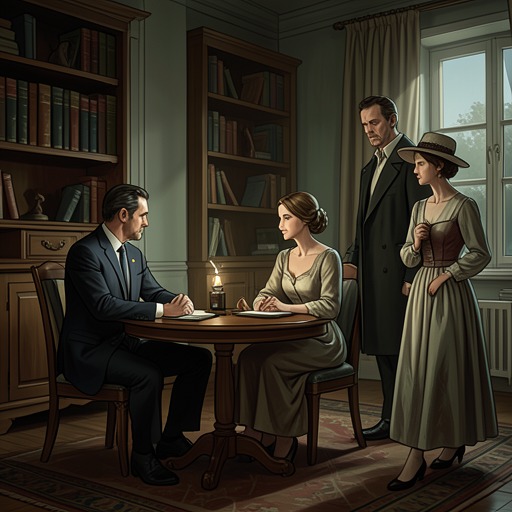
Fatih Hotel
The Museum of InnocenceThe Fatih Hotel is the temporary refuge where Kemal Basmacı lives through the first months after Füsun’s disappearance, turning a period he initially understands as painful into one he later remembers as happy. Between solitary nights, walks through Istanbul’s old neighborhoods, and daily visits to the Merhamet Apartments, the hotel gives his obsessive search for Füsun a provisional home.
Location and Arrival
In mid-January, two weeks before Sibel was due to return from Paris, Kemal left the yali and moved to the Fatih Hotel, between Fatih and Karagümrük. He had first entered the hotel to escape the rain while exploring neglected streets and shops near the Golden Horn. After drinking vodka followed by beer in a nearby beer hall, he became so intoxicated that he could not remember where he had parked his car. Walking through the dark, muddy streets, he found himself back at the hotel and took a room.
The room’s key, the hotel stationery, and a replica of its small sign, which Kemal found years later, are preserved as reminders of this stay. Their significance lies less in any description of the hotel itself than in the way Kemal later makes its ordinary traces stand for a difficult stretch of his life.
A Refuge from Home
Kemal’s first night at the hotel brought an unexpected change: after months of troubled sleep, he slept soundly, and he continued to do so on the nights that followed. Dreams of sunny memories from childhood and youth sometimes woke him with a shudder, but he wished to return to sleep and to those dreams. After that first restful night, he went back to the yali to collect his clothes and other belongings, then chose the hotel rather than his parents’ house, where he would have faced their worried looks and questions.
He kept going to Satsat in the mornings, but left work early to return to Istanbul’s streets. At lunchtime he went to the Merhamet Apartments, where Füsun’s belongings offered distraction and consolation; each day, he recalled more objects and treasured each newly remembered one. In the evenings he rested his weary legs in beer halls, then walked through Fatih, Karagümrük, and Balat, peering through curtains at families eating dinner and imagining that Füsun might be among them. The hotel anchored this routine without ending the search that gave the days their shape.
The City Beyond the Hotel
Kemal’s stay was inseparable from his wandering through neighborhoods far from the affluent social life he had once shared with Mehmet and Sibel. He drove through Vefa, Zeyrek, Fatih, and Kocamustafapaşa, hoping to find Füsun. When one of her imagined apparitions appeared in a poor neighborhood, he lingered even after realizing it was not her, persuaded that her true self might be nearby. The damaged streets, old fountain, coffeehouses, and crowded homes became part of a personal geography organized around longing.
That geography also took the form of prohibitions. Kemal tried to keep himself away from places associated with Füsun, including the Merhamet Apartments, the Şanzelize Boutique, and Kuyulu Bostan Street, marking the most dangerous areas on a mental map. Yet the effort to avoid reminders could not contain them: as imagined sightings multiplied in crowded places, Istanbul itself became a network of signs that recalled her. Against the city’s elegant European life, the streets around the hotel seemed to offer Kemal a return to what he called the simpler substance of life, even as his search remained governed by absence.
Departure and Retrospective Meaning
Kemal left the Fatih Hotel at the beginning of March, when Osman Bey arrived in the Chevrolet to tell him that his father had died. Kemal did not want his brother to see the strange objects he had accumulated from junk dealers, grocers, and stationers in his ramshackle room. After packing and paying the bill, he left the hotel and returned to his family home. As the car crossed the Atatürk Bridge, the cold, oil-streaked Golden Horn seemed to echo his loneliness.
Only much later did Kemal understand that his days at the hotel, which he had then thought painful, had been full of happiness. The Fatih Hotel thus marks both a withdrawal from family life and a period in which searching, remembering, and collecting gave his days their own consoling rhythm. Its key and other preserved traces fix that interval in material form, while the surrounding city remains the larger space through which his longing moved.