Feridun
The Museum of InnocenceFeridun is Füsun’s husband and a screenwriter whose search for backing brings Kemal Basmacı into the film business. His marriage to Füsun, his repeated efforts to make films, and his eventual departure from cinema form a parallel to Kemal’s long, possessive attachment: Feridun pursues an artistic career with Füsun as a hoped-for star, while Kemal’s investment in that career is also a means of remaining near her. The partnership gives all three a reason to meet, even as their private interests pull them in different directions.
Identity and introduction
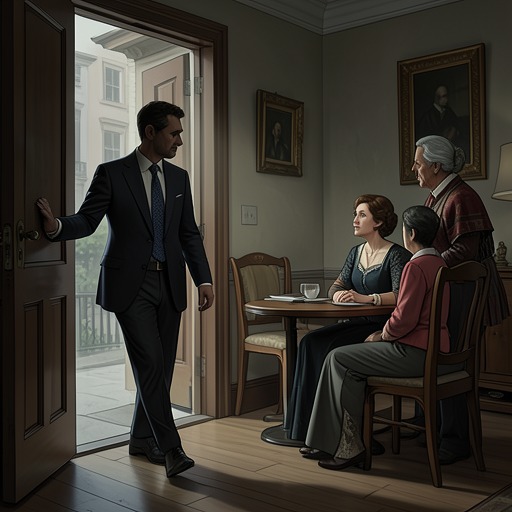
When Kemal first encounters him at the Keskin family’s dinner table, Füsun introduces Feridun as her husband, explaining that they had married five months earlier. The revelation unsettles Kemal, who has not understood the purpose of his invitation and initially struggles to accept that the marriage is real. Feridun is twenty-two, a distant relation on Füsun’s father’s side, and someone who had known her since childhood. He had even ridden the children’s tricycle Kemal had once brought to the house. Those details make him seem to Kemal less like a newly arrived rival than a figure already woven into Füsun’s family history.
Feridun is also presented as a young professional with an established foothold in Istanbul’s film industry. Nesibe the seamstress describes him as a sought-after screenwriter and identifies him as the author of The Old Lady Who Sells Simits. Feridun speaks confidently about his work: he has spent three years in Yeşilçam, worked as a set hand and assistant director, and written eleven screenplays. Füsun adds that the scripts had been filmed and had done well. His self-assurance, which Kemal envies, contrasts with the financial uncertainty of his career: he needs a producer willing to support the work he hopes to make.
Marriage and the competing accounts of its beginnings
The account of how Feridun and Füsun married reaches Kemal through Nesibe, not through Feridun. She says that Füsun was in such distress that she scarcely knew what she was doing, that Tarık had first proposed marriage as a remedy, and that Füsun eventually agreed to marry Feridun. According to Nesibe, Feridun had been deeply in love with Füsun when they were younger, while Füsun had shown little interest in him. Nesibe presents him as less in love by the time of the marriage, though she also says the couple later developed feelings for one another. She frames the decision as a practical response to the crisis Füsun had endured.
Kemal understands that crisis as Füsun’s premarital relationship with him and the threat that it posed to her reputation. In his account, marriage offered a way to protect her from the social consequences, and he accepts that Nesibe holds him responsible for the circumstances. This makes Feridun’s marriage consequential beyond the couple themselves: it is both a family response to Füsun’s predicament and an obstacle to the future Kemal imagines. The novel preserves a gap between what Kemal knows and what he infers. He watches Feridun closely, but his understanding of the marriage is filtered through his own jealousy and through Nesibe’s explanation.
Film ambitions and Kemal’s investment
Feridun’s professional ambitions become the legitimate pretext for Kemal’s repeated visits to the Keskin home. Feridun proposes an art film in which Füsun would act, but he cannot find a producer. Kemal interprets the project both as a genuine opportunity and as a cover for his own desire to see Füsun. He wonders whether Feridun understands this double purpose, speculating that the screenwriter may trust him because he sees Kemal as no threat and needs his financial support. That suspicion remains Kemal’s interpretation, not a confirmed account of Feridun’s motives.
After much encouragement from Füsun, Feridun completes a final draft and ceremonially hands the typescript to Kemal as prospective producer. Füsun tells Kemal that she believes in the screenplay and trusts him not to let her down. By early 1977, the three agree to establish a company to finance Feridun’s films. At Füsun’s suggestion, they name it Lemon Films after Lemon, the canary; the company’s business card bears the bird’s image, and its office is next door to the New Angel Cinema. Kemal arranges a monthly deposit of 1,200 Turkish lira: half for Feridun’s salary as managing director, the remainder for rent and production expenses. The arrangement turns Kemal’s private attachment into a continuing business commitment.
The art-film plan does not resolve the tension between artistic purpose and commercial necessity. In January 1981, Feridun is making commercials with a cameraman he knows from the Pelür Bar, but he is unhappy about doing the work for money. He says he has another screenplay ready to film. The script tells of a rich man who seduces and abandons a young relation; she takes revenge by becoming a singer. The story, songs, and role are, in Kemal’s judgment, poorly suited to Füsun, and the film’s earlier opportunity had collapsed after its intended star, Papatya, refused to work under Hayal Hayati. Yet Kemal agrees to finance it, partly because he wants to make Feridun happy.
Feridun begins shooting Broken Lives in May 1981. Despite borrowing its title from an old novel, the film’s setting and plot belong to contemporary Istanbul: its heroine, played by Papatya, becomes a famous singer and patiently plots revenge against the man who took her virginity. Production begins at the Peri Cinema, rearranged to resemble a nightclub. The film’s premiere takes place seven weeks later at the Palace Cinema in Beyoğlu, but neither Feridun’s wife nor the film’s producer attends. By then, Feridun and Füsun are not speaking, and he has scarcely been home during the summer. Kemal hears indirectly that Feridun is probably living with Papatya, and that he returns to the family home only occasionally to collect belongings.
Separation, divorce, and professional parting
Feridun’s departure from the household becomes explicit after he comes home drunk and miserable, having been away at night on the pretext of late film shoots. Later, he tells Füsun that he and Papatya have separated and asks to return to her and to the house. Füsun refuses; a public argument follows, and Feridun and Nesibe subsequently meet in Beyoğlu and agree to a separation. Nesibe changes the front-door locks and tells Kemal that the house is no longer Feridun’s. The separation ends his place in the daily life of the Keskin household, although the film partnership and the divorce still require practical arrangements.
When Füsun and Feridun mutually decide to divorce, Kemal arranges for a lawyer to represent Füsun. He and Füsun meet every other day in Beyoğlu to see films, while he can no longer visit her at home. During one of these outings, she tells him that the divorce is official and that the lawyer has the papers. The announcement marks a decisive change in her legal status and in Kemal’s hopes, though their relationship is not yet settled. Feridun, meanwhile, asks no favor of Kemal in the account of the divorce itself; Füsun tells Kemal that Feridun had considered asking him to recommend a lawyer.
At a final lunch at the Divan Hotel, Feridun and Kemal drink raki, settle the transfer of full rights to Lemon Films to Feridun, and then speak of Feridun’s next project, the art film Blue Rain. Kemal recalls a trace of jealousy in Feridun’s eyes at the prospect of his and Füsun’s happiness, while also acknowledging that his own presence had curtailed some of the happiness Feridun might have shared with his wife in the early years of their marriage. The lunch closes the business relationship without erasing the friendship: Feridun and Kemal find common ground again in the film he hopes to make.
Later life and narrative significance
In the narrator’s later account, Feridun has left the film world and founded a successful advertising firm named Blue Rain, preserving a name associated with his unrealized film ambition. His work now consists of commercials celebrating Turkish products and national pride. He tells the narrator that he loved only once, that Füsun never returned his love, and that he took care not to fall in love with her again after they married because he knew she had been obliged to marry him. This retrospective statement gives Feridun’s earlier marriage a more painful clarity than Kemal could obtain at the time, while remaining Feridun’s own account of his feelings.
Feridun’s final encounter with the narrator also reveals his protectiveness toward Füsun: he warns that he will pursue the writer if anything bad is written about her. The warning sits beside his candid acknowledgment of unrequited love, complicating the image of him as merely a rival or a source of professional opportunity. Across Kemal’s recollections, Feridun is at once husband, screenwriter, business partner, and a man trying to preserve an artistic vocation within a precarious industry. His eventual success in advertising contrasts with the film career he once hoped to build, while the name Blue Rain keeps that abandoned ambition present in his later life.