Istanbul
The Museum of InnocenceIstanbul functions as both setting and structure in Kemal Basmacı’s story: its neighborhoods and interiors anchor his relationship with Füsun, while its streets become a map of memory, longing, and deliberate avoidance. The city’s changing public spaces, social distinctions, and intimate domestic settings give personal experience a geography that the Museum of Innocence later asks visitors to follow on foot.
City, Society, and Historical Memory
Istanbul first appears as a city whose everyday life holds together different eras and social worlds. On a spring afternoon in 1975, its streets are warm while shaded interiors remain cool; the scene of Kemal and Füsun’s intimacy takes place in an apartment overlooking a garden where boys play football. This contrast between the city outside and a private room within gives the setting an immediate role in the narrative: ordinary urban surroundings continue around an experience that Kemal will later remember as exceptional.
The city’s geography also makes social class visible. Kemal and Sibel walk along Valikonağı Avenue after dining at Fuaye Restaurant in Nişantaşı, amid preparations for an engagement party expected to be as extravagant as a wedding. Their world includes sought-after dressmakers, imported fashions, and connections to Paris. By contrast, Füsun’s mother, Nesibe, had worked as a seamstress in affluent households, and Füsun’s family lived in the backstreets of Teşvikiye. The women’s relation to Kemal’s family is distant and socially unequal: they are called aunts, but are not close relatives. The city’s neighborhoods thus register distinctions of wealth and belonging within a family history.
That history reaches further back than Kemal’s own memories. His mother traces the family connection through her father’s first marriage and the deaths and displacements associated with the Balkan Wars and the evacuation of Edirne. Istanbul is therefore not simply a backdrop for contemporary romance; it is also where inherited relationships, migration, and class position meet. Even the city’s architecture carries traces of changing social ideas. The Merhamet Apartments, where Kemal waits for Füsun, retain a name meaning mercy despite the building’s troubled history of ownership and philanthropy.
Homes, Hotels, and Encounters
Private interiors give Istanbul’s larger social landscape its emotional weight. The Merhamet Apartments become the place where Kemal waits through two afternoons when Füsun does not arrive. Among old vases, dresses, discarded furniture, and his father’s photographs, recollection begins to settle his distress. The apartment is not merely an empty meeting place: its stored household objects draw Kemal into memories of childhood and youth even as he waits for a future that fails to appear. When he imagines Füsun might be approaching with a refund for the handbag, he leaves lunch in Beyoğlu and hurries back.
The Istanbul Hilton represents another kind of interior and another scale of social life. When the engagement party cannot be held at Sibel’s future in-laws’ dilapidated house in Anadoluhisarı, the hotel becomes the preferred venue. Its modernist facade had once seemed foreign against the city’s older silhouette, but Kemal’s family gradually incorporated it into their routines: they visited for meals, tea, and weddings. The hotel’s history in his account links Istanbul to Western innovations and international commerce, while its ballroom provides a formal stage for bourgeois celebration. It also offers a rare setting where an affluent unmarried couple could obtain a room without being asked for a marriage certificate, connecting the city’s modern public establishments to private conduct.
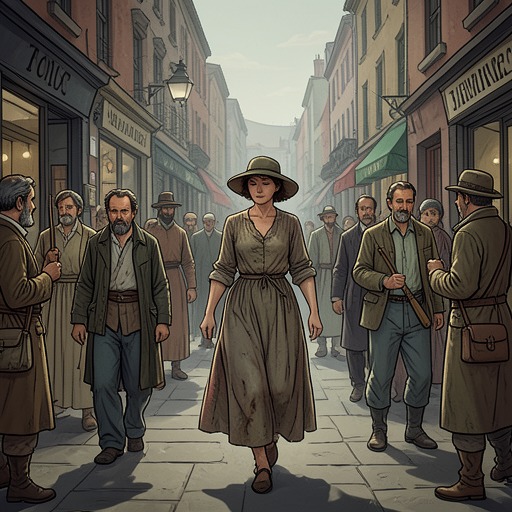
The city’s streets also preserve encounters that do not resolve into intimacy. Years later, people who knew Füsun recall going with her to Beyoğlu cinemas and shops, and protecting one another from men who bothered them. Their recollections give the urban landscape a social dimension beyond Kemal’s account: the same streets that carry his memories were also used by women navigating public life and its unwanted attention.
A City Recast as a Map of Longing
After losing contact with Füsun, Kemal tries to keep functioning by imposing restrictions on his own movements. He redraws his mental map of Nişantaşı, marking the Şanzelize Boutique, the Merhamet Apartments, Kuyulu Bostan Street, and other places as areas he must avoid. Streets around his home and Teşvikiye Mosque are treated with caution; some routes are permitted only in necessity, without stopping. Familiar paths between Satsat, the boutique, and the apartment have become traps of recollection rather than neutral ways across the city.
This self-imposed geography is precise because the memories are specific. Kemal marks not only the sites of his relationship with Füsun but also places associated with earlier glimpses of her, including a mosque courtyard and an empty lot where lambs were sacrificed. His map turns the city into a system of emotional risk: moving through it can bring him near the person he misses, but can also intensify the pain he is trying to suppress. The map records the cost of absence in urban terms, converting an ordinary neighborhood into a field of forbidden, dangerous, and reluctantly accessible places.
Istanbul as Memory and Museum
The city’s streets eventually become part of Kemal’s proposed museum experience. He asks for a map at the end of the novel so that readers who know his and Füsun’s story can walk through Istanbul and recall her when they encounter its streets and prospects. The journey through the city would extend the museum beyond its rooms: objects preserve moments indoors, while urban places offer a route through the landscape where those moments took place.
Kemal’s account of love as close attention gives this project its logic. He imagines visitors moving slowly among the objects and pictures of Istanbul neighborhoods, rather than being hurried through a crowded display. The city is not presented as a neutral backdrop to the collection; it is part of the remembered life the collection represents. As the museum gathers the small things associated with Füsun, Istanbul supplies their wider setting—the routes, homes, shops, and shared public spaces through which a private history acquired meaning.
The novel also complicates the authority of this remembered city. Former acquaintances do not all share Kemal’s understanding of Füsun or his love for her. One neighbor remembers her affectionately but says that Füsun did not return her wish for a close friendship; another observer regards Kemal as lonely and disapproves of wealthy men pursuing women in the film world. These differing recollections keep Istanbul from becoming only Kemal’s personal monument. Its streets hold lives and judgments beyond his own, even as his map and museum attempt to preserve the city as the setting of a singular attachment.