Kemal Basmacı
The Museum of InnocenceKemal Basmacı is a businessman, obsessive museum-maker, and narrator of a life organized around his love for Füsun. He remembers an afternoon with her as his happiest moment, although he understood its meaning only afterward; in later life he makes that private memory the basis of a public collection. His story holds together a striking contradiction: a man who insists he lived happily, yet spends years preserving and explaining a love he could not keep.
Identity and Early Position
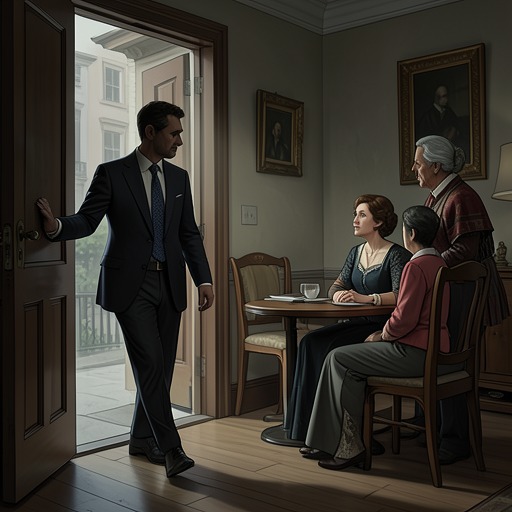
At thirty, Kemal was the son of a prosperous family and general manager of Satsat, his father’s distribution and export firm in Harbiye. He had graduated from business school in America and completed military service before his father placed him in the family business, following his elder brother’s path. Kemal knew that his appointment owed much to his position as the owner’s son, and tried to meet that advantage with humility while learning from older accountants and clerks.
The company’s profits did not simply reflect Kemal’s management. Satsat had an inflated operating budget and made large profits through accounting practices that routed earnings from his father’s other factories and businesses through the firm. The name itself could be translated as “Sell-sell.” His account of the company therefore locates his early privilege within a family enterprise whose apparent success was partly an effect of how its finances were arranged.
Kemal’s personal life was also poised between competing expectations. Füsun was eighteen, poor, and a distant relation whom he had nearly forgotten before encountering her again a month before the episode he later calls his happiest moment. He was thirty and about to become engaged to Sibel, whom those around him considered the ideal match. That contrast in age, wealth, and social position frames the intimacy he recalls: it begins not as an established life plan but as a sudden relationship crossing the path of an already expected marriage.
The Moment He Could Not Recognize
On Monday, May 26, 1975, at about a quarter to three in the afternoon, Kemal and Füsun made love in the back bedroom of the second-floor apartment. His later account gives the encounter an almost suspended quality: the moment seemed to last for hours or years, and the lovers felt released from guilt, gravity, and time. The scene is grounded in specific surroundings—the warm Istanbul spring outside, the coolness of the mattress, a breeze lifting the tulle curtains, and boys playing football in the garden below.
Their attention turns briefly from intimacy to the boys’ furious swearing. Recognizing that they were repeating the same indecencies, Kemal and Füsun stop and look into each other’s eyes, smiling. The small pause gives the scene its distinctive movement: private pleasure meets the ordinary world just outside the window, and the lovers respond not with embarrassment but with shared amusement. An earring comes loose during their lovemaking, but they are so absorbed that they do not notice its fall. The lost object later belongs to the material history of the relationship, while the remembered scene makes clear that its importance was invisible to them at the time.
Kemal’s retrospective question is not simply whether he was happy, but whether recognizing happiness would have allowed him to hold on to it. He answers that he would have tried to preserve the instant. The memory thus becomes both a moment of complete contentment and an account of belated knowledge: only after it has passed can he name it as the happiest moment of his life.
Wealth, Work, and Unease
Kemal’s family fortune expanded alongside the early-1970s growth of the textile and export trade. His father’s wealth increased fivefold over the preceding decade, amid a citywide rise in land prices that was especially sharp in their neighborhood. Kemal nevertheless felt uneasy when Sibel drew attention to the counterfeit handbag he had bought for her. Their surname, Basmacı, meaning “cloth printer,” made the family’s prosperity legible as the result of three generations in cloth manufacturing; to Kemal, that history made his discomfort over a fake luxury item feel awkwardly out of proportion.
The moment reveals a tension in his social position rather than a simple rejection of wealth. Kemal is conscious of inherited business success and of the accounting arrangements behind Satsat’s profits, yet he is also troubled by the status signals attached to consumption. His unease does not undo his privilege; it makes him alert to the gap between the family’s accumulated material success and the meanings that objects acquire when they are judged as authentic, false, or worthy of pride.
The Museum as a Form of Attention
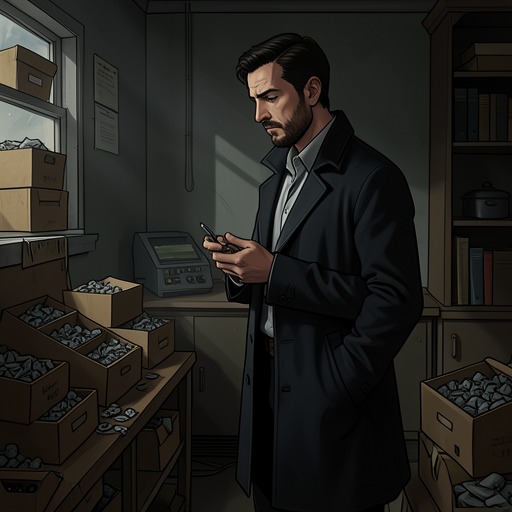
In later life, Kemal turns collecting into a way to preserve his experience with Füsun and to explain what he believes love entails. He describes his museum as a display of objects that might otherwise bring shame, arguing that exhibiting them can transform them into possessions people take pride in. This principle extends beyond his own collection: for him, the museum should help people value the lives they have actually lived rather than defer to borrowed standards of cultural prestige.
Kemal’s curatorial instructions make the museum an expression of both memory and method. Wherever visitors stand, he wants them to be able to see the entire collection and all its display cases at once. Because the objects—and the story they embody—would then be visible together, visitors could lose their sense of time. He regards that temporal suspension as a consolation, not merely a pleasing effect of looking at old things. He also asks that the objects be softly lit from within their cases, so that their presentation conveys the close attention he devoted to Füsun.
That attention is specified through ordinary gestures and details: the way Füsun held her hand or arm, the curl in her hair, how she stubbed out cigarettes, and how she frowned or smiled. Her handkerchiefs, barrettes, shoes, and the spoon in her hand belong to the same record of observation. Kemal’s claim that love is deep attention and compassion is therefore not left abstract; he asks visitors to encounter it through the small particulars he watched and kept.
He also assigns the museum a civic and practical role. He wants no more than fifty people admitted at a time, with groups and school classes required to book in advance, so that visitors can examine objects without being rushed through a crowd. He imagines the collection alongside photographs of Istanbul neighborhoods where he and Füsun walked hand in hand, and asks for a map at the end of the novel so readers can retrace those streets. A ticket placed in each copy of the book would provide free admission on a reader’s first visit. The arrangement joins a narrated life to a physical route through the city: reading, walking, and looking become connected ways of remembering.
Death, Legacy, and Narrative Role
Kemal’s devotion to museums outlasts the years of his romance. He traveled widely to experience collections and had visited 5,723 museums by the time he died. Among the institutions he especially valued was the Bagatti Valsecchi Museum in Milan, whose collection of everyday furnishings and household objects impressed him as an account of the lives once lived among them. His final recorded thoughts distinguish a museum that is experienced from one merely strolled through, and insist that collections give a museum its meaning.
In the early hours of April 12, 2007—Füsun’s fiftieth birthday—Kemal died of a heart attack in a large room at the Grand Hotel et de Milan, where he stayed on his visits to the city. He was sixty-two. His funeral took place at Teşvikiye Mosque; his mother, Vecihe, watched from a balcony and could be heard crying as she bade farewell to her son. The account of his death places the private history of Füsun and Kemal within an unmistakable family loss, without resolving the sorrow that his museum was built to contain.
Near the end of the narrative, Kemal kisses Füsun’s photograph, puts it carefully into his jacket’s breast pocket, and smiles at the narrator. He asks that his final declaration be made known: “I lived a very happy life.” The statement does not cancel his grief or the long labor of collecting. Instead, it completes the self-portrait he has been constructing: a man who measures happiness not by possession or conventional success, but by the intensity of his attention to Füsun and by his ability to give their shared past a lasting form. As both the subject of the story and the founder of its museum, Kemal makes recollection itself his final public act.