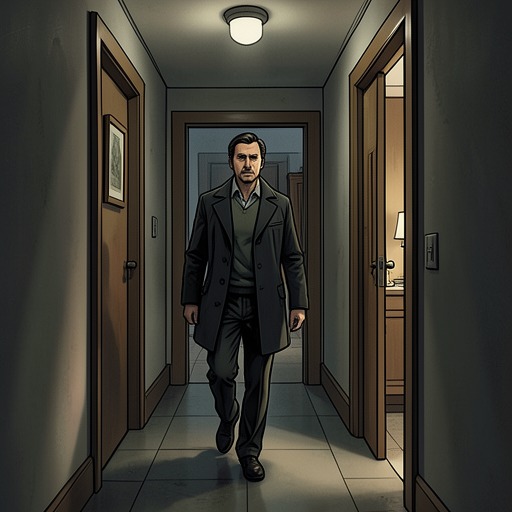
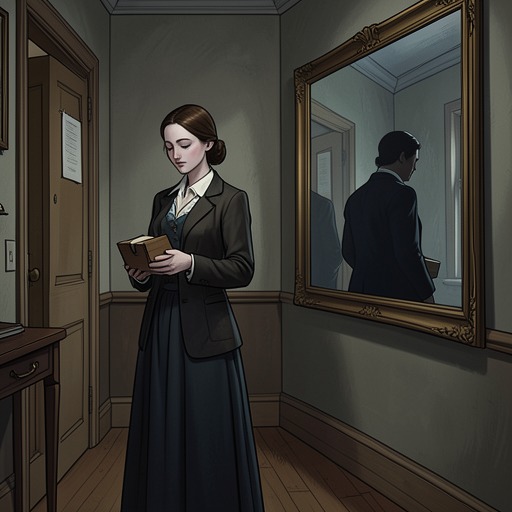
Kemal ends his engagement to Sibel
The Museum of InnocenceKemal’s broken engagement to Sibel is a decisive turning point less for the details of the separation—which the account does not stage directly—than for the life that follows it. Kemal leaves the couple’s shared social circle and settles into a new pattern of frequent visits to Füsun and her family, where private longing takes shape inside the repeated rituals of supper, television, and timekeeping.
The Break and Its Immediate Aftermath
At a later conversation with Nesibe, Kemal hears that Füsun had been deeply affected by the news that he had broken off his engagement to Sibel. Nesibe also says Füsun was sorry to learn how much he had suffered. Her account links the broken engagement to the earlier heartbreak between Kemal and Füsun, while showing that the news had reached Füsun and mattered to her. Nesibe encourages Kemal to remain beside Füsun and support her; Kemal answers that he wants to repair the damage and asks for help winning Füsun back. He gives Nesibe a box containing his father’s earrings for Füsun. The scene does not describe the act of ending the engagement itself, but makes its emotional consequences part of the family’s understanding of Kemal’s return.
The separation also changes Kemal’s place in his old circle. On New Year’s Eve 1976, as he plays tombala with the Keskins, he recognizes the gathering as proof that his life has changed irrevocably. Having broken with Sibel, he has had to keep his distance from their mutual friends; his visits to the Keskins now occur four or five times a week, and he has mostly abandoned his former habits. Until that evening, he had continued to tell himself and others that his old life might still be resumed. The holiday gathering makes the change harder to deny.
Withdrawal from the Former Circle
Kemal does not lose all contact with his acquaintances at once. Zaim keeps him informed about people he no longer sees, and the two meet at Fuaye Restaurant, Garaj Club, or other newly opened social restaurants for long conversations about life and their circle. Those meetings preserve a thread to Kemal’s previous world, but they do not restore his former place in it. He stays away both to keep his distance from Sibel and to avoid upsetting people with painful memories or having to explain his disappearance.
In place of that circle, Kemal becomes a regular presence at the Keskin dinner table. His visits begin on October 23, 1976, eleven days after Nesibe’s open-ended welcome, and continue through August 26, 1984. Across 2,864 intervening days, he records 1,593 suppers over 409 weeks—an average of about four visits a week, though the rhythm varies. Some weeks he sees the family every day; in others, indignation persuades him to stay away. He never remains absent for more than ten days, because that length of separation brings back the misery he experienced in the autumn of 1975. The Keskin family comes to expect him and keeps a place for him without needing to issue a formal invitation. He calls his presence there sitting, a euphemism that lets everyone avoid naming his real reason for coming: to see Füsun.
A New Private Rhythm
The dinners give Kemal’s life a recurrent structure. He usually arrives around seven in the evening and stays until the television broadcast ends, often leaving around midnight. Looking back over the 1,593 visits, he estimates that each lasted about five hours on average, while admitting that some lasted longer. The routine is intimate but constrained: during the early visits, Kemal and Füsun rarely find themselves alone. He whispers that he has missed her, and she sometimes answers with her eyes; there is no opportunity to get closer than that.
Within this household, public time and private time run alongside each other. A German-made wooden wall clock hangs by the door, its pendulum and chime bearing witness to the official world outside, though television has largely taken over the job of keeping time. Each evening, shortly before the national news, a large clock appears on the screen. Füsun checks her wristwatch while Tarık checks one of his pocket watches, and Kemal watches her adjust the time. When she has it right, she looks at him and smiles. The gesture turns an ordinary act of household routine into one of their few quiet exchanges.
Television also sets the length of Kemal’s evenings. He watches the programs from the dinner table, while Füsun moves between the kitchen and dining area with plates and pots, passing between him and the screen. Kemal experiences her not as an obstruction to the broadcast but as the view itself. The nightly closing ceremony—soldiers marching and saluting the flag as the national anthem plays—marks the point at which the household remembers the hour and Kemal prepares to leave.
Political Time and the Meaning of the Change
In September 1980, martial law and a ten o’clock curfew interrupt this domestic rhythm. Kemal must leave at a quarter to ten, before his longing to see Füsun has been satisfied. As Çetin drives him through dark streets emptying under the curfew, the shortened visit feels like a renewed deprivation. In retrospect, Kemal connects the force of military rule most vividly not to an abstract political account, but to the familiar pain of being rushed away from Füsun.
The engagement’s lasting significance therefore lies in the life it displaces and the one it makes possible. Kemal’s old social schedule gives way to thousands of days measured by visits, dinners, television programs, and the intervals between seeing Füsun. The change is neither a clean return to the past nor a straightforward new courtship: it becomes a prolonged arrangement in which Kemal is welcomed at the table but cannot speak openly about why he keeps coming. The breakup is the threshold to that private routine, and its consequences persist in the increasingly exact calendar by which he remembers it.