Keskin Family's Home in Çukurcuma
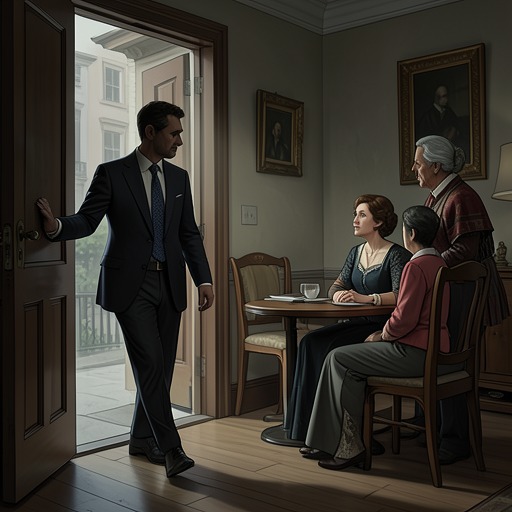
The Museum of InnocenceThe Keskin Family's Home in Çukurcuma is both the setting for Kemal Basmacı’s years of visits to Füsun and the intimate world that makes those visits feel at once ordinary and timeless. Its dinners, familiar furnishings, family rituals, and small objects give his unfulfilled love a recurring shape: a place he returns to for happiness, and from which he carries fragments of that happiness away.
Setting and the Years of Visits
Kemal Basmacı’s first supper at the house took place on Saturday, October 23, 1976, eleven days after Nesibe the seamstress had given him an open-ended welcome. His last evening there with Füsun and Nesibe was Sunday, August 26, 1984. Across seven years and ten months—2,864 intervening days—he says he dined with them 1,593 times, an average of about four visits a week. The frequency varied: some weeks he saw the family daily, while at other times he stayed away in the hope that he could forget Füsun. Yet more than ten days without seeing her brought him back to the misery he remembered from the autumn of 1975.
The visits gradually became part of the household’s routine. The family expected Kemal Basmacı and kept a place for him at the table without needing to invite him formally. That welcome offered continuity, but it also made each decision to go or stay away difficult: he feared imposing on the family, missing Füsun, or giving offense by not appearing. Their accommodation of him was therefore both a form of domestic belonging and a source of anxiety.
A Domestic World Outside Ordinary Time
The house’s routines gave Kemal Basmacı’s repeated visits their particular rhythm. In his account, the family clock—a German-made wooden-and-glass clock with a pendulum and chime, hanging beside the door—stood as a reminder of time shared with the outside world. Yet the Keskin family television had increasingly taken over the household’s attention and the clock’s former role in domestic life. The clock could still chime through the corridor at night; when Kemal Basmacı, heartsick and unable to sleep, got up for a cigarette, hearing it warmed him.
For him, however, the family’s hours were not measured chiefly by clocks. He describes the present as a succession of moments whose connections make people aware of time and, ultimately, death. At the Keskin home, Füsun’s smile at supper could supply enough happiness to last far beyond the evening itself. Kemal Basmacı gathered objects she had touched in an effort to preserve such moments, turning the house into a place where everyday life and the memory of it seemed to overlap. Repetition did not simply make the visits monotonous: over the first two and a half years, familiar looks, meals, conversations, and excursions along the Bosphorus acquired the beauty of the quotidian, as if their recurrence could hold the world still.
After supper, Nesibe the seamstress typically fetched her knitting, kept in a capacious old plastic bag, and the family settled in the back room to watch television. She would not let too much time pass before following Füsun and Kemal Basmacı there, calling for her knitting and reminding them that a program was about to begin. They watched hundreds of films and television series together, though Kemal Basmacı later remembered almost none of what appeared on screen. The rooms, company, and repeated gestures remained vivid; the broadcast itself faded away.
Rooms and Objects as Memory
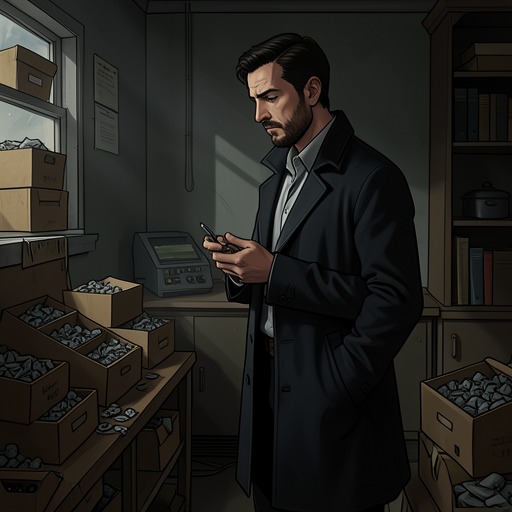
The material details of the house gathered meaning through their repeated use. Kemal Basmacı recalls Füsun’s bird paintings in progress, photographs of birds taken by Feridun, and the family’s discussions of which bird she should paint next. Around them were the Uşak carpet, cloth and buttons, old newspapers, Tarık’s reading glasses, ashtrays, and Nesibe the seamstress’s knitting. These furnishings and activities formed, in his memory, a single domestic atmosphere. At the end of a visit, he might slip a thimble, button, or spool into his pocket; back at the Merhamet Apartments, it helped him recall the room and prolong the comfort he had felt there.
As his longing intensified, the things he took became more than souvenirs. He pocketed a colored porcelain thimble and an orange pastel pencil Füsun had handled, and he collected matchboxes that she had touched, associating them with the scent of her hands. He describes taking three or four things in a week, sometimes six or seven, and as many as ten to fifteen during his most miserable periods. A saltshaker she had used could become a private trophy: knowing it was in his pocket helped him find the strength to stand up and leave when supper ended. In this way, the household’s objects made his attachment portable, while also prolonging his inability to leave the household behind.
Even the television’s porcelain dogs became part of that pattern. After the 1980 coup, Kemal Basmacı reflected on how such figures had moved from radio tops to television sets as domestic attention shifted, and how the family had taken eleven months to notice that one was missing. Two days after an evening when he had brought two dogs to the house, he brought two more. Their quiet disappearance and return echoed the larger practice by which objects passed between the family home and his own rooms, acquiring significance through concealment, handling, and recollection.
The House and the City Beyond It
The house’s importance becomes clearer against Kemal Basmacı’s efforts to avoid reminders of Füsun elsewhere. During an earlier attempt to forget her, he imposed prohibitions on places associated with their past, including the Merhamet Apartments and the street where Füsun and her family lived. His mental map divided Istanbul into forbidden, conditionally permitted, and hazardous areas, with familiar routes marked as snares of recollection. The Keskin home was therefore not an isolated destination: it sat within a city he tried to manage by avoiding places and paths that could intensify his pain.
Avoidance gave way to searching. When Füsun’s imagined figure began appearing to him in poorer neighborhoods such as Vefa, Zeyrek, Fatih, and Kocamustafapaşa, he drove and walked through their streets, lingering in coffeehouses and imagining that the real Füsun might be nearby. Istanbul became, in his perception, a network of signs pointing back to her. The regular return to Çukurcuma answered that citywide restlessness with a fixed table, familiar rooms, and a family that expected him.
When Kemal Basmacı and Füsun could no longer meet at the house, their courtship shifted to the cinemas of Beyoğlu. They met every other day, chose films, and sat together in the cool, dim theaters, sometimes holding hands in secluded seats. That change marks the household’s distinctive role in their story: it had provided the shared domestic routine through which Kemal Basmacı could remain near Füsun for years, but it could not contain every later stage of their relationship.
Narrative Significance
The house matters not only as a setting but as the structure of Kemal Basmacı’s remembered time. In his retrospective account, visits become a countable series—409 weeks and 1,593 suppers—while the interior seems to resist the forward movement those numbers record. Family meals and television evenings recur; particular objects preserve moments that would otherwise pass. The tension between measurable duration and intensely remembered instants explains why the house can feel both ordinary and outside time.
Kemal Basmacı presents collecting as a response to the knowledge that happiness cannot be recovered simply by returning to its setting. Objects touched at the house let him carry traces of shared evenings away, but they also expose the limits of that consolation: a keepsake preserves a moment as memory, not as a living relationship. The Keskin home thus becomes the center of a private geography where affection, habit, and loss are bound together, and where the most ordinary details acquire the weight of a past he cannot relinquish.