Lovers of Collectible Objects Association
The Museum of InnocenceThe Lovers of Collectible Objects Association is presented as Turkey’s first collectors’ group and as a meeting place for people whose private collecting carries both shame and emotional weight. Kemal Basmacı’s uneasy first encounter with its members turns into a broader change: once his love for Füsun is common knowledge, collectors who had kept their work underground help him and begin sharing their own stories and collections publicly.
Formation and First Meeting
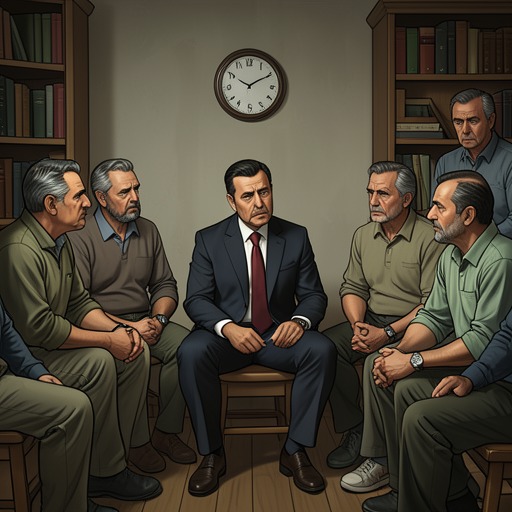
The Association had only recently been established when Hıfzı Bey urged Kemal to attend a meeting. Hoping to find reminders of Füsun that might belong in his account of their relationship, Kemal went to a small wedding salon rented for the morning. The setting was modest, and his purpose personal: he entered the gathering not simply as a collector but as someone searching for objects that could reconnect him with Füsun and his past.
The attendees included collectors Kemal knew by name, among them Cold Suphi, a matchbox collector. The group was described as the first organization of its kind in Turkey; the account supplies no further formal structure or stated program. Its significance emerges instead through the encounter between collectors who had long kept their interests private and a wealthy newcomer whose collecting was bound to a lost love.
Suspicion and Collectors’ Shame
Kemal felt that the members treated him worse than they might have treated an ordinary Istanbul collector or one of their own. Their largely silent, suspicious stares made him feel like an interloper and broke his heart. Hıfzı Bey later suggested that seeing even a rich man acquire objects to soothe a troubled heart had stirred revulsion and hopelessness among the collectors. They had imagined that wealth would cure what they regarded as their own illness or mania for collecting; Kemal’s presence unsettled that distinction.
The reception reflected a wider climate in which personal museums were almost nonexistent in 1990s Istanbul. Collectors were privately contemptuous of their own obsessions and openly scornful of one another, with jealousy sharpening their attacks. Against this background, the Association’s meeting did not immediately offer Kemal a welcoming community. It exposed how collecting could remain socially isolating even among people who shared the same pursuit.
A Change Toward Public Recognition
The relationship shifted as gossip about Kemal’s love for Füsun became common knowledge. The collectors who had first eyed him with suspicion began to help him and to tell him how they had struggled to emerge from concealment and bring the results of their work into public view. The change did not erase the earlier hostility; it made shared vulnerability a basis for cooperation. Kemal’s private grief became intelligible to people who also knew the stigma attached to collecting.
That support entered the making of his museum. Kemal brought together objects stored at the Merhamet Apartments, possessions from the Keskin household, things recovered from rubbish dens, and objects received from members of the Association and from witnesses to his story. The members’ contributions thus joined a collection assembled through several different routes, extending beyond Kemal’s own household and private search.
Collecting, Objects, and the Museum
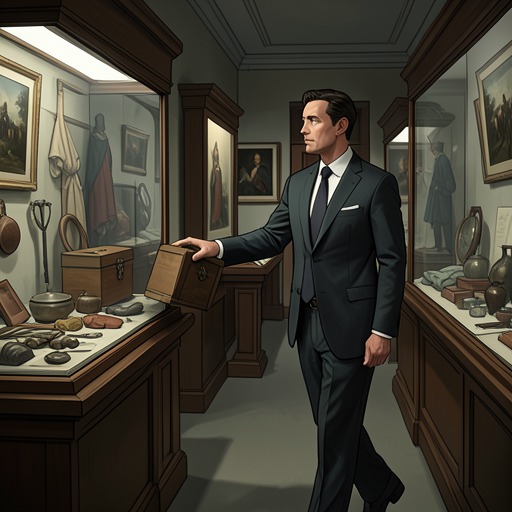
The kinds of everyday objects that appear in Kemal’s collection show what could be at stake in treating ordinary possessions as records of lived experience. He had taken matchboxes, Füsun’s cigarette butts, saltshakers, coffee cups, hairpins, and barrettes; as his collecting expanded to ashtrays, cups, and slippers, he sometimes replaced what he took with newer items. At the Keskin family’s New Year’s Eve tombala gathering in 1980, he introduced his grandfather’s antique glass, the vessel from which Füsun and he had drunk whiskey at their last rendezvous on the day of his engagement. The glass entered family life as a game prize, though Füsun did not recognize its connection to that painful day.
In the museum, such objects could be assembled into a public account of private memory. Kemal’s design aimed to let visitors see the entire collection from wherever they stood, so that the objects and the story they carried would be present together. He argued that a museum could transform shameful possessions into objects of pride; the Association’s members, in moving from secrecy toward public display, had undergone a related struggle. Their connection to the museum lies not in a documented formal mandate, but in the practical and social passage from concealed collecting to shared exhibition.
Significance
The Association gives the novel’s collecting world a collective dimension. It begins with a lonely encounter: Kemal, seeking Füsun’s traces, meets collectors who regard his wealth as no answer to the distress behind his habit. It later becomes a source of assistance and testimony, as members share the difficulty of making their collections visible. Through that reversal, collecting appears not only as an individual response to heartbreak but also as a practice shaped by social embarrassment, mutual judgment, and the possibility of public recognition.