Musée Gustave Moreau
The Museum of InnocenceThe Musée Gustave Moreau is a Paris house museum that becomes a decisive point of reference for Kemal Basmacı’s understanding of how a collection can preserve private memory. During his visit, he is unmoved by Moreau’s paintings but deeply affected by the house itself: a lived-in family home transformed into a setting where objects and rooms hold the traces of a life. Its example helps Kemal imagine his own museum as both a collection and a place shaped by attachment.
The House and Its Transformation
In his final years, Gustave Moreau began converting the family house where he had spent most of his life so that his thousands of paintings could be displayed after his death. The resulting museum included the house and a large, two-story studio beside it. Its significance for Kemal lies not simply in the paintings it contains, but in the conversion of a lived domestic space into a setting for remembrance.
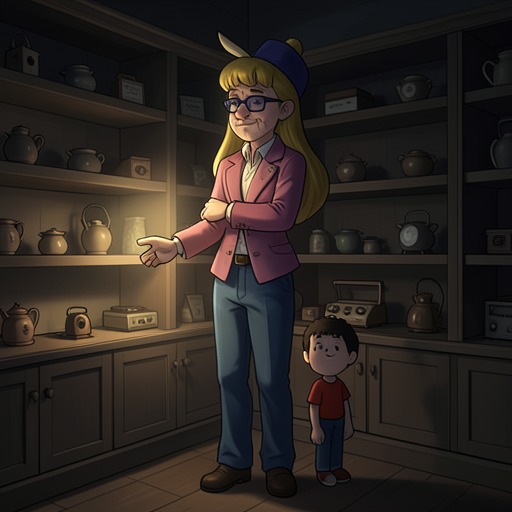
Kemal encounters a museum that remains legible as a home. He walks through empty rooms, across creaking parquet floors, and past guards who are dozing. The quiet, domestic scale contrasts with the more conspicuous art institutions he does not seek out in Paris. Moreau’s paintings strike him as mannered and historical, yet the museum itself holds his attention: the rooms make the collection feel bound to the life that formed it.
Kemal’s Visit and Its Effect
Kemal visits the museum during the last days of his Paris trip, with Füsun’s bird paintings on his mind. He has been trying to understand his life with Füsun from a distance, rather than seeing her only through the immediacy of his obsession. In the Musée Gustave Moreau, the preserved house offers a form for that effort: personal history can be approached through the things and spaces gathered around it.
The visit moves him with an intensity he likens to religious passion. He returns to the museum seven more times over the following twenty years, each visit renewing the same feeling of awe. This recurrence makes the museum more than a passing influence. It becomes a durable point of orientation for Kemal as he considers how to give material form to a private past.
A Model for a Museum of Memory
Moreau’s transformation of his family home gives Kemal a concrete precedent for his own project. After returning to Istanbul, he tells Nesibe the seamstress that he wants to buy the house where Füsun’s family lived. He later turns that building into a museum for the objects he has collected, including things connected to Füsun and their shared life. The Musée Gustave Moreau does not contain Kemal’s story, but its combination of house and collection helps him conceive of a museum as a house of memories.
Kemal’s later museum extends this idea in a distinctive direction: the former Keskin home is made into an exhibition space, while he also sleeps among the collection in its attic. He describes the museum as transforming Time into Space. The Musée Gustave Moreau anticipates this joining of domestic architecture and memory, while Kemal’s own project makes explicit the intimate attachment that, in his view, gives objects their force.
Place, Objects, and the Work of Memory
The museum’s importance rests on a contrast between the paintings Kemal dislikes and the setting that moves him. The house, studio, quiet rooms, and accumulated works make an individual life perceptible through its material surroundings. For Kemal, this suggests that memory need not remain an inward recollection: it can be arranged in a place where objects preserve the past and invite others to encounter it.
That model connects with his belief that collected objects can hold moments that would otherwise be lost. He gathers possessions touched by Füsun to preserve the happiness of his visits to her family’s home, and he imagines his museum as a means of allowing that history to be seen beyond his own private memory. The Musée Gustave Moreau thus marks a turning point in his thinking: a house converted into a museum shows him how a personal world might endure in rooms, objects, and the act of display.