Orhan Pamuk
The Museum of InnocenceOrhan Pamuk is both a character in Kemal Basmacı’s recollections and the writer entrusted with telling them. Their collaboration makes the book’s act of narration part of its story: Kemal first recounts his life to Orhan Pamuk, then yields the first-person voice to him, turning personal memory into a narrative meant to accompany the objects in the Museum of Innocence.
Background and Selection
Orhan Pamuk belongs to an old Nişantaşı family that had lost its fortune. His father and uncle had once done business with Kemal Basmacı’s father and family, giving him a connection to the social world from which Kemal’s story emerged. Kemal also understands Orhan Pamuk as someone devoted to his work and serious about storytelling. He selects him not simply as a known writer but as a person he believes can understand the story’s background and give sustained attention to its telling.
Before revealing the central story of Füsun, Kemal introduces himself through his experience of museums. Over the preceding fifteen years, he had visited 1,743 museums around the world and kept all his admission tickets. He describes memorial museums with mixed responses: the Dostoevsky museum in Saint Petersburg, where a hat is identified as genuinely belonging to the writer, and the Nabokov museum, once used as a domestic censorship office during the Stalin era, prompt him to consider what such institutions preserve and what they can teach. His visits to museums devoted to Proust, Spinoza, and Tagore likewise shape his view that a writer’s museum need not be absurd. These examples establish a shared subject for the proposed collaboration: how a life, its traces, and the stories attached to them can be arranged for visitors.
The First Meeting and Kemal’s Story
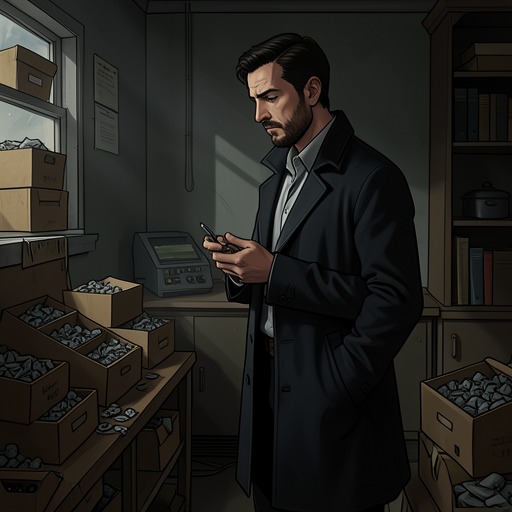
Kemal first meets Orhan Pamuk at Hünkar, a restaurant that had replaced Fuaye. Over three hours, and after drinking three double rakıs, he tells the story of his life in a disordered sequence, moving back and forth rather than presenting a disciplined chronology. He is elated, but later thinks that his excitement may have made the story sound ordinary. The encounter begins as a request for help with a museum catalog, yet quickly becomes an act of personal disclosure: Kemal tells Orhan Pamuk that he once loved a woman so deeply that he kept her locks of hair, handkerchiefs, barrettes, and other belongings, and asks to tell him the story.
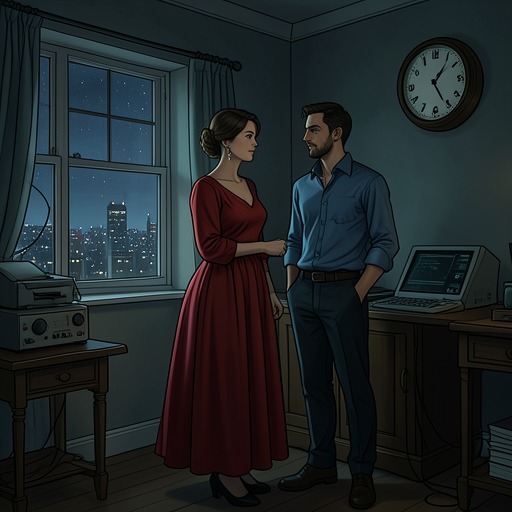
Orhan Pamuk already has a small but significant personal connection to Füsun. He remembers her from the engagement party at the Hilton Hotel, Istanbul, where he had danced with her, and recalls that she worked at the boutique nearby. His recollection confirms that he knew her as more than a figure in Kemal’s later account, while also making clear the difference between their experiences: for Kemal, the dance belongs to the history of his engagement and his love; for Orhan Pamuk, it is a remembered encounter with a striking woman at a crowded party.
The Dance and the Earning of Trust
When Kemal asks Orhan Pamuk to describe the dance, Orhan Pamuk is initially reluctant. After they have each had another rakı, however, he recounts it with feeling. He remembers Füsun as the most beautiful girl at the party and himself as neither handsome nor flamboyant enough to attract her attention. Although he was five years older, he did not feel mature or confident. His mind, he recalls, was crowded with moralizing thoughts and books that kept him from simply enjoying the evening.
The dance nonetheless overwhelms his composure. He remembers Füsun’s height, bare shoulders, back, and fleeting smile, and the light warmth of her hand. Her hand on his shoulder briefly makes him feel proud, and her closeness sets his imagination racing through scenes of an imagined romance, a kiss, and marriage. The fantasy is sharply checked by the actual conversation. He tells her that he sometimes sees her in the shop while walking down the street in Nişantaşı, a remark that leaves her unimpressed because it merely repeats that she is a beautiful shopgirl. By the middle of the dance, he senses that she has judged him and is looking past him toward the other guests, tracking the men who had shown interest in her and assessing the room’s social possibilities.
For Kemal, this account proves more than Orhan Pamuk’s ability to recall a scene. He recognizes in the description an attentive, detailed regard for Füsun that he trusts Orhan Pamuk to bring to the story. The memory makes Orhan Pamuk a credible teller precisely because it is not Kemal’s memory: it reveals Füsun as the object of another person’s brief desire, while preserving the distance between what Orhan Pamuk imagined and what she appeared to be thinking about.
Narration and the Transfer of Voice
Orhan Pamuk tells Kemal that he is writing the novel in the first person, speaking as Kemal and using Kemal’s voice. The arrangement unsettles Kemal. He considers it normal to guide visitors through the museum and tell them about the objects himself, but finds it disturbing for another person to occupy his voice. He worries that allowing this may indicate weakness or a failure of courage, and the idea annoys him even though he expects the story to remain his and to be treated respectfully.
The dance recollection changes his judgment. Once Orhan Pamuk has described it with the feeling and attention Kemal had hoped for, Kemal trusts him as the right person to tell the story to museum visitors. He also decides that his own voice has been heard enough. The handover is therefore both practical and emotional: Orhan Pamuk is authorized to complete the account, but that authorization follows a test of whether he can see Füsun as a person remembered beyond Kemal’s possession of her story.
Narrative Role and Significance
The book marks the transfer openly. Kemal announces that the account will, from that point onward, essentially be told by Orhan Pamuk; the next passage begins with Orhan Pamuk identifying himself and narrating the dance. The change makes the novel’s layered authorship visible rather than concealing it. Kemal remains the source and subject of the life story, while Orhan Pamuk becomes its first-person narrator, speaking in a voice that is both assigned to him and authorized by its owner.
This divided perspective also complicates the museum project. Kemal wants the objects connected with Füsun to carry the story of his love and devotion, but a catalog of those objects requires a teller who can shape private recollection for others. Orhan Pamuk’s role joins the intimate history to its public presentation: he is chosen for his storytelling seriousness, his understanding of the social background, and, finally, his demonstrated attentiveness to a moment that Kemal cannot narrate for him. His entrance thus turns the story of collecting and remembrance into a story about who may speak, whose memories are preserved, and how one person’s life becomes legible to visitors and readers.