Palace Cinema
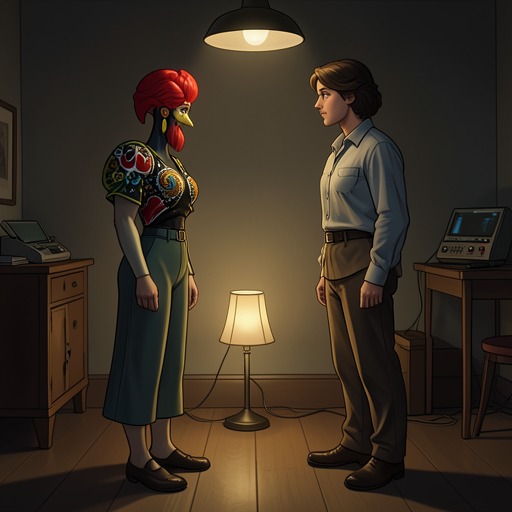
The Museum of InnocencePalace Cinema is a Beyoğlu theater that gathers several decisive moments in Kemal and Füsun’s relationship: private courtship during their regular film outings, the news that Füsun’s marriage to Feridun has officially ended, and the later handover of her passport for their planned journey to Paris. Its faded interior and secluded boxes give intimate gestures a setting, while its repeated appearances bind remembered longing to the couple’s changing prospects.
Setting and Place in Their Courtship
After Füsun and Feridun mutually decided to divorce, Kemal arranged for a lawyer to represent her. Although he could no longer visit Füsun in Çukurcuma, they met every other day in Beyoğlu to see films. Their outings followed a deliberate ritual: they met in Galatasaray, studied the posters, chose a theater, and settled into cool, dim, mostly empty seats. At the back, they could hold hands and watch at leisure, as if time were plentiful.
Palace Cinema belongs to this network of theaters, but its boxes make it especially important to the couple’s private life. Kemal recalls that he and Füsun sometimes sat together in a box, where she would not let him kiss her but allowed him to rest his hand on her legs and stroke her knees. The boundary she maintained did not end their intimacy; it shaped its terms. The theater’s relative privacy let them be physically close without turning their meetings into an open declaration.
The cinema also makes the couple’s intimacy part of a wider urban scene. During summer screenings, Beyoğlu theaters offered double or triple features, and Palace Cinema was among those where intervals between films replaced the traditional mid-film break. Only when the lights came up could Kemal and Füsun see the other patrons: solitary men with newspapers, elderly people asleep in corners, and moviegoers reluctant to leave the film’s imagined world. During those pauses, the pair whispered to one another but did not hold hands. Their restraint sits beside the vast, dim auditorium and its dispersed audience, making their exchange feel private without removing them from the public place around them.
The Divorce Announcement
At one screening, Kemal and Füsun sat in a box at Palace Cinema when she told him that she and Feridun were officially divorced. The lawyer had the papers, she explained, and she was now legally divorced. Kemal had waited eight years to hear this news. The announcement turns the theater from a refuge for discreet courtship into the scene of a formal change in Füsun’s status—and, for Kemal, a long-awaited possibility.
He remembered the moment through the room itself: its gilded ceiling, faded glamour, peeling paint, curtains, stage, and drowsy patrons became engraved in his memory. The setting’s worn splendor gives the declaration a double character. The legal change is immediate, but the room is already marked by age and decline; the happiness of the moment is preserved through details of a place that is not pristine or new. The cinema is therefore not just a backdrop to the news. In Kemal’s recollection, its surfaces become part of how the news remains present.
That happiness is complicated by what Kemal later recognizes about his own expectations. Füsun had insisted that she and Feridun had never made love, and demanded that Kemal believe her. He admits that he had clung for years to that possibility because imagining their marriage as sexually consummated would have made his jealousy unbearable. His account connects the divorce announcement to the beliefs that had enabled his long attachment: the theater holds the moment of release, but his recollection also exposes the self-deception behind his hope.
Film Culture and Jealousy
Palace Cinema also appears as a place where popular celebrity and Kemal’s attention to Füsun intersect. After Ceyda leaves them, Kemal and Füsun slow down outside the cinema, where a film starring Papatya is showing. Newspapers and magazines have promoted extravagant claims about Papatya’s run of film and photoroman roles and a supposed Hollywood offer; she sustains the publicity by posing with English textbooks and presenting herself as willing to represent Turkey abroad. As Füsun studies the stills in the lobby, she notices Kemal watching her expression. He urges her onward, and she reassures him that she is not jealous of Papatya.
The brief exchange turns the theater lobby into a small test of what each believes the other is feeling. Papatya’s public image is built through press stories and staged signs of ambition; Füsun’s response is legible to Kemal only through her expression, which he watches closely. Her reassurance does not establish that jealousy is absent from their relationship; rather, it shows that the possibility is present enough to be named between them. The cinema’s images and publicity provide an occasion for that private awareness.
Passport and the Future Journey
Later, Palace Cinema becomes the place where Kemal gives Füsun her passport, its pages filled with colorful visas for the countries they plan to visit on the way to Paris. He had pressed her to go, despite her warning that pressure would make her more stubborn, and afterward remembered the insistence with remorse. The passport brings the proposed journey into concrete form, but his recollection keeps both its promise and its coercive edge in view.
The handover also carries an earlier memory of the same cinema: during the years when Kemal thought he saw Füsun everywhere, he had once encountered her apparition there. In the later scene, she first smiles at the passport, then turns serious as she inspects each visa. Kemal interprets his role in securing the documents as making him feel like a good husband, although the two are preparing for a future rather than recalling an established married life. The theater thus links absence, expectation, and a projected shared journey. From the long-awaited divorce news to the passport bearing a route toward Paris, Palace Cinema marks changes in what Kemal and Füsun can imagine together, while its remembered rooms preserve the tensions those changes do not resolve.