Paris
The Museum of InnocenceParis occupies several roles in Kemal’s life: a marker of cultural prestige, a destination imagined with the women he loves, and, finally, a place where he can look at his grief from a distance. Its meaning shifts from fashionable promise to an unrealized shared future and then to solitary refuge.
An emblem of status and cultural aspiration
Paris enters the story as part of Istanbul’s Western-oriented social world. Before Kemal and Sibel’s engagement, his parents discuss the preparations for a lavish celebration, and his father is pleased by the prospect of a daughter-in-law who had studied at the Sorbonne. The description reflects the prestige attached in their social circle to having gone to Paris for study, regardless of what that study involved. Paris thus signifies not only a city but a credential through which the Istanbul bourgeoisie recognizes cultural standing.
Fashion provides another route by which the city reaches Istanbul. On April 27, 1975, Sibel notices a handbag by Jenny Colon in a shop window while walking with Kemal along Valikonağı Avenue. Kemal returns to the Şanzelize Boutique the next day. The shop’s stock belongs to a wider boutique culture in which goods and styles from Paris and Milan arrive in luggage or as copies of designs featured in imported magazines. Paris is therefore both a distant cultural center and a source of objects sold locally at inflated prices. Its influence is present in Istanbul before Kemal ever makes it the setting for a journey of his own.
The city also belongs to Kemal’s personal history with Sibel. They meet in Suadiye, and after she goes to Paris in the autumn, he visits her there several times over the winter, traveling by plane. When she returns to marry him, they use the summer house to meet during the winter. Paris is consequently tied to an earlier relationship and to the movement between Istanbul and Europe that the couple’s social position makes possible.
A childhood dream and a shared destination
Paris becomes a more personal ideal through Kemal’s childhood interest in painting. During his school years, he used the Merhamet Apartments as a place to paint and dreamed of becoming a painter. He also imagined going to Paris to see paintings. He recalls that from the 1950s until the early 1960s Istanbul had no museum where visitors could see paintings, and that art books and catalogues were not readily available for browsing. For him, Paris represented access to an artistic world that seemed distant from the city in which he grew up.
Years later, during his regular dinners with Füsun’s family, Kemal brings that old wish into their conversations. He proposes that he and Füsun go to Paris to visit museums and see paintings, and she responds positively. The idea recurs alongside their attention to Füsun’s bird paintings. As she works from photographs of birds taken by Feridun, they discuss which bird she might paint next; their discussions of painting and museums join a wider sense of security and continuity in the Keskin home. Paris is imagined as an extension of that shared cultural interest, not simply as a place to leave Istanbul behind.
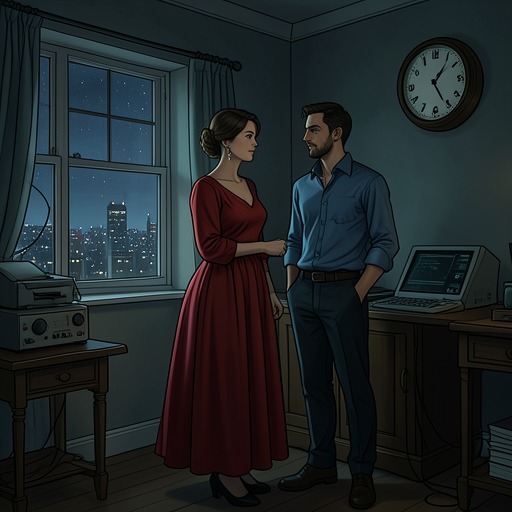
The museum visit also gives shape to a future they have not yet secured. Later, when Füsun sets out conditions for their marriage, she asks for a European tour in Kemal’s car, with her mother accompanying her to Paris. She wants to visit museums, look at paintings, and buy items there for her trousseau. Her plan joins travel, art, family, and preparation for a household of their own. Kemal’s happiness at hearing her speak of their future home underscores how much the destination has come to stand for a life they hope to begin together.
The planned journey
After Füsun and Kemal resume meeting in public, their plans become more concrete. They meet in Beyoğlu, attend films, and use the book Europe by Car to map a route. Their intended first stop is Edirne, followed by a drive through Yugoslavia and Austria toward Paris; Füsun also suggests Vienna. Looking at photographs of Paris in guidebooks becomes part of their planning, though at times she falls silent while studying the images.
Kemal arranges travel documents and books three rooms at the Hôtel du Nord in Paris: one for himself, one for Çetin Efendi, and one for Füsun and Nesibe. The arrangement reflects the conditions under which the journey is being prepared: it is to be a family trip, not a private honeymoon. Kemal’s mother urges him to marry first and travel alone with Füsun, while he insists on bringing Çetin Efendi and Nesibe. The disagreement shows how the trip is shaped by family expectations as well as by the couple’s own wishes. Füsun’s plan for her mother to accompany her, and Kemal’s decision to bring his own trusted driver, make the proposed journey a carefully managed transition toward marriage.
That journey never takes place as planned. After Füsun’s death, Nesibe remembers that Füsun had wanted to surprise Kemal in Paris by wearing a particular pair of earrings, though she did not know which pair Füsun meant. The recollection gives the unrealized trip a specific, intimate detail: Paris had remained a destination in which Füsun imagined delighting Kemal, even though the planned visit was cut off before they could go.
A solitary return and the consolation of museums
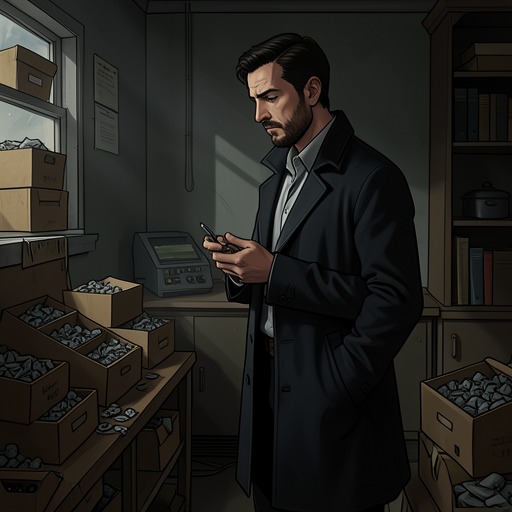
The next day, Kemal books a room at the Hôtel du Nord and tells his mother that he is going to Paris because the trip will do him good. He presents the journey as useful for Satsat, but the purpose is difficult even for him to state plainly. As he leaves, he regards the voyage partly as atonement for his past actions, including having failed to notice Füsun’s earring. Once aboard the plane, he understands that he has set out both to forget and to dream. Away from Istanbul, whose streets continually remind him of Füsun, he can consider her and their story with greater distance and see his own obsession from outside it.
In Paris, Kemal seeks out museums unlike the crowded, prominent institutions such as the Louvre and Beaubourg. At the Musée Édith Piaf, he views hairbrushes, combs, and teddy bears by appointment. He spends a day at the Musée de la Préfecture de Police, and visits the Musée Jacquemart-André, where objects are arranged alongside paintings and empty chairs, chandeliers, and unfurnished spaces hold his attention. These visits turn his interest toward collections in which ordinary belongings and rooms preserve traces of individual lives.
The museums provide consolation not by erasing Füsun but by giving Kemal a different position from which to remember her. In their quiet rooms, separated from the city’s crowds yet still within Paris, he finds relief in an atmosphere that feels removed from ordinary time. This differs from the role he had once assigned Paris as a place to visit with Füsun: the shared journey and its imagined future are gone, but the city still offers a way to approach memory. Paris closes the gap between Kemal’s long-held artistic dream and his later work of grieving, making the museum visit both a private refuge and a change in how he understands his story.