Political violence in Turkey in the late 1970s
The Museum of InnocencePolitical violence in Turkey in the late 1970s turns Istanbul’s streets into contested and unpredictable space, intruding even on the routines of home, work, cinema, and evening visits. In Kemal’s account, bombings and armed clashes are not a distant political backdrop: they alter where people can go, whether they venture outside, and how long he can remain with Füsun and her family. The contrast between a dangerous city and the order of the Keskin dinner table gives violence its particular force in the narrative: it is both a public crisis and an interruption of private time.
Escalation in Istanbul
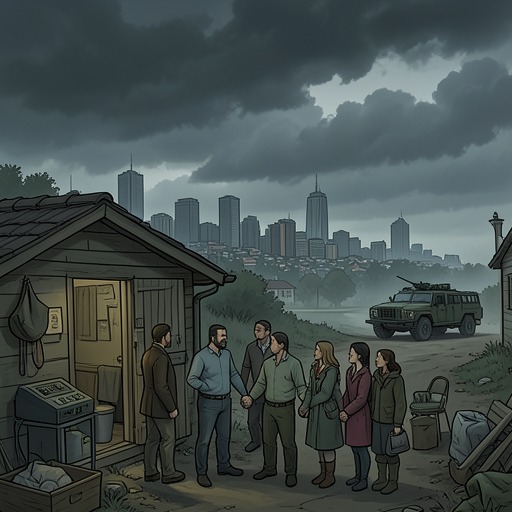
By 1978, bombs were exploding at night even in the neighborhood around Çukurcuma. Political factions controlled streets leading toward Tophane and Karaköy, while the residents of Çukurcuma Hill—including petty bureaucrats, workers, and students sympathetic to Kurdish, Alevi, and left-wing groups—lived amid their own armed political allegiances. Militants from opposing sides sometimes fought to control a street, coffeehouse, or small square. Bombings attributed to gangsters acting under distant direction could set off fierce battles. The account describes violence as dispersed through ordinary urban places, so that a street or local café could become a site of danger rather than merely part of the city’s daily fabric.
The danger also shaped travel. Çetin Efendi, who drove Kemal to the Keskin family’s home, was repeatedly caught in crossfire and uncertain where to park or wait. Kemal sometimes proposed going alone, but Çetin refused. Leaving the house could be more perilous than arriving: after dinner, the routes through Çukurcuma, Tophane, and Cihangir were unsafe, and driver and passenger exchanged fearful looks in the mirror as people put up posters, pasted notices, and wrote slogans on walls. These small details show how political conflict occupied the city not only through spectacular attacks but through the anticipatory caution required to cross it.
The household as refuge—and witness
The evening news carried reports of bombings, killings, and massacres into the Keskin home. The family felt comparatively safe indoors, yet worried about what would come next. They were often reluctant to discuss the news directly, turning instead to the television presenter Aytaç Kardüz and the familiar humor of Tarık. Repeated jokes and shared laughter could momentarily restore the household’s ordinary rhythm, but the news kept bringing the violence back into the room. Home offered shelter, not separation from the political crisis.
That shelter had a pattern measured by television and meals. Kemal visited Çukurcuma regularly for seven years and ten months, from October 23, 1976, to August 26, 1984; his notes counted 1,593 suppers across 2,864 days. The family’s wall clock represented the continuity of the outside world, while the television increasingly set the evening’s practical timetable. Kemal often arrived around seven and left after the nightly broadcast ended, near midnight. This repeated domestic schedule made the visits a private measure of time, but it could not keep public events from entering: television showed the news, and a coup-era address could appear among the programs watched at the table.
In September 1980, four years after the visits began, a military coup brought martial law and a ten o’clock curfew. Kemal then had to leave the Keskin home at a quarter to ten, before he felt he had spent enough time with Füsun. His driver hurried through streets emptying for curfew, and the reduced time together became a personal deprivation. The restriction demonstrates how political authority could regulate private life through a deadline as well as through the danger of violence in the streets. The household’s evening refuge remained meaningful, but its hours were no longer entirely its own.
Public consequences and private resonance
The escalation also damaged Istanbul’s cinema industry. As bombings and street battles made families less willing to go out at night, cinema audiences dwindled. Producers stopped investing in the kinds of films that had drawn summer crowds, and film workers increasingly depended on commercials or low-budget productions. The Pelür Bar remained crowded, but its gathering of film people reflected unemployment as well as industry life. Political violence therefore affected not only movement through the city but also the livelihoods and cultural venues that depended on people feeling safe enough to gather.
Kemal’s account repeatedly brings public catastrophe close to private distress without treating them as identical. In November 1979, an oil tanker collision near Haydarpaşa set the Bosphorus alight. The city talked of the fire, while Kemal associated it with political assassinations, breadlines, inflation, and the country’s impoverishment; he also felt it echoed disasters in his own life. That association reveals how a crisis-stricken public world colored his personal experience. The fire was not itself a political attack, but its place among the period’s disasters shows how thoroughly fear and hardship had become part of the atmosphere in which he understood his private longing.
Violence, routine, and narrative form
The narrative’s strongest contrast is between the scale of the crisis and the modest repetitions that persist within it: suppers, television, jokes, journeys by car, and the decision to sit together. Some evenings pass in silence, with rain at the windows or a car clattering down the hill; at other times, an explosion sounds in the distance. Such ordinary details do not cancel the violence. They make clear what it threatens and why the household’s routine feels precious to Kemal. His visits continue, but their setting is neither timeless nor secure: political news interrupts the family’s evening, dangerous streets frame each journey, and curfew cuts short his stay.
The account also places popular cinema beside the violence of the surrounding society. At an open-air screening, Kemal watches Orhan Gencebay’s melodramas with Füsun, and the films’ stories of suffering, shame, and love provide a shared emotional language. Later, as audience fear empties cinemas and the film business falters, the connection between public life and popular entertainment becomes material as well as thematic. Political violence changes who can gather to watch a film, while the melodramas give audiences a way to encounter sorrow together. Across these scenes, the late-1970s crisis is presented not as a single episode but as pressure on the spaces, schedules, work, and shared pleasures of everyday life.