Quince grater
The Museum of InnocenceThe Quince grater is an ordinary kitchen tool that becomes one of Kemal Basmacı’s most revealing keepsakes: taken from Füsun’s family home after an evening of quince-jelly making, it turns a private memory into a fraught encounter with soldiers enforcing martial law. Its return brings a small, disproportionate happiness, showing how the objects Kemal collects preserve not merely things but the texture of the life he longs to remain inside.
A domestic object
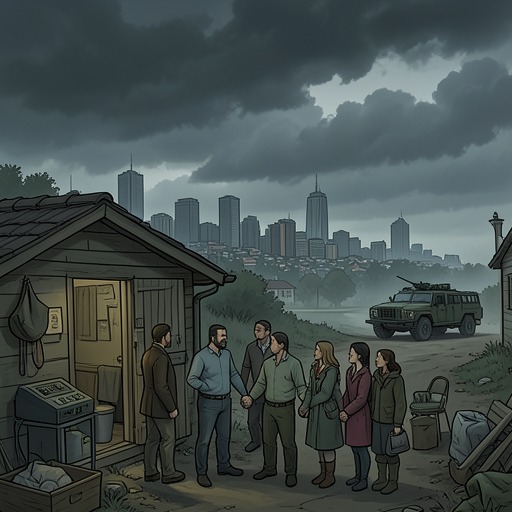
The grater enters the story through a particular evening at the Keskin home. On arriving, Kemal smells quince jelly; Nesibe explains that she and Füsun have spent the afternoon boiling the fruit over a low flame and talking together. He imagines Füsun slowly stirring the jelly with a wooden spoon while her mother attends to other work. The grater belongs to this same unremarkable domestic world: preparation, shared labor, conversation, and the smell of fruit in the house.
That scene matters because Kemal’s attachment to Füsun is sustained through repeated evenings rather than dramatic declarations alone. He visits her family for supper over seven years and ten months, returning 1,593 times across 2,864 days. The grater is lifted from the kitchen amid this accumulated familiarity. It is not valuable because of its rarity or beauty; its value lies in its connection to a specific household and to an evening whose small details Kemal has made precious.
Taken from the Keskin home
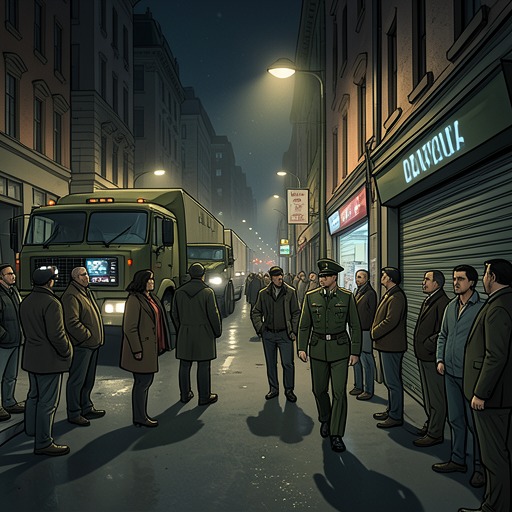
After the visit, Kemal and the chauffeur Çetin are driving home in the Chevrolet when soldiers stop them on Sıraselviler Avenue, fifteen minutes before curfew. Kemal has picked up the grater without anyone noticing, by instinct or force of habit. He has even taken it from his coat pocket and placed it on the seat beside him, like a hunter displaying a prize. The casual theft gives him a moment of pleasure: he has managed to leave early without struggling to do so, yet still carries away something from Füsun’s home.
The soldiers inspect identity cards and search the car. When one asks whose the grater is and what it is, Kemal finds himself unable to name it. His silence is not simple forgetfulness. He fears that explaining the object would expose the routine behind it: years of visiting Füsun and her family, often four times a week, and the humiliating intensity of his attachment. The tool, ordinary in the kitchen, has become incriminating in public because it bears the evidence of the private life he cannot openly explain.
Kemal later connects this speechlessness to a childhood classmate who fell silent when questioned at the blackboard, unable to answer even a simple yes-or-no question. On Sıraselviler Avenue, he recognizes a similar paralysis in himself. His passion, he reflects, has turned inward rather than leading toward a freely shared life with Füsun. The grater makes that inwardness visible: he can take an object from her world, but cannot say what it means to him.
Confiscation and return
Çetin breaks the silence by identifying it as an ordinary quince grater. The soldier still takes the object and the men’s identity cards away to an army truck. Under the glare of the cars waiting behind them, Kemal sees the grater sparkle briefly before disappearing inside. Its seizure transforms a domestic utensil into the focus of an anxious wait. He imagines it being handled by an officer and dreads losing it, while announcements about martial-law prohibitions and suspects caught play on the radio.
When the soldier eventually clears the way for the Chevrolet, Kemal gets out and goes to the army truck to ask for the grater back. The soldier remarks that he can speak after all. The exchange turns the object’s return into more than the recovery of property: Kemal has overcome his silence, if only to reclaim a thing whose meaning no one else could know. The soldiers ask whether he pays his taxes on time; then they say nothing more. As Çetin drives him home carefully, Kemal feels a little heartbreak but also happiness at being reunited with the grater.
The change in his perception extends beyond the object. The empty Istanbul streets, which daylight makes ugly, seem mysterious and almost poetic on the drive home. After an evening dominated by curfew, inspection, and fear, the grater’s recovery restores a small, private continuity. The satisfaction is modest, but its intensity reveals how precariously Kemal’s sense of comfort depends on preserving tokens of Füsun’s world.
Memory, collecting, and private time
Kemal’s other collected things work in a similar way. A saltshaker, a dog-shaped tape measure, a can opener, or a bottle of sunflower oil can call back a particular moment at the Keskin dinner table; one object can summon the larger experience of sitting with Füsun and her family. The grater is especially legible as a memory vessel because its story retains both ends of the connection: the afternoon’s jelly-making at home and the later journey through streets governed by curfew.
Its movement from kitchen to car to army truck, and back into Kemal’s possession, sets domestic time against official time. At the Keskin home, the evening unfolds through familiar food and companionship; outside, soldiers check identities and the approaching curfew determines when Kemal must leave. The object crosses between those worlds. It makes the political restrictions tangible without becoming a symbol detached from its practical use: it remains a grater, but one that Kemal cannot regard as merely a grater.
The episode therefore concentrates the logic of his collecting. He keeps objects because they anchor remembered moments, and because memory allows him to return to a life he cannot openly claim. The grater’s brief disappearance makes that dependence palpable. Its recovery cannot resolve Kemal’s longing or change his relationship with Füsun, but it gives him a moment of joy and lets an ordinary piece of household life survive the journey into his private collection.