Tahir Tan
The Museum of InnocenceTahir Tan is an actor in the Istanbul film world whose interest in Füsun Keskin becomes the focus of a confrontation at Huzur Restaurant in Tarabya in the summer of 1977. His attempt to approach Füsun’s parents about film roles exposes the conflict between her acting ambitions and the family’s objections to scenes involving kissing. For Kemal, Tahir is both a rival near Füsun and a recurring reminder that the film business can bring other men into her orbit.
Identity and Place in the Film World
Tahir appears as a working actor connected to the commercial film industry and its social circles, rather than as a private acquaintance outside them. The account first places him among people moving between Pelür Bar, producers, and prospective film projects. His professional standing gives him access to Füsun’s potential roles, but it is his personal interest in her that shapes his importance to the narrative.
The narration does not establish a relationship between Tahir and Füsun. Instead, it presents Kemal’s interpretation of Tahir’s attention, the offers made to Füsun, and the suspicions these circumstances produce. That distinction matters: Tahir’s actions are described through Kemal’s recollection, which repeatedly turns a question of work and access into one of jealousy and rivalry.
The Huzur Restaurant Confrontation
Before the confrontation, Kemal remembers an earlier evening in Tarabya when Füsun sat beside her husband, Feridun, and talked about film-world gossip. The experience stayed with Kemal. On a later outing, after leaving Pelür Bar, he brusquely told one of Feridun’s friends there was no room in the car because the group planned to collect Füsun’s parents for dinner. Kemal recognized the man’s surprise and anger but dismissed him from his thoughts. Once they reached Çukurcuma, Kemal and Füsun persuaded Nesibe the seamstress and Tarık to join them at Huzur Restaurant.
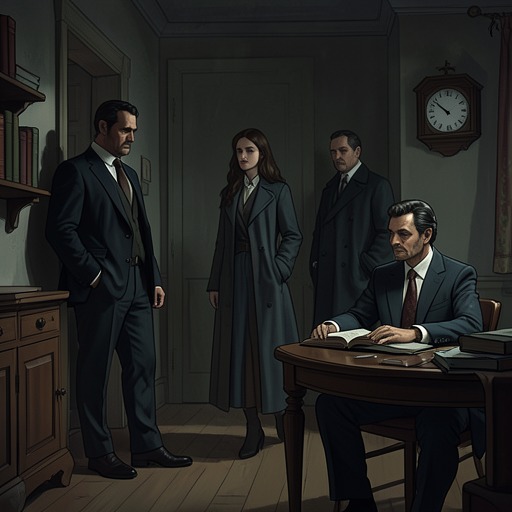
The man turned out to be Tahir. He arrived with a friend and approached the table, explaining that he wanted to speak with Füsun’s parents. His manner, as Kemal describes it, resembled a young man seeking a girl’s parents’ permission before inviting her to dance. Tahir told Nesibe and Tarık that producers Muzaffer Bey and Hayal Hayati had offered Füsun important roles, and that they understood her father had withheld consent because the films included kissing scenes. Feridun rejected that account coldly. The noise in the restaurant made it unclear whether Tarık heard Tahir or chose not to respond.
The exchange grew tense. Tahir’s friend took him away, while Feridun restrained Kemal by the shoulder and sat him down, preventing the disagreement from becoming a fight. Kemal later explains that men in Turkey could treat even a minor pretext as grounds for a physical confrontation, and that backing away could itself be regarded as dishonorable. Against that social pressure, Feridun’s intervention ended the immediate clash. Tahir left without securing a response from Füsun’s parents.
The scene closes not with a resolution about the roles, but with a change in the meaning Kemal assigns to Füsun’s behavior. As she smoked and held his gaze without looking away, he saw her as more challenging and self-possessed than before. The encounter therefore reveals more than Tahir’s interest: it sharpens Kemal’s sense that Füsun’s expectations and independence have changed, even as he remains intent on interpreting events through his own attachment to her.
Aftermath and Renewed Restrictions
After the Tarabya evening, Kemal concluded that Tahir had become infatuated with Füsun after seeing her at Pelür Bar and had persuaded Muzaffer Bey and Hayal Hayati to offer her roles. He also considered another possibility: that the producers had made their offers after noticing Tahir’s interest. Füsun later acknowledged that she had at least encouraged the interest behind the offers. Kemal treated this as a betrayal, a judgment that expresses his possessiveness as much as it records her conduct.
The confrontation had concrete consequences for Füsun. After the summer 1977 incident, she was barred from the film-world gathering places in Beyoğlu, especially Pelür Bar. Her parents, frightened by what had happened, also temporarily restricted her contact with neighborhood friends and required her to ask her mother before going out. Feridun promised that he, too, would stay away from Pelür Bar, but those assurances did not undo Füsun’s anger at the limits imposed on her. The effort to get an art film underway became, in Kemal’s view, the best hope of lifting her spirits.
Tahir’s presence in Kemal’s thoughts outlasted the immediate dispute. During a later period of severe strain in the Turkish film industry, Kemal went to Pelür Bar at Feridun’s insistence and drank through the night with its struggling film crowd. Tahir was there, and Kemal recalled speaking with him amiably. The encounter shows that their earlier clash did not prevent them from occupying the same professional and social world; it does not, however, establish that the underlying rivalry had been resolved.
Casting, Rumor, and Recurrence
The dispute returns when Kemal and Feridun consider a screenplay for their first film together. Feridun describes a suggestive role intended for Papatya, with revealing clothing and a stripping scene, and says that Tahir Tan must play the male lead. Kemal immediately objects to Tahir’s casting. The two men argue over him as if this were the central issue, although their deeper disagreement concerns using Papatya rather than Füsun in the project. Feridun urges Kemal not to let emotion govern the decision and to put the Huzur Restaurant episode behind them.
The screenplay’s plot—a rich man seduces a beautiful distant relation and abandons her, after which she seeks revenge as a singer—makes the casting question especially charged for Kemal. It combines a role for Papatya with Tahir’s proposed participation, reviving Kemal’s suspicions about Tahir’s interest in Füsun. The role was eventually judged unsuitable for Füsun, and Kemal agreed to finance the film partly to please Feridun. Tahir’s proposed role thus becomes one point in a larger negotiation over film production, personal loyalty, and Kemal’s wish to keep Füsun away from men he distrusts.
Tahir also figures in public gossip. A society column about an anonymous wealthy bachelor, called Mr. K, alleges that he is jealous of a young married woman he wants to make a star, follows her and her director husband through bars and restaurants, and objects to her being seen by other men. The column’s portrayal echoes the possessiveness that shapes Kemal’s own conduct and the public scandal surrounding his broken engagement, but it should be read as a newspaper account rather than as independent confirmation of every allegation. Tahir appears in the article’s description of the bachelor’s pursuit, while the wider piece turns the affair into a public argument about jealousy, reputation, and the expectation that an actress should accept kissing scenes if she hopes to star in a modern film.
After the commercial success of Broken Lives, Tahir again appears among the film people gathered at Pelür Bar, alongside Feridun, Papatya, Hayal Hayati, and Ekrem Güçlü. The account notes that newspapers had circulated hints of a secret affair between Tahir and Papatya when the film opened, but that the rumor had since faded and Papatya denied it. This passing report does not establish an affair. It does show how readily actors’ professional relationships and public images became material for speculation, just as Tahir’s earlier approach to Füsun had been entangled with both film offers and Kemal’s jealousy.
Narrative Significance
Tahir’s role is episodic but consequential: he connects Füsun’s ambition to enter films with the family controls placed on her, and he repeatedly brings Kemal’s jealousy into professional settings. The restaurant scene begins as a discussion of acting opportunities and parental consent, yet Kemal remembers it as a test of rivalry and possession. Later, the same tension resurfaces in an argument over a leading role, while the newspaper column reflects its wider public form as gossip about a wealthy man, a married aspiring actress, and the men around her.
Because Tahir is seen chiefly through Kemal’s recollections, his motives remain less certain than the effects attributed to his attention. He approaches Füsun’s parents, is associated with offers from prominent producers, returns as a possible leading man in a screenplay, and later shares the film industry’s social spaces with Kemal. Across these appearances, his presence marks the boundary Kemal tries to impose between Füsun and the professional world—and the repeated failure of that boundary to remain merely professional.