Temporal Illusion
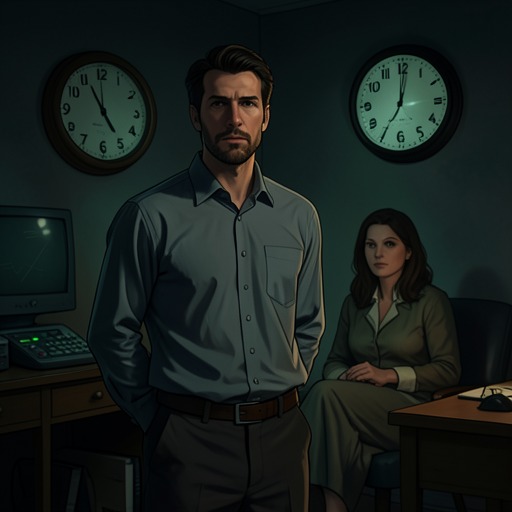
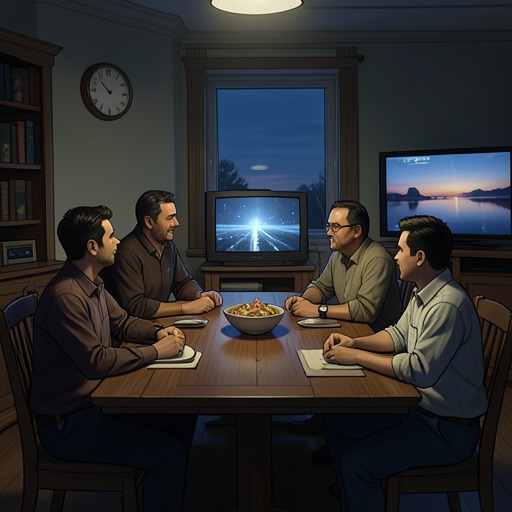
The Museum of InnocenceTemporal illusion is the sensation of experiencing the present as if it were already a memory. In Kemal’s account, it arises most intensely during his repeated dinners with Füsun and her family: familiar scenes seem to belong to an earlier time even as they are unfolding. The illusion gives ordinary moments a second life in recollection, but also makes their passing—and the eventual end of the line connecting them—hard to ignore.
Definition and the Experience of the Present
Kemal distinguishes the temporal illusion from simply forgetting the hour or losing track of a calendar. Drawing on Aristotle’s distinction between Time and the indivisible moments he calls the present, he describes Time as the line joining one moment to the next. Clocks and calendars regulate people’s relations with one another; they do not, by themselves, make a person feel the continuity of lived experience. In the Keskin home, for example, Füsun checks the black-and-white clock shown on television to see whether she has set her watch accurately. For Kemal, the detail registers their ordinary social relation to time, while her smile becomes a moment of happiness that need not involve conscious reflection on time at all.
The more painful act is to remember the line itself: to connect separate moments and recognize that the line comes to an end. Kemal presents this recognition as a source of sorrow, made more insistent by age and by intimations of death. Yet individual present moments can carry enough happiness to sustain a person for years. He says that he went to supper at the Keskin house hoping to gather such moments, and that he collected things Füsun had touched to preserve them. The temporal illusion is therefore both an experience and a later interpretation: while living a scene, Kemal feels displaced from it; afterward, he understands that displacement through the objects and memories that survive it.
Repetition and the Out-of-Time Household
The pattern develops over Kemal’s visits to the Keskin family in Çukurcuma. During the first two and a half years, the visits lose the singular quality of separate occasions. Looks exchanged with Füsun, shared meals, conversations, and excursions to the Bosphorus recur, even in winter. Each visit reenacts something that has happened before. Their repetition creates the beauty of the everyday, but also a private world that seems to stand outside ordinary chronological change. The hoped-for film project remains perpetually close to production, while the shared routine continues.
Television helps shape this strange relation to the present. Over eight years, Kemal watches hundreds of films and programs with Füsun and her family, yet can recall almost nothing about most of the works themselves. What lasts instead are isolated images: a detective’s shoes and trouser cuffs on a staircase, a chimney caught at the edge of a shot, a woman’s hair tucked behind her ear during a kissing scene, or a ferry in the background of a Turkish film. These fragments join in memory with details of Füsun watching—a raised eyebrow, the placement of her hand, or the way she leaves her fork beside her plate. The remembered scene is neither simply the television image nor simply the dinner table; it is their conjunction, reconstructed from small visual particulars.
At the beginning of 1983, Kemal enters the dining room and senses that something is missing, although the chairs remain in their usual places. The unease belongs to a wider change in his consciousness: he has begun to think of life as something imagined, like love, and to behave as if he could leave his pessimism unexamined. Watching Rear Window with Füsun intensifies the feeling. The film recalls an earlier occasion when he had watched it alone while thinking of her, but now the familiar work offers no comfort. He describes supper as a suffocating dream in which time seems to narrow. In this scene, repetition does not merely make the present feel familiar; it makes the room and the routine feel confining.
Objects as Carriers of Moments
Kemal’s collection gives material form to the temporal illusion. Cigarette stubs are especially close to what he understands as Aristotle’s indivisible moments. Some evenings he takes one away from the table, others a few; later, at the Merhamet Apartments, each stub calls up a past moment. Their value comes not from importance in themselves but from their link to a particular encounter: when Füsun and Kemal’s eyes meet, even the changed shape of a stub can preserve the confusion of that instant.
As the collection grows, Kemal no longer needs to handle every object. Seeing them is enough to recall the past they represent. A porcelain saltshaker, a tape measure shaped like a dog, a can opener resembling an instrument of torture, and a bottle of Batanay sunflower oil each become associated with a particular moment in the Keskin kitchen. The memories then expand and merge. One object can lead Kemal back to a detail; details accumulate until he can summon the larger reality of sitting at dinner with Füsun and her family. The objects do not restore the past itself. They provide a structure through which fragments of experience can be recalled as part of a whole.
This logic also informs the Museum of Innocence. Kemal asks its visitors to see buttons, glasses, old photographs, and Füsun’s combs not as things encountered only in the present, but as his memories. The museum’s arrangement makes visible the process by which objects connect separate moments. At the same time, each object points toward the limit of that process: it can preserve a trace, not return the time in which the trace was made.
Memory, Loss, and the Museum
The temporal illusion shapes Kemal’s understanding of happiness as well as grief. A person cannot reliably identify the happiest moment while living it, he argues, because the young and hopeful expect further happiness to come. Only later, when a life has taken shape, can a moment be selected and named as the happiest. That retrospective naming acknowledges that the moment is past and will not return. Kemal’s response is to possess something belonging to it: mementos, he believes, can preserve its colors, textures, images, and delights more faithfully than the people who shared it. The museum grows from this effort to hold what memory declares irretrievable.
The same transformation of familiar things occurs after Kemal’s father dies. The household objects that had served as ordinary fixtures of childhood become vessels of a lost past. In his father’s bedside drawer, old phone bills, telegrams, aspirin, and medicines appear to him as parts of a complicated picture; even the everyday view down Teşvikiye Avenue becomes an irreplaceable memento. Elsewhere, the funeral prayers at Teşvikiye Mosque have long been part of the family’s view from home. As children, Kemal and his brother imitated the funeral bearers with bolsters, and public funerals could become a diversion for visitors gathered on the balcony. These accumulated practices show how private memory is shaped by shared rituals and familiar places, and how their meaning changes when death enters the household itself.
Kemal’s journey to Paris makes the distance involved in remembering explicit. In Istanbul, reminders of Füsun surround him, and his view of her remains entangled with his obsession. Once airborne, he finds that he can think about both Füsun and their story more profoundly, as if he can see the obsession from outside it. Quiet museums offer consolation: objects arranged in separate rooms create a realm distinct from the city’s crowded streets. The movement away from Istanbul does not erase the past; it makes reflection on it possible. Across the visits, the collection, the family’s memories, and the museum, temporal illusion names the double quality of remembrance: the past can become intensely present through fragments, while the act of recognizing it as past makes its loss unmistakable.