The Art of Exchanging Glances
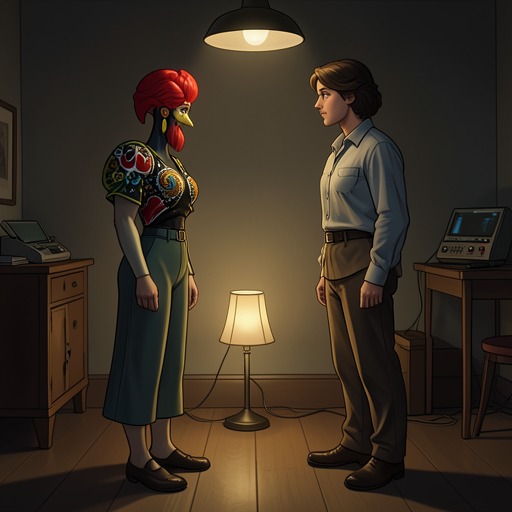
The Museum of InnocenceThe Art of Exchanging Glances is the largely wordless, deeply ambiguous communication that takes shape between Kemal and Füsun at the Keskin family’s dinner table. It lets Kemal feel that their lost intimacy remains present, even as Füsun’s averted eyes and occasional direct looks resist any clear reading. The practice becomes both a source of pleasure and a measure of their distance: Kemal treats a glance as a possible return to their shared past, but cannot know whether Füsun sees it that way.
A Language Built on Ambiguity
Kemal describes this tacit communication as a discovery made under Füsun’s tutelage. When conversation cannot carry what passes between them, he watches her face and tries to understand what her expressions convey. Yet the meaning is never secure. He wonders whether she knows that he sits with her family because he cannot forget their former happiness, then acknowledges that he may only be imagining her awareness. In this uncertain space between what is felt and what is supposed, even a look can seem to express the fact of looking rather than any message that can be confidently translated.
At first, Kemal reads powerful expressions on Füsun’s face as evidence of anger, resolve, and emotional turmoil. Later, ordinary television scenes that recall their intimacy—such as a couple kissing—can prompt him to seek her eyes. When she turns away, he experiences the refusal as painful and becomes more determined to hold her attention. A glance thus carries two incompatible possibilities: it might revive the bond he remembers, or it might reveal that Füsun wants to keep that bond unspoken or forgotten.
The Dinner-Table Gaze
Kemal’s looking becomes deliberate and persistent. He studies Füsun as if time were abundant, though at the dinner table his stares usually last only ten or twelve seconds; on his boldest attempt, he says, they continue for half a minute. He recognizes that such insistence could be understood as harassment. By staring, he makes the former intimacy visible at a family table where Füsun may prefer to conceal it. His own explanation is not that drink excuses him: he says only that surrendering this small pleasure might have made him unable to keep visiting the Keskins.
Füsun often seems to recognize his mood from his first few looks. When Kemal becomes angry and obsessive, she does not answer with a matching gaze; instead, she behaves as though she has not noticed him. The refusal intensifies his frustration, and he stares more fiercely. The contrast between his insistence and her nonresponse gives the exchange its recurring tension: Kemal wants the look to establish a claim on their past, while Füsun’s silence leaves him without confirmation. He also fears that his gaze might resemble the threatening stares directed at women in the street. Sibel had told him about men who watched women in a menacing way, and Kemal recalls a warning by Milliyet columnist Celâl Salik against staring at a beautiful woman as though with murderous intent. That comparison makes the act’s ambiguity ethical as well as romantic: Kemal experiences his gaze as love, but understands that Füsun might experience it differently.
Füsun’s Imitation and Kemal’s Claim to Understand
In October 1977, with Tarık having gone upstairs early and Füsun speaking tenderly with Nesibe, Füsun suddenly meets Kemal’s eyes. He returns the careful stare he has practiced. She tells him to stop, then imitates his expression, exaggerating it until he recognizes an unpleasant resemblance to the heroes of photoromans. Nesibe smiles at first, then warns Füsun against imitating everyone like a child. The moment turns Kemal’s gaze back upon him: what he had treated as a refined means of communication appears, in Füsun’s performance, theatrical and distasteful.
Kemal responds by assuring Füsun that he understands her very well. His later account immediately complicates that confidence. Understanding the person one loves matters, he reflects; when understanding fails, at least the belief that one understands may seem necessary. Across the eight years in which he visits the Keskin household, he says he rarely possesses even that second comfort. The gap between his certainty in the room and his retrospective admission shows how readily he mistakes the intensity of his own attention for knowledge of Füsun’s feelings.
After the confrontation, Kemal manages to leave rather than remain seated. At home, he drinks heavily and resolves not to visit again. The resolve lasts only ten days. When he returns, he reads the brightness in Füsun’s eyes at their first meeting as happiness that he has come back, and feels himself to be the happiest man on earth. They sit down and resume exchanging looks. The sequence makes the practice cyclical: a painful refusal produces indignation and withdrawal, but a later expression can restore Kemal’s hope without resolving what Füsun intends.
Shared Routine, Unequal Meanings
As the months and years pass, the dinners offer Kemal pleasures he says he had not known before. He watches television with Tarık and Nesibe, talks with them about ordinary matters, and hears Füsun join the conversation from time to time. He comes to feel that he is making a new family for himself. The repeated setting gives their glances a quiet everyday frame: they occur amid television, family conversation, and the routine of sitting together, rather than in a separate world devoted to declarations of love. That routine lifts Kemal’s spirits and sometimes makes him almost forget the sorrow that brought him there.
Yet the apparent ease of these evenings can sharpen his expectation. A chance meeting of eyes may suddenly remind Kemal of his enduring love; he then sits upright, as if awakened, and hopes Füsun will experience the same return to their former happiness. He imagines that if she, too, were briefly awakened, she would remember their shared past, leave her husband, and marry him. When he sees no corresponding sign of recollection in her expression, he becomes too dejected to rise from his chair. The same glance that revives his hope can therefore precipitate its collapse.
While the film plans remain unresolved, Kemal sees Füsun as looking blandly at him and turning her attention to television or neighborhood gossip. He interprets her composure at her parents’ table as evidence that she has found fulfillment there, and as a sign that his own pursuit has stopped: he detects no shared future and no prospect of her leaving her husband. Years later, he connects her indignant looks and other expressive gestures to the performances of Turkish films, but regards them as more than imitation. In his account, Füsun cannot explain her troubles to her parents or to a man, so her looks carry anger, desire, and other emotions that remain unspoken. This retrospective reading grants her expressions a depth that Kemal could not securely decipher while they were occurring.
Narrative Significance
The glances make the difference between looking and understanding central to Kemal’s account. He has sustained access to Füsun’s face but not to a settled meaning behind it. His attention is real and consequential, yet it is also self-involving: he reads her expressions through the happiness he remembers and the future he wants. The narrative preserves his uncertainty rather than resolving it into proof that his hopes are shared.
The practice also holds intimacy and intrusion in tension. Kemal treats staring as the remaining pleasure that allows him to endure his visits, while admitting that its persistence exposes a past Füsun may want to hide. Her imitation interrupts his romantic framing and makes the gaze available for a different judgment. Later, the dinners and their recurring looks give him a sense of belonging, but his imagined awakening still exceeds what Füsun visibly confirms. The art of exchanging glances is therefore not a reliable code that reunites the pair; it is a fragile, recurring encounter in which affection, frustration, social restraint, and uncertainty remain visible without becoming fully spoken.