The Consolation of Objects
The Museum of InnocenceThe Consolation of Objects names the solace Kemal Basmacı finds in things connected to Füsun when their relationship is interrupted. Objects cannot restore the moments they recall, but they let him revisit details of shared happiness and endure her absence. The idea also links private longing to bereavement and to Kemal’s later understanding of museums: preserving fragments of experience is a response to the knowledge that time and life move toward an end.
The object as a vessel of shared memory
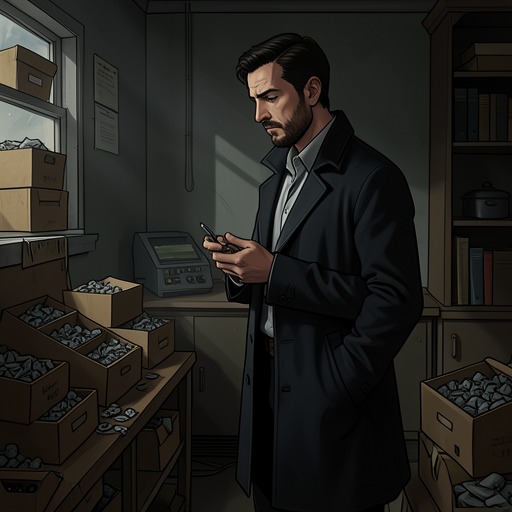
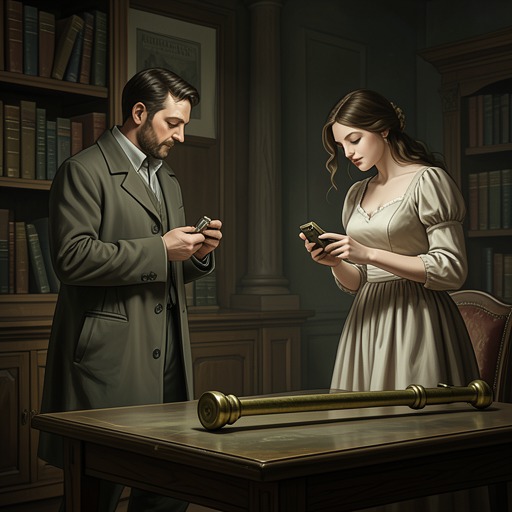
Kemal’s account gives the idea its clearest form after Füsun fails to arrive at the Merhamet Apartments. He is overwhelmed by her absence and cannot readily leave the room where they had met. Instead, he turns to memories and to things that seem to hold them. Familiar crescent rolls from Nişantaşı patisseries recall their conversations; his mother’s hand mirror brings back Füsun’s playful imitation of the singer Hakan Serinkan; and his toy Ankara Express train and space gun recall games they shared. The objects console him not because they solve the separation, but because handling or remembering them briefly restores the texture of being together.
A sugar bowl is tied to a more difficult memory. During a quiet spell between them, Füsun had asked whether Kemal would have been happier if they had met before he met Sibel. Its place among the remembered objects holds both affection and the unease of a relationship shaped by his engagement to someone else. The consoling object therefore does not preserve an uncomplicated idyll: it can also bring back a question that exposes the conditions and tensions of their love.
One cigarette stub Füsun left in an ashtray makes the distinction between remembrance and preservation especially concrete. Kemal considers consuming it, then stops because doing so would destroy the remaining relic. Instead, he keeps it and uses its continued presence to sustain a connection in her absence. The moment captures the logic of his collecting: an object can stand in for a past encounter only while it remains, materially, outside the act that would use it up.
Repetition and the pain of absence
Kemal makes the return to objects into a daily practice. Until the middle of July, he visits the Merhamet Apartments at two o’clock each afternoon, continuing to hope that Füsun might come. He spends the two hours in bed with objects such as a nutcracker or a watch with a ballerina, using the memories associated with them to occupy the time they once shared. The routine does not mean his grief is steadily diminishing. Although he sometimes mistakes his growing ability to distract himself for growing accustomed to Füsun’s absence, he recognizes that the underlying pain continues to accumulate.
This repeated return gives consolation a limited and ambivalent force. The objects help Kemal remain inside memories of happiness, but they also keep him attached to the room and to the expectation of Füsun’s return. After remembering how his grandmother changed her bed and bedroom following his grandfather’s death, he resolves to leave the room and its memory-laden things. He cannot do so. His embrace of the objects becomes, in his own account, evidence both of their power to console and of his difficulty separating himself from the past. The children playing football in the garden help keep him there until nightfall; only later, after drinking, does he attend to the cut he had forgotten about.
Objects, bereavement, and time
Kemal’s reflections place the keepsakes of love within a wider experience of loss. After his father dies, familiar possessions in the family home take on new value as vessels of childhood and of a world that has ended. Kemal looks through his father’s bedside drawer, among its old phone bills, telegrams, medicines, and other belongings. He also drinks the Yeni Rakı his father had left unfinished. These objects do not belong to the romance with Füsun, but they reveal the same process: bereavement changes the meaning of ordinary things by making their connection to an irrecoverable life newly visible.
The family apartment had also shaped Kemal’s childhood understanding of death. From its balcony overlooking Teşvikiye Mosque, the family watched funeral processions, while children in the household imitated the movement of bearers with bolsters. Public funerals could become a diversion for visitors, yet the ceremonies also made death a recurring presence in the family’s daily surroundings. Set beside Kemal’s private keepsakes, this memory shows how objects and places can preserve not only individual attachments but the repeated practices through which a family encounters loss.
Kemal’s later account connects this work of memory to time. He distinguishes individual present moments from the line that joins them, and argues that tracing that line forces people to confront its end. The objects he collected from Füsun’s home carry particular moments within them; keeping them is an attempt to preserve happiness against the knowledge that neither the moments nor the people in them can return. His claim is not that objects abolish time, but that they make some of its passing moments available to memory.
From private keepsakes to museums
The movement from personal objects to museums follows from this attempt to preserve moments. In Paris, Kemal discovers that leaving Istanbul allows him to think about Füsun and his own obsession from a more detached perspective. He finds consolation in less-visited museums, including the Musée Édith Piaf, where personal belongings such as hairbrushes, combs, and teddy bears are displayed. Wandering through these collections, he experiences the museum as a separate, comparatively timeless space within the city. The encounter gives him a way to understand how objects can make an absent life present without restoring it.
In this sense, The Consolation of Objects is both an account of Kemal’s private practice and an argument for the significance of collecting. His keepsakes are intimate and partial: each is connected to a particular visit, game, conversation, or domestic routine. A museum gathers such fragments into a form that can be seen and revisited. For Kemal, preservation answers grief by keeping the evidence of happiness, while also acknowledging why that evidence is needed: the remembered moment belongs to the past, and its survival as an object cannot make it happen again.