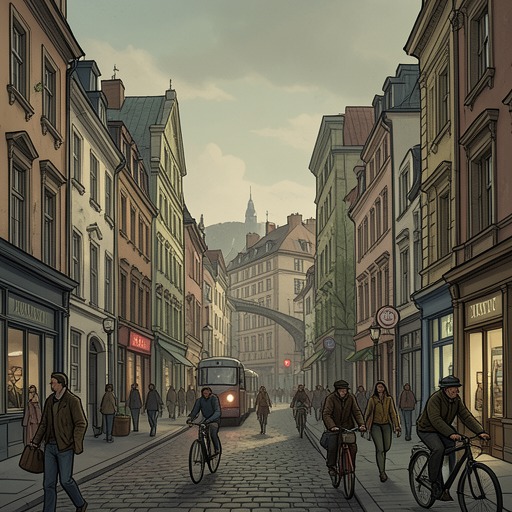
Tophane
The Museum of InnocenceTophane is one of the Istanbul districts through which the novel’s remembered city is shaped by political violence. In the late 1970s, streets leading toward Tophane and Karaköy were described as controlled by nationalist factions, and travel through the surrounding neighborhoods became a daily calculation of risk rather than a neutral passage across the city.
Setting and Urban Context
The account situates Tophane within a contested urban landscape. On the crooked streets above Çukurcuma, residents included petty bureaucrats, workers, and students sympathetic to Kurdish, Alevi, and left-wing groups; elsewhere, nationalist factions held control of streets leading toward Tophane and Karaköy. The contrast does not make any neighborhood safe: the narrative emphasizes that armed groups on opposing sides could fight over a street, coffeehouse, or small square.
Violence and Movement
By 1978, bombs were exploding at night even in the neighborhood. The account describes some explosions as following attacks attributed in the newspapers to gangsters directed from afar by the secret services or another branch of the state; armed confrontations could follow. Violence therefore altered the practical use of the city, making routes and stopping places unpredictable.
This danger shaped the journeys of Kemal Basmacı and his driver, Çetin Efendi. Çetin was often caught in crossfire and could not be sure where to park the Chevrolet or which coffeehouse would be safe to wait in. When Kemal offered to go to the Keskin household alone, Çetin firmly refused. On their return, streets in Çukurcuma, Tophane, and Cihangir were unsafe; as they passed walls being covered with posters, notices, and slogans, the two exchanged fearful glances in the mirror.
Narrative Significance
Tophane’s importance is less that of an isolated destination than of a district embedded in the routes and hazards of Istanbul. The threat appears at the level of ordinary logistics—where a car can stop, where a driver can wait, and whether a familiar journey can be made safely. Against the private routine of Kemal’s visits to the Keskin household, the district’s unrest makes the surrounding city a force that interrupts and constrains domestic life.