Westernization and modernity
The Museum of InnocenceWesternization and modernity in the novel are neither a clean break with tradition nor a simple adoption of European habits. They are aspirations lived through restaurants, boutiques, education, business, and intimate relationships, while older expectations continue to shape wealth, reputation, and women’s choices. The distance between a modern self-image and the social rules that persist beneath it gives the concept its central tension.
An uneven transformation
The narrator places the story in a period when Westernization and urbanization were changing Istanbul, but not at the same pace or in the same way. Among affluent families, travel and study in Europe could confer distinction, and European ways of life offered an attractive model of sophistication. Yet the narrator’s account of premarital chastity makes clear that modernizing influences had not erased the moral codes attached to women’s sexuality. New aspirations and older expectations could occupy the same household, and even the same relationship.
This unevenness also appears in the changing city. The expansion of textiles and exports in the early 1970s coincided with Istanbul’s population tripling and land prices rising sharply, especially in neighborhoods such as Nişantaşı. Kemal’s family fortune grew with that economic change, but the family name, Basmacı, still signaled three generations of cloth manufacture. His retrospective discomfort at being troubled by a counterfeit handbag, despite the family’s accumulated wealth, reveals how modern status remained entangled with class origins and the means by which money had been made.
European taste as social performance
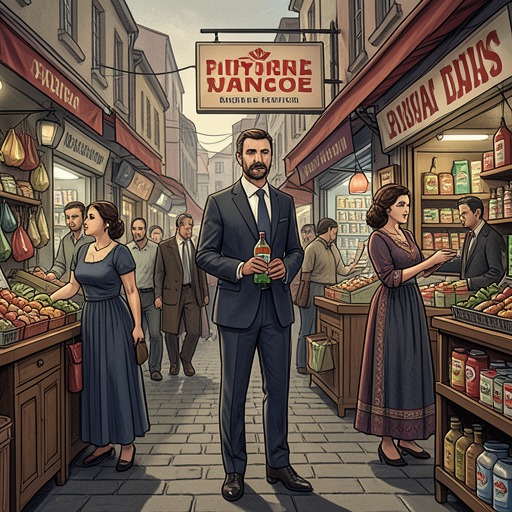
The Şanzelize Boutique and Fuaye Restaurant show how European identity could be displayed through consumer choices. The boutique sold imported goods and copies of fashions shown in foreign magazines to wealthy customers in districts such as Şişli, Nişantaşı, and Bebek. Its name evoked a famous Parisian avenue, translating European glamour into a local commercial setting. Sibel’s admiration for a Jenny Colon handbag brings Kemal back to the shop, where he encounters Füsun; an object associated with fashionable taste thus becomes the starting point of a life-changing sequence.
Fuaye Restaurant offered a related, but distinct, performance of belonging. It served Istanbul’s small wealthy circle with an imitation-French atmosphere, while its understated name suggested a city poised at Europe’s edge rather than fully inside it. The narrator contrasts this style with the later preference of newly rich customers for grander names and familiar traditional food, joining cultural taste to changing class display. Fuaye eventually sank into oblivion as those preferences shifted. The restaurant’s history makes modernity feel provisional: its European associations once signaled distinction, but neither fashion nor status remained fixed.
The same mixture of modern aspiration and inherited position shapes Sibel’s background. Her father was a retired ambassador, but her family had sold its remaining ancestral land and become poor. At moments of insecurity, she recalled her family’s connections and history, including her grandmother’s piano playing and her grandfather’s service in the War of Independence. Kemal found her timidity moving. Her story complicates the idea that European education or social polish could by themselves dissolve class anxiety; family history remained a resource for asserting standing even when wealth had diminished.
Modern intimacy and the marriage promise
Kemal’s relationship with Sibel places the language of modern freedom under pressure. After graduating from business school in America and completing military service, he entered his father’s firm, Satsat, as general manager. The company’s profits depended on accounting arrangements that moved earnings from other family businesses into its accounts, so its apparent commercial success did not simply measure Kemal’s own achievement. In the office, his intimacy with Sibel took place alongside his work, but her reluctance reflected a wider fear of premarital sex among Turkish women at the time.
Sibel had spent time in Europe and sometimes presented herself as one of the brave women willing to cross that boundary. She had begun her relationship with Kemal only after believing his intentions were serious and trusting that marriage would follow. By the time of their engagement, she considered the arrangement to have lasted long enough and expected them to marry. Kemal likewise intended to marry her, but later recognized that her trust created a responsibility within a society that treated a woman’s sexual reputation differently from a man’s. Their claim to be free and modern therefore rested on a marriage promise that protected them from the harsher social meanings attached to sex outside a recognized union.
The narrator’s later conversation with Füsun exposes another consequence of that language. He contrasts Sibel’s trust with what he calls Füsun’s modernity and courage, and subsequently recognizes the implication: by casting Füsun as free of traditional concern, he had failed to acknowledge that premarital intimacy might carry a burden for her too. His remorse shows how modern categories can conceal rather than resolve unequal obligations. The same conduct could be understood as evidence of trust in one woman and as proof of independence in another, depending on the story a man told himself about their choices.
Chastity, reputation, and gendered modernity
In his later account, the narrator sets out the social consequences attached to virginity in 1975. In wealthy Westernized circles, a couple already regarded as serious, especially one formally engaged, might be tolerated. Even there, women could prefer to describe premarital intimacy as a sign of being free and modern rather than as trust in a future husband. Where a couple’s commitment was not socially established, the prevailing code could instead make marriage the expected remedy when a woman’s honor was thought to be at stake. The rules thus allowed limited change while retaining the idea that a woman’s reputation depended on male commitment and public recognition.
The narrator also describes a broader double standard sustained by fantasy. Men from poor, provincial, and petite-bourgeois backgrounds, as well as young men in affluent districts, could believe in stories of women who supposedly sought sex for pleasure in a European manner. That imagined figure was not evidence that women enjoyed equivalent freedom; in the narrator’s account, it was a widespread legend shaped by men’s desires and sexual frustration. His discussion of his friend Hilmi complicates the portrait without overturning it: Hilmi could participate in a culture of male bravado and still defend women from harassment based merely on their clothing or appearance.
The concept’s narrative significance
Modernity in the novel is therefore both material and intimate. Imported fashions, European-style dining, family fortunes, and overseas education mark social change, but none guarantees freedom from inherited codes. The boutique can sell a European image, and a couple can describe itself as modern, while women still bear disproportionate risks and men still interpret their choices through assumptions about marriage and honor.
The retrospective form sharpens this contradiction. Kemal narrates earlier confidence from a later position in which he can name its limits: he recognizes that calling Füsun modern and courageous did not make her experience uncomplicated, and that Sibel’s apparent freedom depended partly on trust and the expectation of marriage. The novel’s account does not treat Westernization as a completed transition. It presents it as a contested vocabulary through which characters seek distinction and autonomy, even as class, gender, and reputation continue to set the terms of what those aspirations can mean.