Fenton Prentice–Edward Niedland relationship
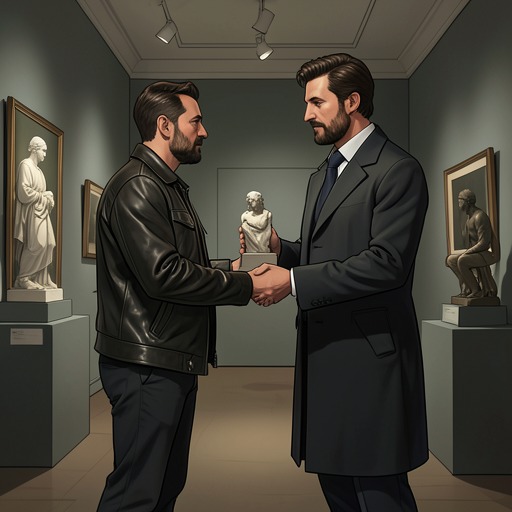
The Mystery of The Invisible DogFenton Prentice and Edward Niedland’s relationship joined personal friendship with artistic mentorship and patronage. Prentice called Edward his friend and protégé, admired him as a fine artist, and commissioned the Carpathian Hound especially for himself. Edward’s death left Prentice grieving; the unfinished business of the sculpture’s delivery made that loss tangible when the work was stolen.
Friendship and Artistic Regard
Prentice described Edward not merely as an artist whose work he collected, but as a friend and protégé. His account of Edward’s death was direct: Edward had died of pneumonia two weeks earlier. Prentice called it a great loss and said that accepting it was difficult for him, as it was for Edward’s brother, Charles Niedland. When Edward’s home was then burglarized, Prentice’s distress arose against the immediate background of that bereavement.
Prentice’s admiration was grounded in Edward’s practice. Charles explained that Edward was a sculptor rather than a painter, working in glass and crystal, sometimes combining crystal with metals. Prentice likewise praised Edward’s talent and youth, presenting him as an artist whose creations mattered beyond their value as possessions.
The Commission and the Exhibition
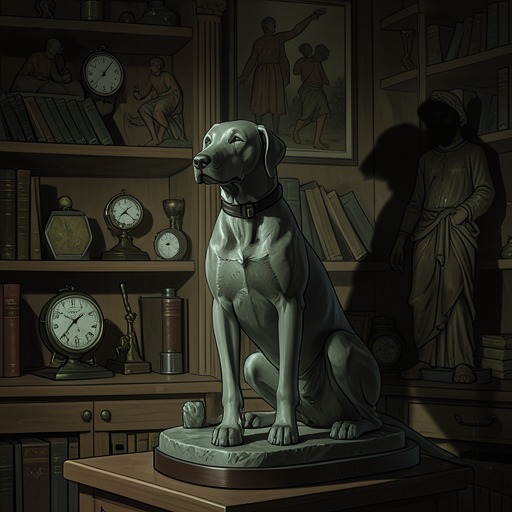
The Carpathian Hound gives the relationship its clearest material form. Edward made the sculpture especially for Prentice, but the piece was finished a month before the burglary and had not yet been delivered. Edward wanted to include it in a show of his newer work at the Mailer Gallery; Prentice agreed to let the sculpture appear in the exhibition before it came into his possession. The commission therefore connected Prentice’s private patronage with Edward’s public artistic career.
The work was no ordinary glass ornament. Charles described Edward repeatedly shaping and reheating nearly molten glass or crystal before finishing it through grinding, buffing, and polishing with acid. The completed Hound combined crystal and gold: its eyes were rimmed with gold, and gold formed the froth on its jowls, recalling the legendary dog’s glowing eyes. That distinctive craftsmanship helps explain why Prentice feared the stolen sculpture could attract buyers who knew Edward’s work.
Loss, Theft, and the Artist’s Legacy
Prentice’s response to the burglary was intensified by the loss of his friend. After Charles had left through the courtyard passage, Prentice sat on the steps as though too exhausted to remain standing and exclaimed at the desecration. He mourned both the violation of Edward’s home and the death that had made the artist’s absence so recent. The missing sculpture was at once a commissioned object, an unreached delivery, and a surviving example of Edward’s work.
Prentice also recognized that artistic esteem could expose Edward’s work to exploitation. He warned that people without scruples, if they knew Edward’s creations, might willingly deal with thieves to obtain one. His concern makes the Hound’s theft more than a loss between patron and artist: it threatens to turn the legacy Prentice admired into illicit merchandise. In the relationship’s final, unresolved circumstance, Prentice still had not received the work Edward made for him.