
Kirilov’s Fatal Logic
The Myth of SisyphusThis flow traces Kirilov’s attempt to turn divine absence into human godhood and suicide into a demonstration of freedom.
increasing Bearing strength in each event
 decreasing
Bearing strength in each eventdecreasingEngineer of Doubt
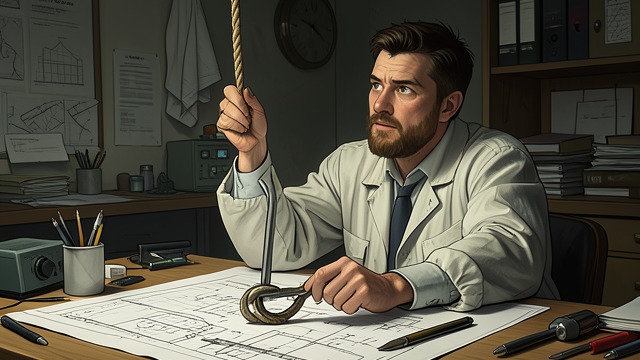
Engineer of Doubt
Necessary God
Kirilov feels that God is necessary while believing that God cannot exist. The contradiction becomes the foundation of his personal logic.
Reason Toward Death
Rather than soften the contradiction, he treats suicide as its direct consequence. His intelligence becomes a mechanism driving him toward an act.
Terrestrial Divinity

Terrestrial Divinity
Godless Godhood
Kirilov’s claim to be god means absolute earthly independence, not supernatural power. Divinity is redefined as freedom from service to an immortal master.
Human Particularity
His habits, irritability, health exercises, and emotional responses keep him recognizably human. The theory grows out of ordinary bodily life.
Freedom’s Burden

Freedom’s Burden
New Liberty
Kirilov wants death to assert insubordination and a dreadful freedom. The act is meant to prove that no external authority controls the final decision.
Contradictory Proof
By dying, he leaves the world in which freedom could be lived. His demonstration therefore turns independence into self-annihilation.
Sacrifice for Humanity
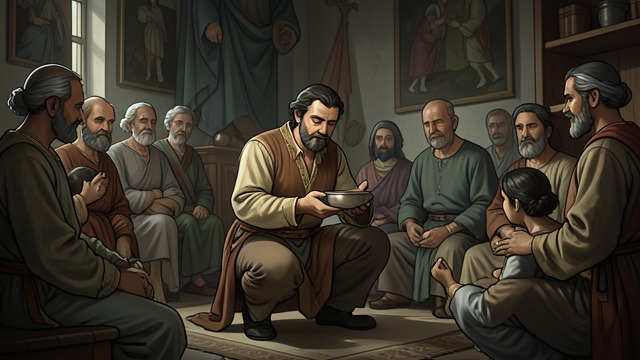
Sacrifice for Humanity
Pedagogical Intention
Kirilov hopes others will learn from his example and become earthly sovereigns. His death is imagined as the beginning of a human revolution.
Evangelical Structure
Although he rejects God, his action resembles a sacrifice for others. The contradiction exposes how easily revolt can reproduce religious patterns.
The Pistol’s Silence
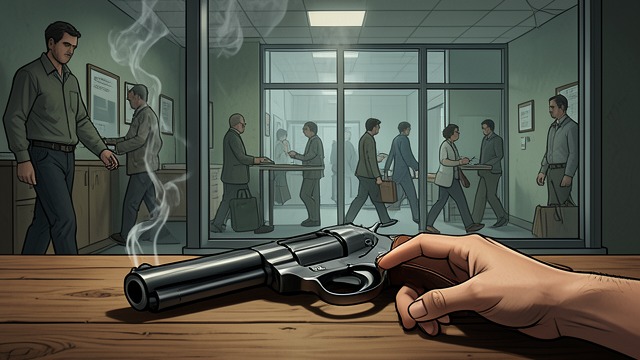
The Pistol’s Silence
No Final Liberation
Kirilov’s death does not awaken humanity into universal freedom. The world continues to cherish its familiar hopes.
Failed Demonstration
The pistol announces a logic that remains private. His fate becomes an example of the danger of making an idea more important than the life that produced it.
opening of the Kirilov section
early Kirilov section
middle Kirilov section
late Kirilov section
conclusion of the Kirilov discussion
