Boredom
The Myth of SisyphusBoredom is not merely a lack of amusement but a condition in which habitual life loses its meaning and exposes the absurd. It begins inside repetitive routines, appears as a defense against anxiety, and can become either a return to unconscious habit or the first movement toward lucid consciousness. In Oran, the same condition is projected onto the city itself: its streets, entertainments, and social customs repeatedly turn experience into a closed circuit of habit, display, and indifference.
Boredom and the Awakening of Consciousness
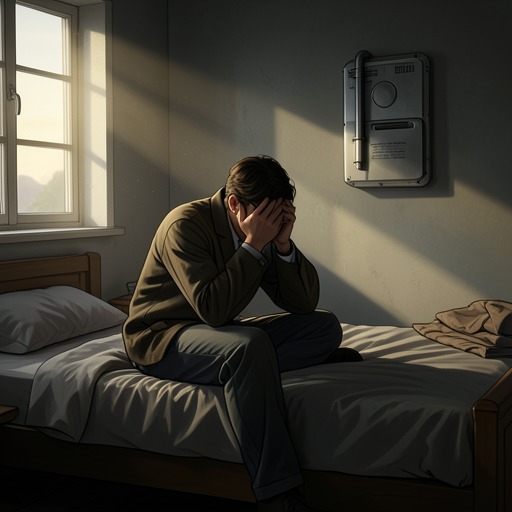
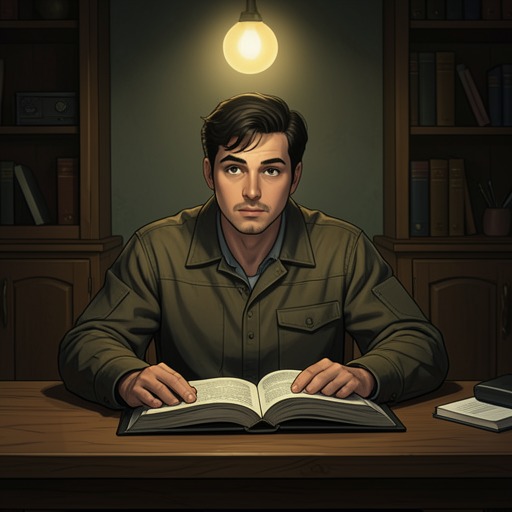
Boredom emerges when the ordinary sequence of life ceases to carry a person automatically. The daily pattern of rising, taking the streetcar, spending four hours in an office or factory, eating, returning to work, sleeping, and repeating the same rhythm from Monday through Saturday can usually be followed without reflection. Then the question of why suddenly arises. The important point is that weariness comes at the end of mechanical life but also inaugurates consciousness: it awakens the mind and provokes what follows.
That awakening does not guarantee liberation. Consciousness may be followed by a return to the chain of routine, or it may become definitive. The eventual consequence is presented as either suicide or recovery. Boredom therefore occupies an unstable threshold. It has a sickening quality because it reveals the emptiness of automatic existence, yet it is also valuable because nothing acquires significance except through consciousness. The first experience of boredom is thus not a conclusion but a beginning.
Boredom, Anxiety, and Death
In the philosophical account of the absurd, boredom belongs to the same climate as anxiety and anguish. Martin Heidegger describes it as the state in which the ordinary person tries to suppress and numb anxiety. Alongside terror before death, boredom marks the mind's failure to remain comfortably absorbed in everyday distractions. Once consciousness recognizes mortality, existence can no longer hide indefinitely in the anonymous social world.
This connection gives boredom a temporal force. People ordinarily live toward tomorrow, later, or the moment when they will supposedly understand life more fully. The recognition of one's age interrupts that postponement. A person locates himself on a curve whose end is death and discovers that the future he had been longing for is also what the body must resist. Boredom belongs to this revolt against time: routine carries life forward until the individual is forced to carry time consciously. Its apparent emptiness is therefore charged with the knowledge that ordinary repetition is taking place under the sign of an irreversible end.
Boredom and the Ethics of Experience
The book's response to boredom is not a moral program promising a higher world. Faced with the question of whether one can live without appeal, the absurd position replaces quality of experiences with their quantity and variety. If life consists in the continuing opposition between conscious revolt and surrounding darkness, what matters is not the best life but the most living one. This does not make boredom disappear; it changes the demand placed upon consciousness after boredom has exposed mechanical existence.
Modern life gives most people roughly the same quantity of experiences and, consequently, a similar depth of profound experience. The comparison between the ancient Greek code of leisure and the modern code of the eight-hour day shows how social arrangements organize the field in which experience can accumulate. The imagined adventurer of everyday life would try to break the records through sheer quantity, confronting the world as often as possible. The tension is deliberate: the absurd declares experiences without ultimate importance, yet urges the individual to have as many as possible. Boredom is the pressure that makes this contradiction visible, because repetition reveals both the poverty of unexamined life and the necessity of choosing how intensely to inhabit the life that remains.
Boredom as the Atmosphere of Oran
Oran gives boredom a civic and material form. The city is described as a place that turns its back on the sea, a great circular yellow wall under a leaden sky. Its labyrinthine streets make the traveler seek the sea as though following the sign of Ariadne, only to turn repeatedly through pale, oppressive passages. The governing image is that of the Minotaur: in Oran, boredom devours the inhabitants, and the citizens have eventually stopped wandering and accepted being eaten.
The city's stones reinforce this condition. Pebbles are displayed in shop windows, piles of them remain along the streets, and the trees of the business district are coated in dust until they resemble petrified plants. Around the Ras-el-Ain ravine, chalky stones lie beneath the sun, while the city as a whole seems to have solidified in a mineral matrix. This landscape offers little conventional beauty or historical consolation. Its indifference leaves the heart and mind alone with themselves and with the human creature, making Oran a difficult place of retreat in which emptiness and boredom become instruments of solitude.
Social Routines and Sensory Escapes
Oran's inhabitants do not simply endure boredom in silence; they organize repetitive pleasures against it. The local youth polish their shoes on Boulevard Gallieni with elaborate care and then display the finished shoes on the boulevard. The ritual does not end when the leather first shines: polish is applied again, rubbed in, dulled, and brought back to a second gloss from within the leather. Evening fashion extends the same repetition into performance, as youths between sixteen and twenty imitate the elegance of American films, complete with oiled hair, tilted felt hats, oversized collars, close-waisted coats, short light-colored trousers, and triple-soled shoes. Their imitation of Clark Gable gives them the local nickname “Clarques.”
The city also offers bodily and communal diversions. In Algiers, swimming is described not as an ordinary outing but as an indulgence: people swim in the harbor, rest on buoys, and continue sun-centered habits even in winter. Summer brings the poor down toward the harbor, where warmth, water, and the brown bodies of women provide a temporary abundance before they return to oilcloth and a kerosene lamp. In the boxing hall of the Central Sporting Club in Oran, roughly a thousand spectators crowd a badly ventilated, brightly lit garage to watch inexperienced fighters whose courage compensates for their lack of skill. These scenes do not abolish boredom permanently. They show how bodies, spectacle, grooming, sport, and sunlight interrupt a city whose deeper atmosphere remains repetitive and indifferent.