Consciousness
The Myth of SisyphusConsciousness is the decisive awakening through which a person recognizes the absurd: the rupture between the demand for meaning and unity and a world that offers no rational guarantee. It begins in ordinary weariness, becomes an alert and continually renewed awareness, and finally supports revolt rather than suicide, hope, or metaphysical escape.
Awakening from Routine
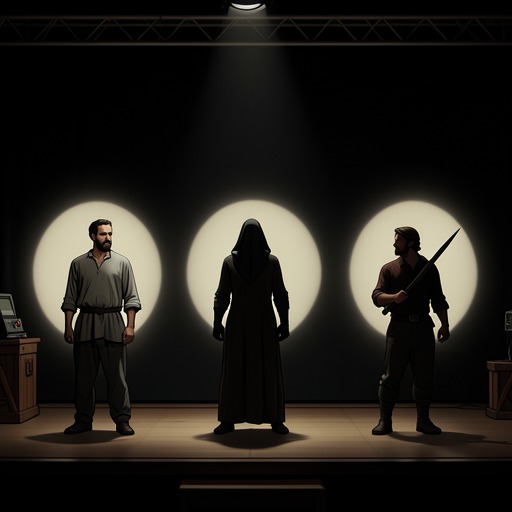
Consciousness first appears when the familiar stage sets of daily life collapse. The repeated sequence of rising, commuting, working, eating, sleeping, and beginning again can be followed almost automatically, until the question of why emerges. Weariness then changes its function: although it comes at the end of mechanical existence, it inaugurates consciousness and provokes a choice between returning to the habitual chain and undergoing a definitive awakening. The possible consequences are suicide or recovery, but neither can be understood before the awakening itself has made the life in question visible.
This awakening is not an abstract discovery detached from time. A person may live toward tomorrow, postponing understanding and fulfillment until later, but the recognition of a precise age suddenly places that person within time and on a curve leading toward its end. The horror of belonging to time exposes it as an enemy, while the body’s revolt against a future it had been awaiting becomes one of the forms of the absurd. Consciousness thus converts routine, age, and mortality into explicit problems rather than leaving them submerged in habit.
The Absurd as Conscious Conflict
The central work of consciousness is to preserve two certainties that cannot be reconciled: the appetite for the absolute, unity, clarity, and cohesion, and the impossibility of reducing the world to a rational and reasonable principle. The absurd is not simply a property of the world or of the mind in isolation. It takes shape in the awareness of the break between them. If a person were a tree among trees or a cat among animals, the problem of meaning would not arise, because there would be no consciousness standing opposed to the world and demanding familiarity from it.
For this reason, consciousness cannot be erased by a convenient assertion or a borrowed hope. The absurd is difficult to win but, once recognized, returns to human life and finds its home there. Abstract evidence gives way to the poetry of forms and colors; spiritual conflicts become embodied in the human heart; and the unresolved problems regain their sharpness. The present, even when experienced as a kind of hell, becomes a kingdom because the person no longer hides the conflict behind the anonymous impersonal pronoun of ordinary convention.
The book treats this absurd sensitivity as widespread in its age rather than presenting an established absurd philosophy. It takes the absurd as a starting point and offers a provisional description of an intellectual malady without introducing a metaphysics or belief. The purpose is consequently less to invent unfamiliar absurd discoveries than to determine their consequences: whether one should die voluntarily, hope despite everything, or refuse both evasion and false certainty.
Consciousness and Revolt
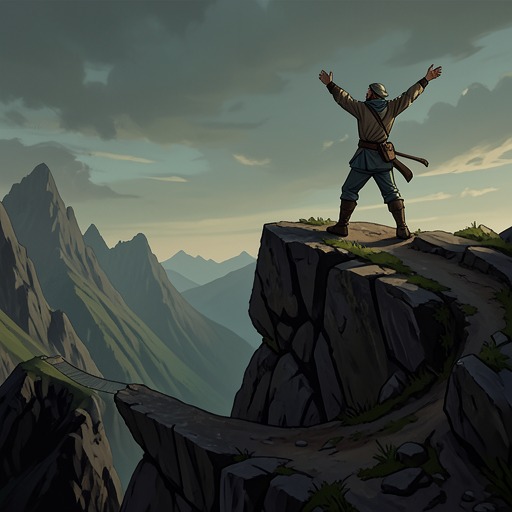
Once consciousness has disclosed the absurd, maintaining it becomes an ethical and existential task. Living an absurd fate fully requires keeping the contradiction before the mind instead of abolishing one of its terms. To eliminate conscious revolt would be to escape the problem. Permanent revolution therefore passes into individual experience as a constant confrontation between a person and personal obscurity, an insistence on impossible transparency, and a renewed challenge to the world every second.
This revolt is not aspiration and contains no hope. It is the certainty of a crushing fate without the resignation that fate might seem to demand. Consciousness remains present in the person’s own eyes, extending awareness across the whole of experience. Suicide, by contrast, accepts the absurd at the extreme and settles it by engulfing both the problem and the person in death. Revolt keeps the absurd alive because it is simultaneously awareness and rejection of death; its emblem is the condemned person who, even at the brink of falling, still notices a shoelace a few yards away.
The preface frames this position historically and philosophically. Written in 1940 amid the French and European disaster, the work confronts suicide without appealing to eternal values that contemporary Europe has temporarily lost or distorted. Its underlying answer is that, even without belief in God, suicide is not legitimate. Consciousness is what allows the book to move beyond nihilism while remaining within its limits, turning a mortal problem into a lucid invitation to live and create in the desert.
Cities, History, and the Material World
The struggle over consciousness also appears in the contrast between solitude and the modern city. Because there are no longer true deserts or islands, the text asks where the mind can collect itself and where courage can measure its strength. Big cities can provide the necessary distance, but only under difficult conditions. Paris, Florence, Prague, Salzburg, Vienna, and Amsterdam carry the noise of the past, revolutions, fame, music, and empires; they rarely offer enough silence. Oran, by contrast, becomes a desert of another kind, a place whose ugliness, dust, boredom, and indifferent sky leave the human creature without distraction.
In Oran, social life is not organized around elevated artistic or intellectual circles. Attempts to import such customs produce little, while the remaining instructive associations belong to poker players, boxing enthusiasts, bowlers, and local groups. Those who seek a certain unsophisticated nobility leave the circles and go into the street. The city’s physical spaces therefore expose consciousness to common life rather than isolating it in a refined cultural enclave.
The city’s architecture intensifies that exposure. Oran is described as a circular yellow wall under a leaden sky, a walled town turned away from the sea and folding back upon itself like a snail. The traveler who seeks the sea through its labyrinthine streets encounters the Minotaur of boredom, and the citizens have ceased wandering because they have accepted being consumed by it. Dust-covered trees become petrified plants, while pebbles are displayed in shop windows or piled along the streets. This mineral world removes the consolations of picturesque history and memory, leaving solitude and the human creature as the few remaining objects of attention.
The same tension appears in the city’s labor. At Oran’s coast, men and machines tear stone from the mountain, heap it beneath the waves, and extend a jetty toward the open sea. The work cannot destroy stone; it merely moves it, and the stone will outlast the people who move it. The undertaking may be useless, yet moving things is presented as the work of human beings, who must choose action or nothing. The heaps of rock consequently testify to people in masks of dust and sweat, making material action a visible answer to an indifferent world even when its final permanence belongs to stone rather than to its builders.
Memory, History, and Responsibility
Consciousness is also retrospective. Returning to Tipasa after the war, the narrator finds the ruins surrounded by barbed wire, accessible only through designated openings, and visited on a rainy morning rather than under the light and freedom of youth. The lost landscape cannot be restored, and the distance between warm ruins and barbed wire is recognized as an inward distance as well: tyranny, war, police forces, and the era of revolt have entered the self. Beauty, plenty, and innocence have become memories under the light of conflagrations.
This historical consciousness changes moral self-understanding. Earlier innocence had existed without awareness of morality; afterward, knowledge produces guilt without intention, while the person remains unable to meet the moral standard now recognized. The ruined temple becomes a place where the past can still be heard but never overtaken. Consciousness does not heal the break by recovering youth; it makes the loss precise and forces the present to live with what history has done.
The same obligation governs the artist’s relation to political suffering. The artist may not need to interfere in the world as an artist, but as a human being must remain connected to exploited miners, people shot down, slaves in camps, colonized peoples, and the persecuted. Writing is drawn toward those who are humiliated and debased because their silence cannot simply be left unanswered. Yet intervention must not destroy the artist’s nature or replace creation with social preaching. Consciousness holds both demands together: the artist’s language is altered by a militant life, while the values of creation and humanity remain inseparable.
In this sense, consciousness is neither detached contemplation nor blind participation. The text rejects the modern reduction of awareness to the streets of history alone, criticizing the exclusion of nature, the sea, hilltops, and evening meditation from a world ruled by big cities and historical power. It also refuses the opposite escape into an eternal realm. Consciousness keeps the conflict open: it sees history’s force, the world’s beauty, political suffering, mortality, and the need to create without converting any one of them into a final explanation. Its achievement is not resolution but lucid presence, the condition under which revolt, action, affection, and creation can resume their places in an absurd world.