Don Juan
The Myth of SisyphusDon Juan is the conscious seducer and sexual athlete whose repeated affairs embody the absurd life: he knows that existence has no future guarantee, refuses to convert desire into a promise of eternity, and nevertheless spends himself without reserve. His decisive significance lies in the transformation of habitual seduction into an ethic of quantity. He does not overcome the absurd by discovering a higher meaning; he makes lucidity itself the condition of action, love, pleasure, and eventual decline.
Identity and Introduction
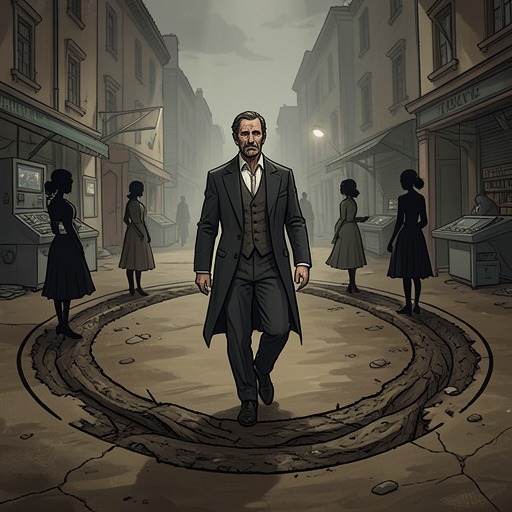
Don Juan is presented not as a mystical lover searching for one perfect attachment, but as an ordinary seducer who has become lucid. His condition remains seduction, even after consciousness has stripped it of romantic illusions. He goes from woman to woman not because he lacks love, but because he loves each one with the same passion and with his whole self. Each encounter therefore demands repetition: when one woman claims to have finally given him love, he answers that it is not finally, but once more. His movement is not a defective approximation to total love; it is a deliberate refusal of the belief that love must be rare in order to be profound.
The text distinguishes Don Juan from both the mystic and the conventional immoralist. He does not hope, and the absence of hope prevents the melancholy that would otherwise accompany his repeated departures. His laughter, theatrical playfulness, and conquering insolence are signs not of hidden despair but of a man who knows the limits of his condition and does not pretend to exceed them. The intelligence that recognizes its frontier becomes, in this portrait, a form of genius. Don Juan remains ignorant of melancholy until physical death because he has abandoned the earlier state in which hope made him melancholy.
Repetition and the Ethic of Quantity
Don Juan’s encounters are governed by efficacy rather than by elaborate moral or romantic language. The conventional phrases of seduction are described as passwords, rules, and courtesies whose value lies in the voice that pronounces them and in the action that follows. He does not pause to solve a moral problem before acting. Nor is he like a figure who damns himself by aspiring to sainthood: hell, for him, is something to provoke rather than a metaphysical destination that gives his life its meaning.
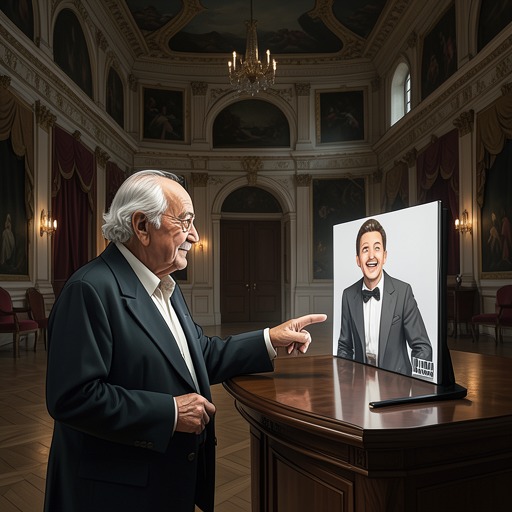
His conscious repetition turns the ordinary seducer into an absurd man. Nothing changes in his outward condition, yet everything is transformed by the knowledge with which he inhabits it. He does not collect women as possessions or preserve them as trophies. To collect would be to live from the past, while Don Juan exhausts both the number of women and his own chances of life in the present. He rejects regret because regret is another form of hope, and he cannot look at portraits: the past has no authority over a consciousness committed to what can still be lived.
This repeated expenditure is called an ethic of quantity, in contrast with the saint’s tendency toward quality. The point is not numerical accumulation for its own sake, nor a claim that every experience is identical. Rather, Don Juan multiplies experiences that cannot be unified under one permanent meaning. The value of his life is measured by its intensity and extent of actual living, not by a future result or a final synthesis. His seduction thus becomes a model of absurd freedom: he remains within time instead of standing apart from it, and he refuses to live from memories of what has already been consumed.
Love, Mortality, and the Question of Selfishness
Don Juan’s view of love contests the language of eternity. A love that is thwarted may appear eternal precisely because death or separation prevents its completion, but the love under examination is instead a mixture of desire, affection, and intelligence binding one person to another in a particular way. That compound differs from person to person and cannot honestly be covered by a single universal name or enacted through a single prescribed set of gestures.
Against the closed intensity of the mother or the passionate wife, whose heart is turned away from the world toward one creature and one face, Don Juan’s love is described as liberating. It brings the faces of the world into view because it knows itself to be mortal. He chooses to be nothing in the sense that he refuses to make one attachment into an eternal identity or to sacrifice every other possibility to a single emotion. Each affair contains a death and a rebirth; gathered together, these successive endings and beginnings form the flowering of his life and his way of giving vitality.
The text therefore leaves open the charge that Don Juan is selfish, but it sharply qualifies the accusation. He may be selfish in his own way, yet his relationships are not described simply as acts of possession. By refusing to promise what mortality cannot deliver, he liberates himself and, at least in the argument’s idealized account, those who approach him. His generosity is inseparable from his refusal to make love a permanent enclosure. The same logic that makes him appear faithless also prevents him from pretending that a transient passion has become an eternal truth.
Religion, Punishment, and the Stone Commander
Don Juan’s crime, from the perspective of the men of God, is his knowledge without illusions. Loving and possessing, conquering and consuming become ways of knowing, and the bodily act’s traditional association with knowledge gives this claim particular force. Don Juan is dangerous not merely because he violates a rule, but because his lived experience negates the religious promises that those rules uphold. His innocence is secured by the fact of living; guilt becomes a legend derived from death.
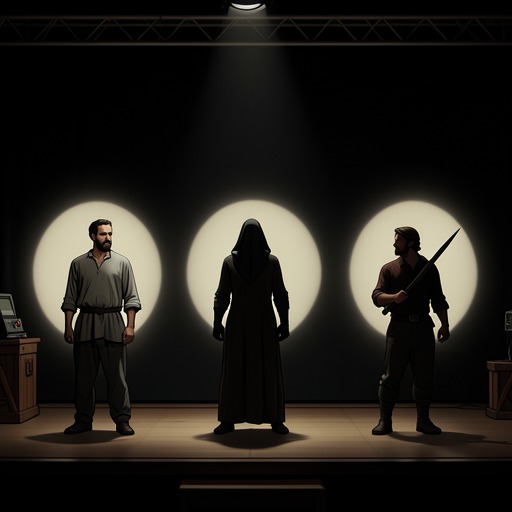
The Stone Commander represents the opposing powers of eternal Reason, order, universal morality, and a wrathful God. The statue’s immense, soulless solidity gathers these forces into one image, but its authority is limited to the symbolic punishment it is supposed to enact. The narrative entertains the legendary account in which Don Juan is killed by the Commander, yet it gives greater weight to another possibility: that the Commander never arrived while Don Juan waited at Anna’s, leaving the blasphemer to experience the dreadful bitterness of having been right. In this version, the decisive tragedy is not supernatural retribution but the exposure of a lucid life to its own final emptiness.
The story of Don Juan’s assassination by Franciscans, who allegedly proclaimed that heaven had struck him down, is treated as unproven but logically fitting. The point is less historical probability than the structure of the legend: those who cannot answer his knowledge must turn his death into a punishment. Yet a fate is not necessarily a punishment. Don Juan accepts the rules of the game, including aging and the possibility of ridicule, but he does not accept the interpretation that would transform the inevitable end of a mortal body into evidence of divine justice.
Decline and Final Image
Don Juan is imagined as eventually burying himself in a monastery, though not in the edifying sense of finding refuge in God. The monastic ending represents the grim logical completion of an existence turned toward short-lived joys. Sensual pleasure and asceticism become two forms of the same destitution: when the body betrays the man who once lived through it, he remains to enact the comedy of waiting, kneeling before a void and facing a God he does not adore.
The final image places Don Juan in a cell in a Spanish monastery on a hilltop. He does not contemplate the ghosts of past loves; through a narrow opening in the sun-baked wall, he may look upon a silent Spanish plain, a noble and soulless land in which he recognizes himself. This image does not redeem him, punish him, or restore the eternal meaning he rejected. It brings the curtain down on a life whose ultimate end was always awaited but never desired, and whose final significance lies not in the ending’s justice but in the uncompromising clarity with which Don Juan has lived toward it.